This article briefly outlines the key considerations that should be taken when purchasing industrial furnaces.
- Sometimes, the industrial furnace’s highest-rated operating temperature and sustained operating temperature are not the same. For example, an industrial furnace with a maximum use temperature of 1700 °C may have a recommended sustained use temperature of 1600 °C.
Running the furnace at the highest rated temperature (1700 °C) for longer than the manufacturer’s recommendations could cause considerable furnace lining degradation and rapid heating element loss.
- Stainless steel furnaces are often aesthetically pleasing. However, to protect the operator, they should be cooled, as sleek, shiny surfaces can cause burns. The traditional solution involves inserting cooling fans between the stainless enclosure and furnace body.
That said, cooling fans can fail. Offset fiberboard furnace exteriors remove the need for reliance on fan cooling, providing a superior solution to prevent hazardous surface temperatures.
- As corrosives splatter and outgas, furnace insulation can end up resembling the moon’s surface. It’s thus recommended to consult the furnace manufacturer to see whether they have built solutions for such occurrences. If not, one may need to replace linings and elements more frequently.
- The temperature controller is also an important factor to consider. Though an inexpensive single-setpoint controller may be suitable in some operations, multiple programs with different segments per program and recipes for different product runs may be needed.
Advanced controllers with advanced features are now widely available at a reasonable price.
- Information is essential. Ask the manufacturer for their expertise and experience in guiding industrial furnace development by offering a complete guide to both the product and the firing process.
- Ask for a non-disclosure agreement (NDA) if any concerns arise when sharing proprietary information. Locate a manufacturer who is able to offer the best solution for the most complex firing problems. This may make design modifications or customization necessary.
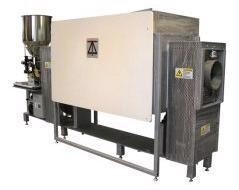
Custom industrial rotary furnace. Image Credit: Deltech, Inc

This information has been sourced, reviewed, and adapted from materials provided by Deltech, Inc.
For more information on this source, please visit Deltech, Inc.