Anton Paar's Litesizer DIF series brings 60 years of laser diffraction expertise to the lab, providing sophisticated particle sizing capabilities from 10 nm to 3.5 mm.
Users can achieve precise particle size measurements with the Litesizer DIF laser diffraction analyzer.
This particle size analyzer, using laser diffraction technology, boasts a top-tier optical configuration that includes powerful 10 mW and 25 mW lasers, along with the most extensive range of detected diffraction angles available on the market, spanning from 0.01 to 170 °.
The Kalliope software simplifies particle sizing and eliminates the need for extensive training, enabling users to start measurements in just three clicks. The Quick-Click system enables effortless switching between dispersion units, reducing the risk of operational errors.
Integrated safety features for both liquid and dry dispersion ensure smooth and secure handling during operation.
The robust metal housing and isolated optical bench provide reliable performance across a wide range of environments, from demanding industrial conditions to advanced research laboratories.
Driven by the revolutionary legacy, this is next-generation laser diffraction technology, the Litesizer DIF series: From First to Best.
Litesizer DIF 500
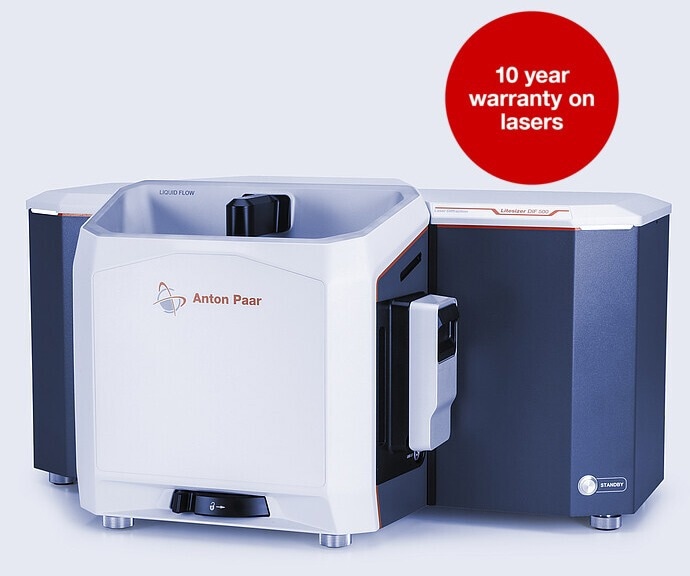
Image Credit: Anton Paar GmbH
- Measurement of samples ranging from 0.01 µm to 3,500 µm
- Compatible with the Liquid Flow Imaging dispersion unit
- Easily switch between liquid and dry dispersion with a single action
- Kalliope software: No training is necessary with the dedicated QC mode
- Consistent results even in challenging environments.
Litesizer DIF 300
- Measurement of samples ranging from 0.1 µm to 2,500 µm
- Compatible with the Liquid Flow Imaging dispersion unit
- Consistent results even in challenging environments
- Easily switch between liquid and dry dispersion with a single action
- Kalliope software: Requires no training with featured QC mode
Litesizer DIF 100
- Measurement of samples ranging from 0.1 µm to 1,000 µm
- Transitioning between liquid and dry dispersion with a single action
- Consistent results even in challenging environments
- Kalliope software: No training necessary, specialized QC mode
Key Features
Particle Sizing in Any Environment
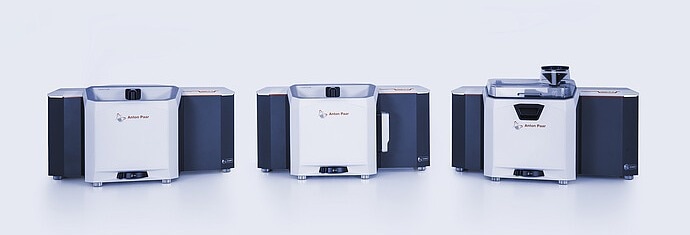
Image Credit: Anton Paar GmbH
Anton Paar's laser diffraction particle size analyzer is designed for heavy industries. It is constructed with high-quality components both internally and externally. Sturdy metal housing protects the durable optical elements.
The Litesizer DIF is engineered to withstand harsh conditions: No dust or powder can infiltrate the device's optical bench, and the interior is shielded from potential direct vibrations at the production site. This design reduces maintenance and repair expenses.
Less Investment, Saved Bench Space – Compatibility Across the Board
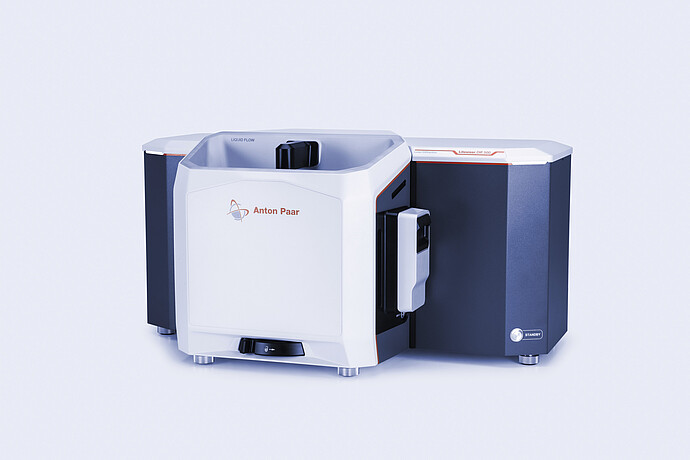
Image Credit: Anton Paar GmbH
The compatibility of dispersion units between Anton Paar’s Litesizer DIA and Litesizer DIF instruments minimizes both investment costs and the use of laboratory space. Furthermore, all Litesizer instruments can be managed from a single PC running the Kalliope software.
Kalliope: The Benchmark Software for Particle Sizing
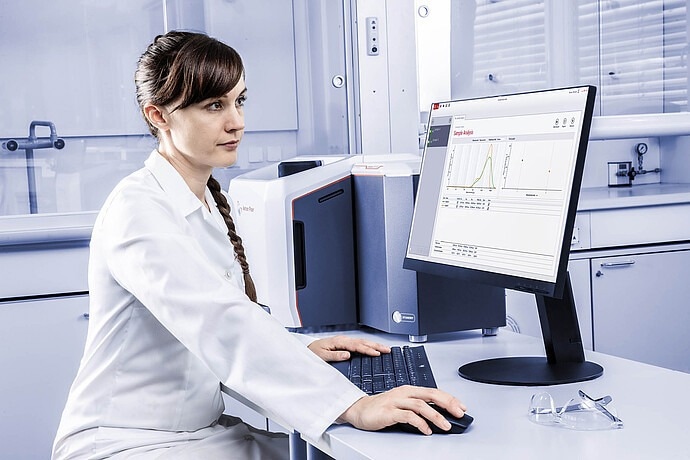
Image Credit: Anton Paar GmbH
With Kalliope, users can quickly understand how to begin using the one-page workflow, which includes setting parameters, acquiring data, and analyzing results.
Moreover, the QC mode ensures consistent, reliable measurement outcomes by allowing customization of user management and by securing sensitive settings. The laser diffraction particle size analyzer in QC mode provides straightforward feedback regarding whether your product falls within the specified limits. This results in obtaining outcomes in just three clicks and requires less training for new users.
A pharma option is available that includes data security features, user management, and audit trails, ensuring that Kalliope complies with 21 CFR Part 11 of the US FDA.
Efficient Dispersion, Maximum Safety
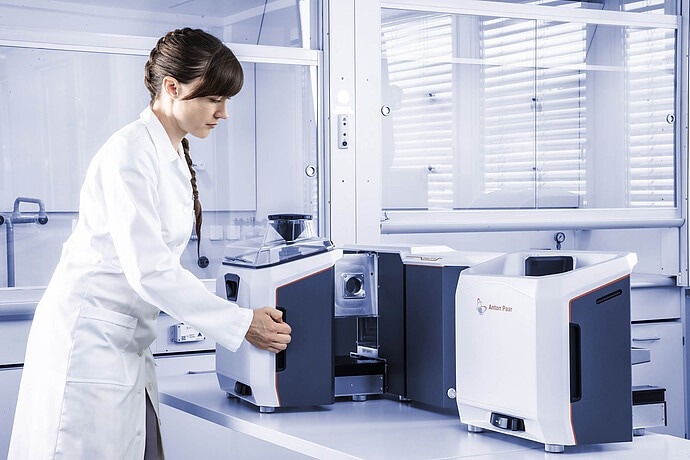
Image Credit: Anton Paar GmbH
Litesizer DIF's Quick-Click feature enables the connection of dispersion units in a single action – eliminating the need for cables, tubes, or pipes. The obscuration level indicator facilitates monitoring of the sample quantity during addition, ensuring the correct amount is used from the outset.
The Dry Jet dispersion unit is equipped with a suction check and an integrated dust cover to reduce the likelihood of powder dispersion.
The Liquid Flow unit automatically checks for adequate liquid levels before sonication, thereby preventing overheating. Additionally, a specialized module with high chemical resistance is offered for handling aggressive liquids.
The unit combines laser diffraction with dynamic image analysis, incorporating shape parameters for particles as small as 5 µm.
On Quality, Anton Paar Leads the Way
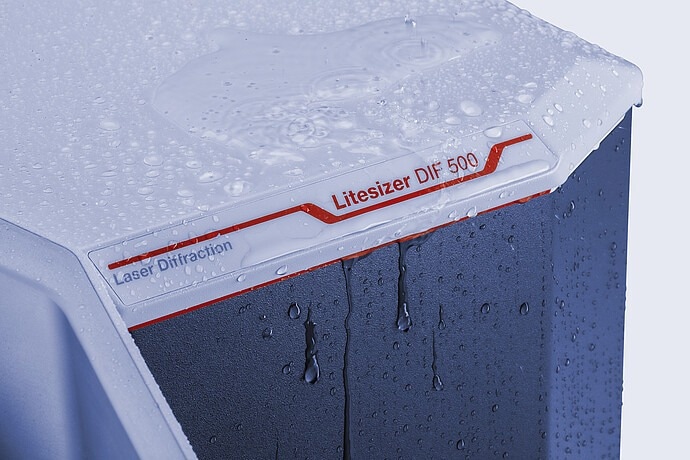
Image Credit: Anton Paar GmbH
Litesizer DIF serves as an ideal instrument for particle analysis, thanks to its exceptional manufacturing quality.
It is equipped with premium hardware, enabling the device to capture high-quality raw data.
This laser diffraction particle size analyzer enables users to assess a wide variety of samples, covering particle sizes from 0.01 µm to 3,500 µm, with a single analyzer – eliminating the need for additional investment.
A Decade of Confidence: 10-Year Laser Warranty
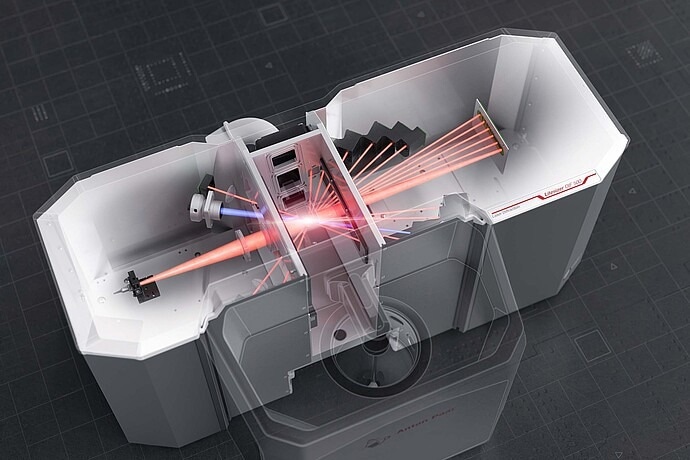
Image Credit: Anton Paar GmbH
Each Litesizer DIF is constructed around a high-performance laser system designed for decades of dependable operation. To reinforce this, Anton Paar provides a 10-year laser warranty, a pledge that significantly exceeds industry norms.
This demonstrates the assurance that the core optical performance of the Litesizer DIF will continue to yield consistent results year after year, regardless of the application's requirements.
Specifications
Source: Anton Paar GmbH
|
Litesizer DIF 500 |
Litesizer DIF 300 |
Litesizer DIF 100 |
| Measurement principle |
Laser Diffraction (Mie and Fraunhofer scattering) |
| Measurement range |
0.01 μm - 3,500 μm |
0.1 μm - 2,500 μm |
0.1 μm - 1,000 μm |
| Size classes |
144 (user adjustable) |
114 (user adjustable) |
104 (user adjustable) |
| Accuracy * |
better than ± 0.5 % variation*** |
| Repeatability |
better than ± 0.5 % variation*** |
| Reproducibility** |
better than ± 1 % variation*** |
| Typical measurement duration |
< 10 sec |
| Data acquisition rate |
16 kHz |
| Light source 1 |
|
| Type |
Fiber-coupled laser diode |
| Optical arrangement |
Reverse Fourier setup |
| Wavelength |
830 nm, infrared |
| Laser power |
10 mW |
| Laser class |
Class 1 (IEC60825-1) |
| Light source 2 |
Litesizer DIF 500 |
- |
| Type |
Laser diode |
- |
| Optical arrangement |
Tilted relative to the IR laser |
- |
| Wavelength |
450 nm, blue |
- |
| Laser power |
25 mW |
- |
| Laser class |
Class 1 (IEC60825-1) |
- |
| Detectors |
|
| Type |
Log-spaced photo diode array and single diodes for side and back-scattering |
| Angular range |
0.01 ° - 170 ° |
0.01 ° - 155 ° |
|
| Focal length |
300 mm |
| Alignment |
Automatic |
| Instrument data |
|
| Instrument dimensions**** |
400 mm x 790 mm x 290 mm (H x W x D) |
| Instrument weight**** |
42.3 kg (93.2 lb) |
| Power supply |
100 V to 240 V ± 10 %, 50/60 Hz |
Trademarks: Kalliope (EU: 012709391, UK: UK00912709391), Litesizer (EU: 011695491, UK: UK00911695491)
* Defined for a monomodal latex standard and accounting for the manufacturer's uncertainty of standard size.
** Defined for D50 of a polydisperse standard.
*** Sample and preparation dependent. Defined for liquid dispersion measurements.
**** Without PC and dispersion unit