
In this interview, AZoMining speaks with Garry Noble, Senior Application Specialist at Thermo Fisher Scientific, about Prompt Gamma Neutron Activation Analysis (PGNAA) and its transformative capabilities in industries such as coal, steel, and copper mining.
Please introduce yourself and your role at Thermo Fisher Scientific.
My name is Garry Noble, and I am the Senior Application Specialist at Thermo Fisher Scientific. My expertise is in physics, and I have been working with PGNAA technology for over 25 years.
I specialize in elemental analysis solutions for the process industries, assisting customers in understanding and applying PGNAA across a wide range of applications, including cement, coal, and mining.
What is PGNAA and how does it work?
PGNAA is short for "Prompt Gamma Neutron Activation Analysis." It is an elemental analysis technique that uses a neutron source to irradiate the sample material. The sample's nuclei absorb these neutrons and emit prompt gamma rays. Detecting these gamma rays allows us to identify and measure the elements present in the substance.
Unlike surface-based measurements such as XRF, PGNAA is a bulk measurement technique.
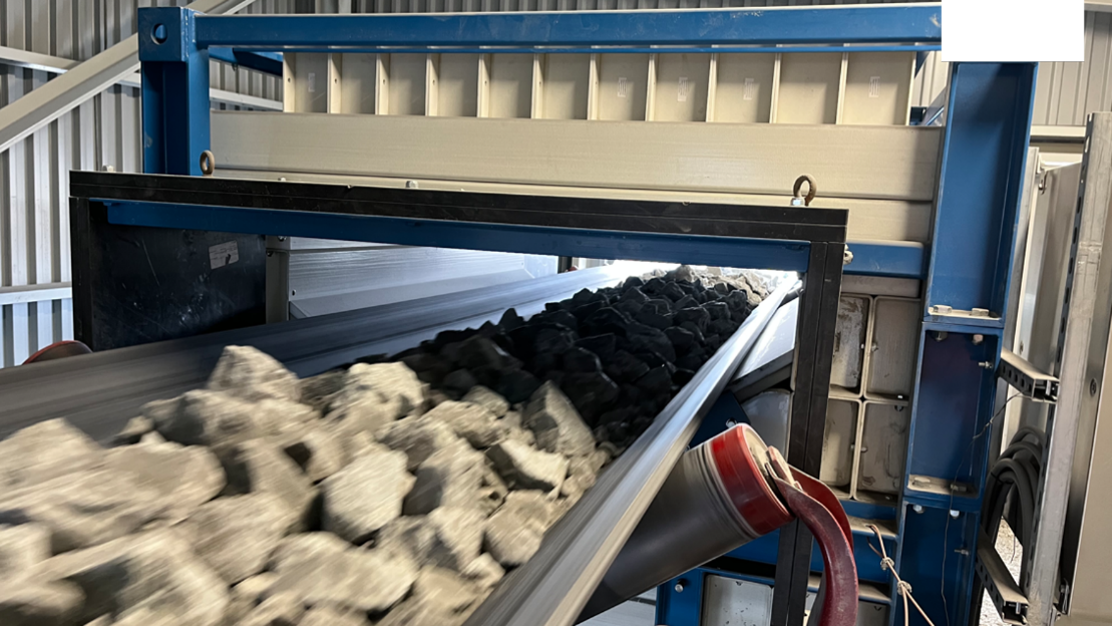
Neutrons and the resultant gamma rays penetrate deeply into the material, enabling real-time, through-the-belt investigation of enormous quantities, regardless of particle size or density. This makes it extremely useful for continuous process control.
How did PGNAA first become established in the coal industry?
PGNAA was first introduced in the coal industry in the 1980s, and I have witnessed its evolution firsthand. It is an essential tool in blend-sorting applications. For example, power plants employ PGNAA to blend high- and low-sulfur coal in real time to satisfy emission targets.
I became a firm believer after seeing it accurately assess coal's high ash level for the first time. The ability to measure and respond in real time was game-changing.
PGNAA has become the industry standard for cement manufacturing. How did that transition occur?
When I installed my first PGNAA analyzer at a cement mill in 2000, it was almost an afterthought. Today, it is integrated into new plant layouts from the outset. Cement companies increasingly rely on PGNAA for quarry control, blending stockpiles, and additive dosing to maintain uniform kiln feed.
The method enables operators to better manage limestone variability, extend quarry life, reduce the use of costly additives, and increase kiln energy efficiency. It has become a common process control technology in the cement industry.
PGNAA is also being used in steelmaking, particularly in sinter plants. Can you explain that application?
Yes, in integrated steel plants, sinter is an important feedstock for the blast furnace. Controlling the calcium-to-silica ratio, known as basicity, is essential.
PGNAA provides real-time monitoring and management of this ratio by measuring iron ore fines and limestone on the conveyor belt prior to sintering. It substitutes delayed lab analyses with real-time data, cutting variability in half and increasing furnace efficiency.

Image Credit: ArtEvent ET/Shutterstock.com
How is the PGNAA being implemented in the copper mining sector?
Copper is a new frontier for PGNAA, and its potential is enormous. Copper grades are lower than coal or cement, frequently below 1%, requiring a more sensitive analyzer design. We have placed systems at locations such as Red Chris in Canada, where PGNAA measures variability truck-by-truck and even within individual shipments.
This provides insight into misrouting, validates mine plans, and allows for feed-forward management of the mill and flotation circuits. This is operational intelligence.
In mining, sampling can be a significant challenge. How can PGNAA help with this?
Traditional grab sampling methods provide a snapshot. In comparison, PGNAA delivers a continuous video of your process. It monitors the entire conveyor belt cross-section and compensates for fluctuations in real time. This is especially important when dealing with high tonnage or coarse particle sizes, as representative sampling is challenging.
It eliminates guesswork and lets you act on what is actually occurring, rather than on what you believe is happening based on a few samples.
How does calibration affect PGNAA's performance?
Calibration is everything. At Thermo Fisher, we undertake thorough factory calibrations that are matched to each site's unique ore properties. We simulate the expected elemental ranges and incorporate variables such as belt loading.
Trying to calibrate in the field with real ore is time-consuming, unreliable, and expensive. Our strategy ensures that the analyzer is ready from the start, accelerating adoption and maximizing value.
Where do you see the PGNAA going in the future?
Although PGNAA has been around for 40 years, we are only touching the surface of its possibilities, particularly in mining.
Beyond current applications, it can also help with bulk ore sorting, predicting rock hardness, assessing tailings for acid-generating potential, and optimizing leaching processes.
It will be a massive breakthrough when plants are developed with PGNAA in mind across the board, rather than as an add-on. I expect copper and other mining sectors will follow suit, just as they have become crucial to cement manufacturing.
From Rock to Results: Real-Time Insights with PGNAA
What final message would you send to industries that have not yet adopted PGNAA?
PGNAA is a mature, proven technology with an excellent track record in a variety of industries. If your process has variability, which most do, PGNAA provides you with the capacity to measure, regulate, and optimize.
It is time to start a conversation about how this technology can alter your operations.
About Garry Noble

Garry Noble, a Senior Application Specialist at Thermo Fisher Scientific, has over 25 years of experience in Prompt Gamma Neutron Activation Analysis (PGNAA). He has a physics degree and has established himself as a global authority on the application of PGNAA in industries such as coal, cement, steel, and mining.
Garry was essential in transforming PGNAA from a specialized technology to an industry standard, particularly in cement manufacturing and process control. He has hands-on experience with calibrations, analyzer commissioning, and integration with process control systems for over 20 commodities.
Garry continues to promote the use of real-time elemental analysis technologies in heavy industry, which improve efficiency, product quality, and resource management.

This information has been sourced, reviewed, and adapted from materials provided by Thermo Fisher Scientific – Production Process & Analytics.
For more information on this source, please visit Thermo Fisher Scientific – Production Process & Analytics.
Disclaimer: The views expressed here are those of the interviewee and do not necessarily represent the views of AZoM.com Limited (T/A) AZoNetwork, the owner and operator of this website. This disclaimer forms part of the Terms and Conditions of use of this website.