The Thermo Scientific™ MSA-430 Multi-Stream Slurry XRF Analyzer is designed for plants with multiple slurry flows requiring simultaneous monitoring. The MSA-430 offers powerful multi-stream analysis capability, delivering reliable real-time elemental data for up to 12 slurry streams, providing wide visibility across regional beneficiation circuits such as rougher, cleaner, and tailings stages.
The MSA-430, which uses an air-cooled, low-power X-ray tube for good reliability and low cost, is now safer without radioisotopes.
By maintaining each stream in its own analysis zone, MSA-430 minimizes cross-contamination without the need for a multiplexer or demultiplexer, reducing head loss and plant elevation requirements. It is suited to industrial applications.
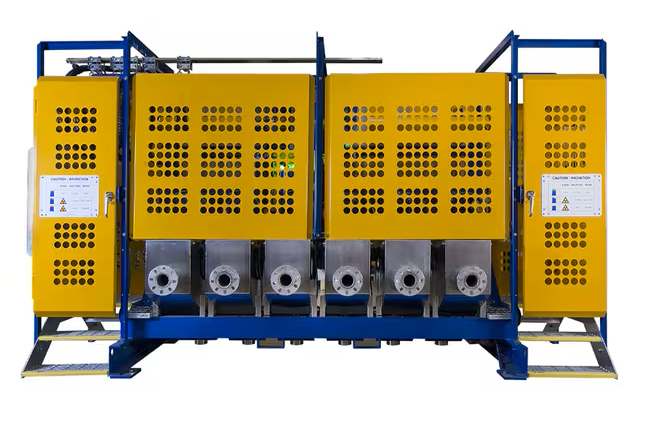
MSA-430 Multi-Stream Slurry XRF Analyzer. Image Credit: Thermo Fisher Scientific – Production Process & Analytics
The MSA-430 Multi-Stream Slurry XRF Analyzer measures % solids and up to 20 components for three to 12 slurry streams using a specified schedule, providing real-time process trend information for monitoring and management. Here are the main features:
- For a long lifespan and minimal maintenance costs, the MEP-400 Multi-Element Probe uses an air-cooled, low-power X-ray tube. The absence of radioisotopes makes the operation safer
- With an integrated Peltier cooler for dependable, trouble-free operation, the high throughput Digital Signal Processor and advanced energy dispersive Silicon Drift Detector offer reduced limits of detection and high precision measurement from calcium to uranium
- MSA-430 is designed for operation in outdoor industrial environments
- MSA-430 is a low head loss solution that does not require a multiplexer or demultiplexer, reducing the requirement for pumps and minimizing the deployment and operational expenses of a centralized analyzer system
- A dedicated, distinct channel for each process stream from sample point to sample discharge reduces cross-contamination and simplifies sample return
- A cross-cut sampler for each stream collects samples for analyzer calibration and shift composite samples
- Flowrate capability can handle the entire flow of low-flowrate process streams, resulting in more accurate readings. To sample greater flow rate streams, use a pressure or gravity pipe Process Sampler
- When handling full flow or supplied from a SamStat-30 rather than a pressure pipe or gravity pipe sampler, the MSA-430's specific cross-cut samplers can be used to collect composite samples for metallurgical balancing
- Optional vacuum filters are provided for each composite sampler, saving time and reducing manual handling at the conclusion of shifts
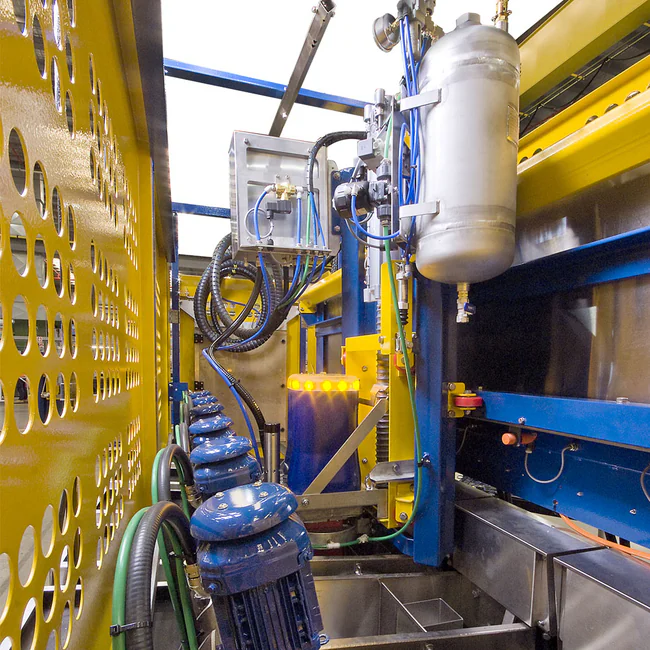
MSA-430 Multi-Stream Slurry XRF Analyzer. Image Credit: Thermo Fisher Scientific – Production Process & Analytics
Specifications
Source: Thermo Fisher Scientific – Production Process & Analytics
| . |
. |
| Air Requirements |
Instrument Air, ISO 8573.1 Class 3, 4, 3, Dewpoint < 3 °C. Pressure 550 kPa minimum, 1000 kPa maximum, nominal 600 kPa (87 psi). Maximum 420 liters per minute at 700 kPa. |
| Certifications/Compliance |
Manufactured in an ISO 9001:2015 certified facility. |
| Electrical Requirements |
Three-phase 380-600 Volts AC +/-10 %, 50/60 Hz (48 – 62 Hz). Maximum 19.3 kVA (12 streams). |
| Water for Sample Acquisition |
Clean Plant / Raw water; 300 - 800 kPa 0 - 230 L/hr @ 350 kPa (per stream requiring froth spray). 10-20 L/hr @ 350 kPa for probe washing. |
| Unit Size |
Each |