Role of X-Ray Diffraction in Mineralogical Phase Identification
X-ray diffraction (XRD) is a popular analytical technique that is widely used to determine crystalline materials’ phase composition. X-ray diffraction (XRD) is especially relevant in mineralogy and geology, where it is commonly used to identify the mineralogical phase composition of geological samples, including sediments.
XRD is generally employed as a bulk analytical method, typically examining areas several square millimeters in size. Specialized instruments are also available, and these tools can perform XRD even on very small regions. This process is known as microdiffraction.
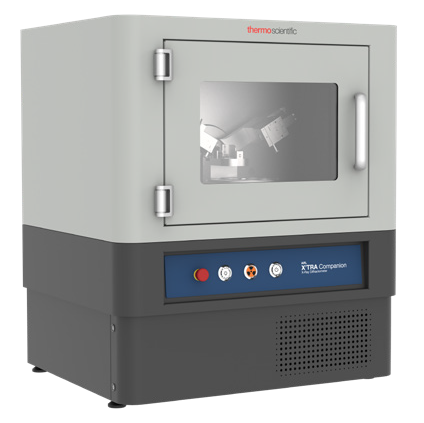
Figure 1. ARL X’TRA Companion X-ray diffraction system with θ/θ Bragg-Brentano geometry, perfect for all geological and mineral analyses. Image Credit: Thermo Fisher Scientific
The Principles of XRD
X-rays passing through a crystal interact with atoms within the lattice, leading to constructive and destructive interference of the X-ray waves. This interaction results in the formation of a distinctive pattern in the diffracted X-rays, and this pattern can be detected and analyzed in accordance with Bragg’s Law (Figure 2).
X-ray diffraction operates on the principle that each crystalline mineral features a distinct and repeating atomic structure. A distinct structural pattern is created thanks to the specific arrangement and types of atoms within the mineral.
XRD supports mineral identification by determining lattice parameters that are characteristic of each crystalline phase. These parameters serve as a unique fingerprint for each mineral.
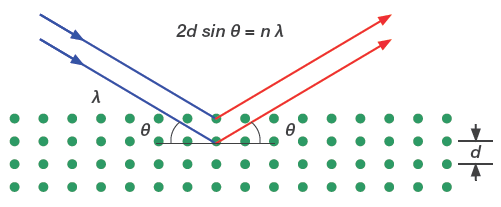
Figure 2. Bragg’s law schema. λ: wavelength, d: d spacing, θ: diffraction angle, n: diffraction order. Image Credit: Thermo Fisher Scientific
XRD Instrumentation for Geological Materials Analysis
The Thermo Scientific™ ARL™ X’TRA Companion system (Figure 1) is a benchtop X-ray diffractometer.
This system is well suited for XRD analysis in geological and mineralogical applications. It is robust, safe, and easy to use. It also enables the establishment of a relevant and straightforward experimental protocol for high-quality data acquisition in a short timeframe.
Results obtained via this system are easily interpretable thanks to the availability of open-source software and free crystallographic databases.
The ARL X’TRA Companion XRD system is ideally suited to continuous high-throughput operation, integrating powerful automation solutions designed to minimize operator intervention.
It can also be configured to work in batch mode, offering one-click quantification results based on the Rietveld method. Results can also be automatically transmitted to a LIMS.
Characteristics of the ARL X’TRA Companion XRD System
The ARL X’TRA Companion XRD system boasts a θ/θ goniometer (Figure 3) with a 160 mm radius in Bragg-Brentano geometry.
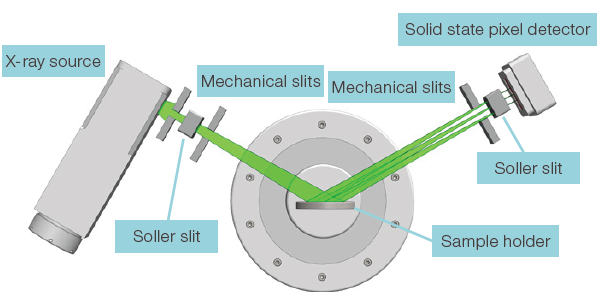
Figure 3. θ/θ geometry of the goniometer. Image Credit: Thermo Fisher Scientific
A 600 W X-ray source (available in either Cu or Co) is included, and this can be utilized alongside either a single sample holder or a sample changer, depending on the analysis flow required. A range of sample supports is also available, allowing various types and shapes of samples to be accommodated. An integrated water cooler can also be included, making the instrument completely autonomous.
The ARL X’TRA Companion XRD supports rapid high-resolution data collection and enabling reliable data interpretation thanks to its use of an innovative semiconductor pixel detector with a 55 x 55 µm pitch.
Importance of Sample Preparation in Quantitative XRD
To provide a test sample that is more representative of the entire sample, rock samples are crushed and ground to a particle size of approximately 100 µm. The resulting powder will be carefully placed in an appropriate sample holder prior to analysis.
This step is important because minerals with specific morphologies can preferentially orient during sample preparation; for example, clays with plate-like particles may result in particles adopting a preferred orientation that can distort quantitative results.
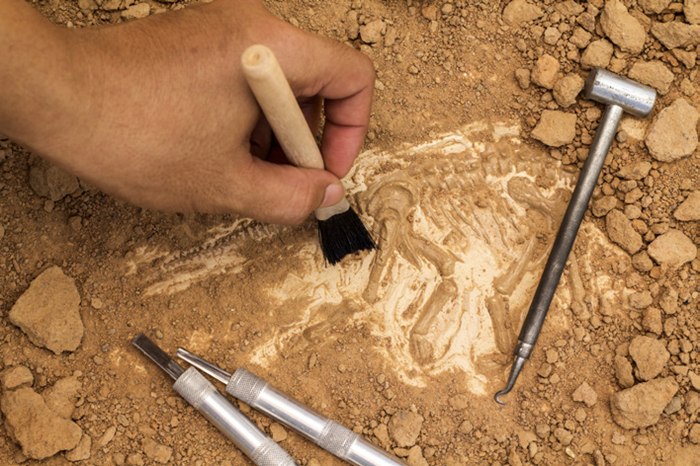
Figure 4. Sample collection before laboratory analysis. Image Credit: Thermo Fisher Scientific
Phase Identification and Quantification Using Rietveld Analysis
XRD software features search and match capabilities designed to interface with ICDD, COD, and other crystallographic databases of known minerals. This enables the identification of minerals based on the diffractogram generated by the sample being analyzed.
Conditions Affecting Quantitative Phase Analysis
Quantitative analysis relies on the relative intensities of the peaks corresponding to each mineral or phase present. Relative phase proportions can be determined using the Rietveld analysis method when appropriate sample preparation and refinement models are applied.
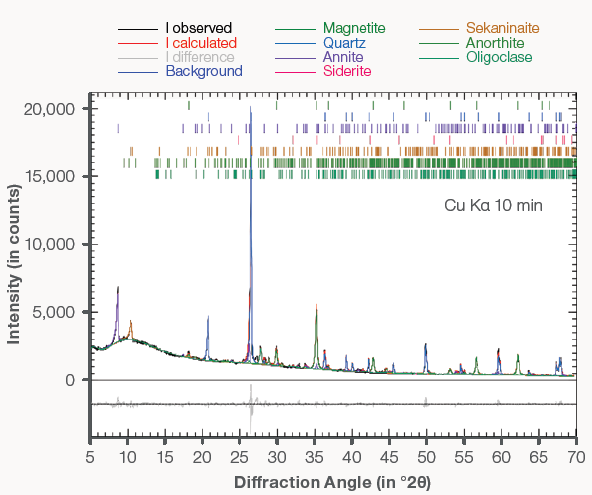
Figure 5. Determine total Fe and Fe2+ / Fe3+ ratio with ease. Image Credit: Thermo Fisher Scientific
Table 1. Mineralogy. Source: Thermo Fisher Scientific – Production Process & Analytics
| Phase |
wt. % |
Description |
| Magnetite |
15.50 |
Fe oxide |
| Quartz |
52.60 |
|
| Annite |
6.81 |
Fe bearing minerals |
| Siderite |
0.23 |
| Sekaninaite |
2.89 |
| Anorthite |
15.30 |
Feldspars |
| Oligoclase |
6.73 |
Table 2. Fe species. Source: Thermo Fisher Scientific
| |
wt. % |
| Fe total |
13.84 |
| Fe3+ |
7.48 |
| Fe2+ |
6.36t |
Minimal Required ARL X’TRA Companion XRD Configuration
The configuration of the ARL X’TRA Companion XRD is relatively simple, ensuring optimal performance with minimal requirements:
- ARL X’TRA Companion advanced benchtop XRD system for geological analysis
- Standard single sample holder or sample changer, depending on the sample flow
- Open-source PROFEX software allows free database access for all users
- ICDD or COD (free open) crystallographic databases
- Extra dedicated software, for example, MATCH! for the search match, or MAUD or FULLPROF (free) for the Rietveld method
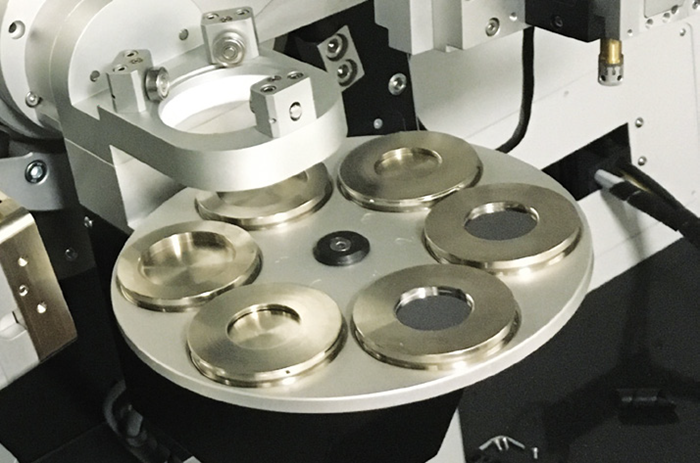
Figure 6. 6-position sample changer. Image Credit: Thermo Fisher Scientific – Production Process & Analytics
Complementary Use of XRD and XRF in Geological Analysis
XRF and XRD both use X-rays and share similarities, but each technique generates distinct yet complementary data. XRF determines elemental compositions, while XRD identifies minerals and determines phase assemblages.
XRF can be used to detect elements such as silicon (Si) and aluminum (Al) and quantify their concentrations down to ppm levels, but it is unable to reveal specific compounds.
XRD can be used to identify compounds such as SiO2, Al2O3, or Al2O3·2SiO2·2H2O (kaolinite), with Rietveld analysis used to quantify their percentages.
XRF can therefore be combined with XRD to support the identification of unknown phases and improve quantitative interpretation when appropriate analytical models are applied.
Conclusion
The ARL X’TRA Companion XRD benchtop system is a powerful geological tool designed to support researchers and geologists in better understanding the mineralogical composition of geological materials.
This robust system is suitable for both industrial and academic environments, offering high-quality analytical data and a user-friendly interface, , making it ideally suited for experiments designed to identify and quantify crystalline phases.
The data obtained via the ARL X’TRA Companion XRD offers value across all geological sectors, ranging from academic research seeking to better understand the environment to quality control of finished products and pioneering exploration geology.
Data obtained using the ARL X’TRA Companion XRD can be easily combined with data acquired via the Thermo Scientific™ ARL™ QUANT’X Benchtop EDXRF Spectrometer.
Acknowledgments
Produced from materials originally authored by Eric Berthier from Thermo Scientific.
This information has been sourced, reviewed, and adapted from materials provided by Thermo Fisher Scientific.
For more information on this source, please visit Thermo Fisher Scientific.