A decade of green mining policies in China has led to a sustained and measurable decline in carbon emissions from raw coal production, reducing annual emissions by an estimated 43.59 million tons across the country’s largest coal bases.
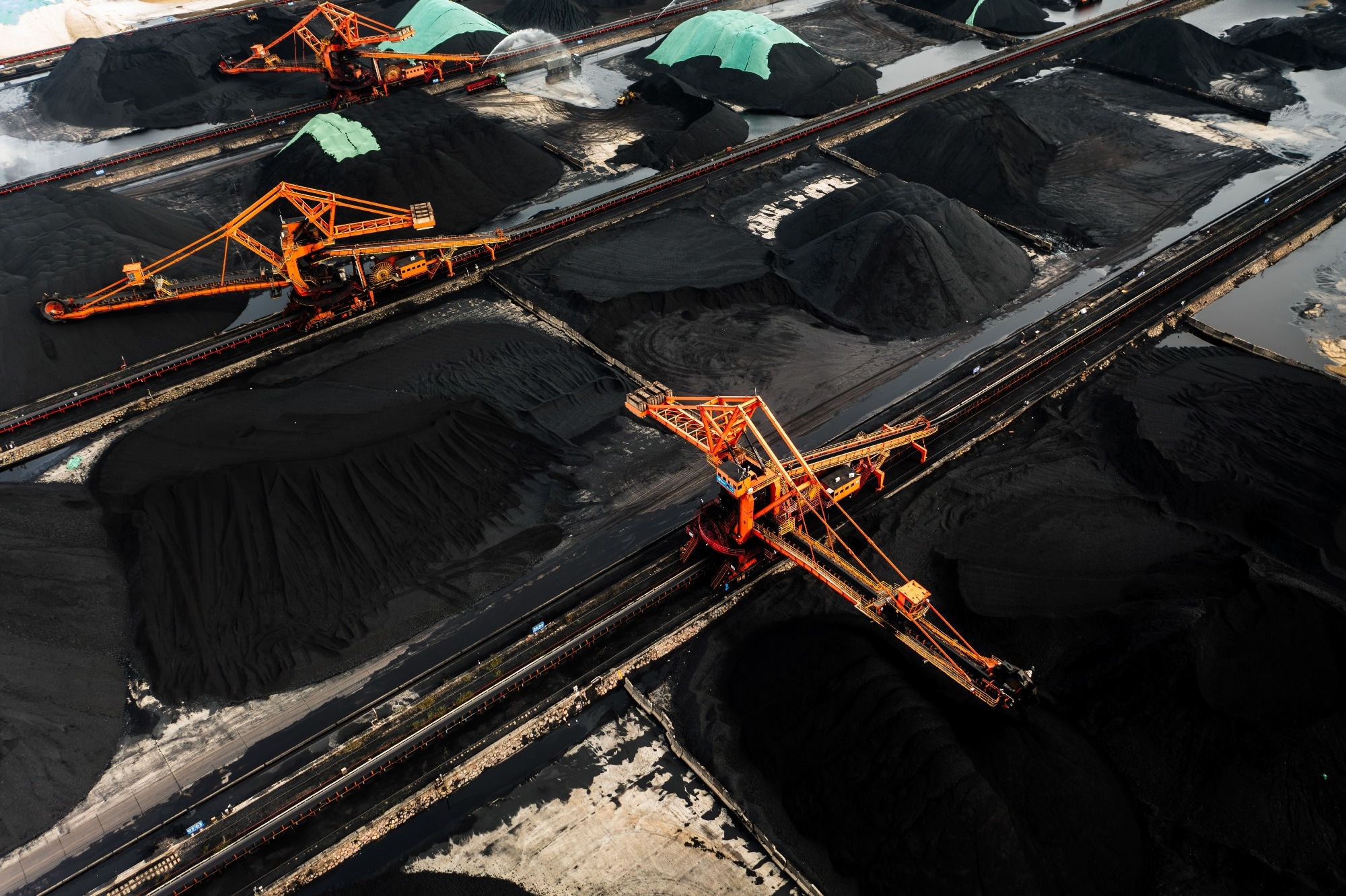
Image Credit: Alex Tao Wang/Shutterstock.com
Researchers evaluated the environmental impact of green mining policies implemented over the past 10 years across 14 major coal production bases - regions central to coal output, industrial clustering, and resource utilization. Together, these bases account for 96.62 % of China’s raw coal production, making them a critical test case for whether policy intervention can meaningfully curb emissions in a coal-dependent economy.
Why Green Mining Matters in a Coal-Dominated Energy System
Global warming continues to demand urgent action on energy extraction and consumption, both of which remain leading contributors to anthropogenic climate change. In 2020 alone, global production of mineral fuels, metal ores, and industrial minerals reached 17.3 billion tons. Coal remains a foundational energy source worldwide, with coal-related CO2 emissions reaching a record 15.3 gigatons in 2021.
Despite international efforts to phase down fossil fuels, coal mining and consumption are expected to persist in the near term. China plays an especially significant role in this landscape. In 2023, it accounted for approximately 51.8 % of global coal production, with raw coal output reaching 4.71 billion tons. At the same time, China’s coal mining sector faces mounting challenges, including high energy consumption, severe pollution, and elevated safety risks.
Green mining policies are a key strategy for aligning coal production with the country’s “dual carbon” goals and broader ambitions for high-quality development. These policies promote ecologically sustainable mining environments, scientific extraction methods, improved resource efficiency, digital management systems, pollution prevention, and ecological restoration.
Want to save for later? Click here.
How Researchers Measured Policy Impact on Carbon Emissions
To examine the relationship between green mining policy intensity and carbon emissions from raw coal production, the research team constructed a comprehensive dataset spanning 2004 to 2021.
They first gathered city-level raw coal production data and corresponding carbon emission factors for areas associated with green mines. These emissions were then aggregated annually to calculate total carbon emissions for each of the 14 coal bases.
Next, the researchers collected green mining-related policies from the PKULAW database at national, provincial, and municipal levels. Using a text-based policy analysis method, they quantified policy intensity for each coal base on an annual basis. Policy objectives were consolidated into three primary categories: mineral resource exploitation and utilization, mine pollution prevention and ecological restoration, and enterprise management alongside community harmony.
Policy instruments were further classified into command-and-control measures, market-based mechanisms, and composite tools that combine multiple approaches.
To evaluate the effects of policy implementation, the team employed an Interrupted Time Series Analysis (ITSA) model. The year 2011 - when the term “green mining” first appeared in national-level policy titles - was treated as the intervention point. The model captured both the immediate effect of policy introduction and the sustained trend effect over time, as well as the influence of policy intensity.
Sustained Emissions Reductions, Limited Short-Term Impact
The findings reveal a clear shift following the introduction of national green mining initiatives. Policy intensity increased more than tenfold, coinciding with a substantial slowdown - and in some cases a reversal - of carbon emissions growth from raw coal production.
Before 2011, baseline emissions were high and trending upward, reflecting expanding coal output. After policy implementation, however, the long-term trend effect was consistently negative across all coal bases. This indicates a cumulative, time-dependent suppression of carbon emissions, suggesting that the policies’ impact strengthened over time rather than fading.
By contrast, the immediate short-term effect was mixed or statistically insignificant in most regions. This pattern points to delayed responsiveness, likely due to transition periods, infrastructure adjustments, and the time required for technological upgrades to take effect.
Overall, the study estimates that green mining policies reduced total annual carbon emissions by 43.59 million tons across the 14 coal bases.
Regional Differences and the Role of Policy Design
The effectiveness of green mining policies varied across regions. The long-term carbon-reduction effect was especially pronounced in central and eastern coal-producing regions. In contrast, some areas - such as MD in Northeast China and LX in the eastern region - showed weaker immediate responses. These outcomes were partly attributed to earlier resource consolidation efforts or conflicting production expansion goals that may have diluted short-term policy effects.
The analysis also highlights the primary pathway for emissions reduction: conservation and efficient resource utilization. This has largely been achieved through capacity structure optimization, including the phased closure of inefficient mines, and through technological upgrades that enhance energy efficiency.
When examining policy instruments, composite measures dominated both in number and intensity, accounting for 54.74 % and 51.85 % respectively. Command-and-control instruments ranked second, underscoring the continued importance of government mandates in driving emissions reduction within China’s coal sector. Market-based mechanisms, by comparison, remain underutilized.
Another notable finding is the prevalence of policies lacking specific quantitative targets. This suggests room for improvement in policy design, particularly in areas such as carbon capture, utilization, and storage, as well as ecological restoration benchmarks.
What This Means for Coal-Dependent Economies
This study provides robust empirical evidence that China’s green mining policies have made a measurable contribution to reducing carbon emissions from raw coal production in the country’s most important coal bases. By emphasizing technological upgrading, resource efficiency, and ecological restoration, policymakers have steered the sector toward a lower-carbon trajectory - without immediately dismantling its central role in the energy system.
The results also underscore an important lesson: policy effectiveness depends not just on regulatory intent, but on institutional coordination, implementation capacity, and the alignment of environmental and industrial objectives. For other coal-dependent economies seeking to balance resource utilization with climate commitments, China’s experience offers a detailed case study in how sustained, government-led policy frameworks can gradually bend the emissions curve.
As coal remains part of the global energy mix, the question is no longer whether change is needed, but how quickly and effectively it can be implemented. Future research could explore how market-based instruments might complement command-driven approaches, or how carbon capture and storage policies can be integrated into broader green mining strategies to accelerate emissions reductions even further.
Source:
Mu J., Liu B., et al. (2026). Green mining policies reduce carbon emissions in Chinese coal production bases. Communications Earth & Environment. DOI: 10.1038/s43247-026-03223-6, https://www.nature.com/articles/s43247-026-03223-6