By simulating underground stress across multiple coal seams, researchers have uncovered modeling strategies that could help engineers better predict and prevent mining hazards.
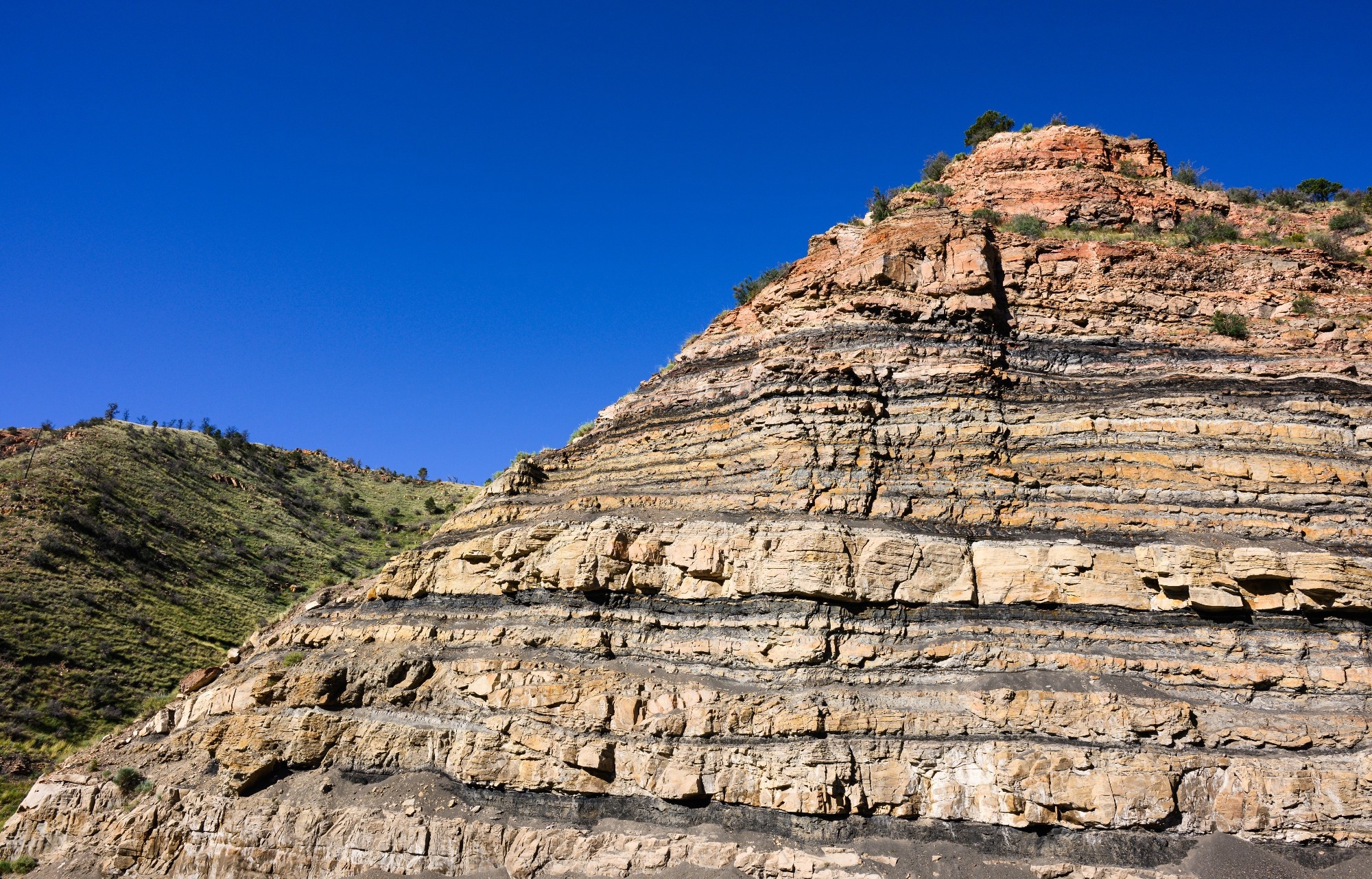
Image Credit: Ian Dewar Photography/Shutterstock.com
Using advanced numerical modeling techniques, researchers analyzed how model dimensions and characteristics of mined-out areas affected stress concentration and redistribution during coal extraction. Their findings revealed that both model size and selected constitutive models significantly influenced stress behavior, providing critical insights for improving operational safety and efficiency in multi-seam mining.
The Role of Numerical Modeling in Mining Safety
Multi-coal seam mining involves extracting several adjacent coal seams, creating complex stress interactions between layers and surrounding rock masses. Traditional mining methods often struggle to manage these stress redistributions, particularly in the presence of goafs, mined-out areas that significantly alter load transfer patterns.
Numerical modeling has become essential for analyzing these conditions. Software such as FLAC3D (Fast Lagrangian Analysis of Continua in 3 Dimensions) enables engineers to simulate geological behavior, evaluate stress distribution, and assess rock mass stability during resource extraction. This capability is especially crucial in multi-seam mining, where interlayer interactions can lead to unexpected stress concentrations.
The study examined different approaches for representing goaf areas, including the Null model and the Double-Yield (D-Y) model. The Null model assumes no material properties in mined-out zones, while the D-Y model accounts for yield strength and plastic deformation of backfill materials. Therefore, accurate selection of these models is important for reliably predicting stress redistribution and ensuring operational stability.
Methodological: The Kailuan Mining Area Study
Researchers developed two numerical models based on geological conditions from the Kailuan mining area in China, which contains five extractable coal seams. They constructed a thin model (20 m × 600 m × 214 m) and a large model (600 m × 600 m × 214 m) to precisely evaluate the influence of model size on stress distribution.
Using FLAC3D, the study simulated multiple mining scenarios, including single panel extraction, downward mining, and same-seam mining under goaf conditions. Key parameters examined included model thickness, roof caving angle, and the representation of goaf behavior through the Null and D-Y constitutive models. The Null model assumed no material properties in mined-out areas, while the D-Y model accounted for elastic and plastic deformation of backfill materials. By comparing stress concentrations near goaf edges across different configurations, researchers quantified how model size and constitutive selection affected stress redistribution during sequential coal seam extraction. This approach enabled the identification of more reliable modeling strategies for multi-coal seam mining.
Key Findings on Stress Redistribution Patterns
The findings emphasized that smaller model thicknesses amplified stress concentration near goaf edges mainly due to boundary effects. However, this influence decreased when more than three seams were extracted. While model size significantly affected the intensity of stress concentration, it had little impact on the actual location of stress peaks.
In contrast, the selection of the goaf constitutive model strongly influenced peak location; the D-Y model provided a more realistic simulation of stress transfer through compacted goaf zones in comparison to the Null model. Additionally, increasing the caving angle in the D-Y model further promoted upward migration of stress concentrations toward overlying strata.
Practical Applications in Mining Engineering
This research has significant implications for multi-coal seam mining operations. By improving numerical modeling strategies, it enhanced the ability to predict stress redistribution, which is critical for safe and efficient resource extraction.
Understanding model size effects and goaf parameters supports more reliable support system design, optimized mining sequences, and improved roadway stability. The results also highlight the significance of selecting suitable goaf constitutive models based on geological conditions. The D-Y model provided a more accurate simulation of stress transfer and recovery than the Null model, enabling improved prediction of stress concentrations.
Click here to download a free PDF copy of this page
Future Directions on Mining Safety and Efficiency
The study clarified the mechanisms governing stress distribution in multi-coal seam mining and highlighted the importance of accurate numerical modeling. It showed that model size primarily influences stress magnitude rather than peak location, while goaf representation plays a key role in determining stress redistribution patterns.
The findings provide practical guidance for improving safety and operational efficiency in multi-seam mining. Future work should focus on incorporating dynamic factors, such as seismic activity and mining-induced vibrations, to further enhance predictive accuracy. Overall, this research sets a strong foundation for refining modeling strategies and supporting safer, more sustainable mining practices in complex geological environments.
Journal Reference
Wang, N., et al. (2026). Mechanisms of stress distribution influenced by numerical model size and goaf parameters in multi-coal seam mining. Sci Rep. DOI: 10.1038/s41598-026-42013-0, https://www.nature.com/articles/s41598-026-42013-0
Disclaimer: The views expressed here are those of the author expressed in their private capacity and do not necessarily represent the views of AZoM.com Limited T/A AZoNetwork the owner and operator of this website. This disclaimer forms part of the Terms and conditions of use of this website.