In a recent article published in the journal Scientific Reports, researchers focused on large and major earthquakes (moment magnitude, Mw, greater than 6.8) in various subduction settings, analyzing why some generate thousands of aftershocks while others produce few or none.
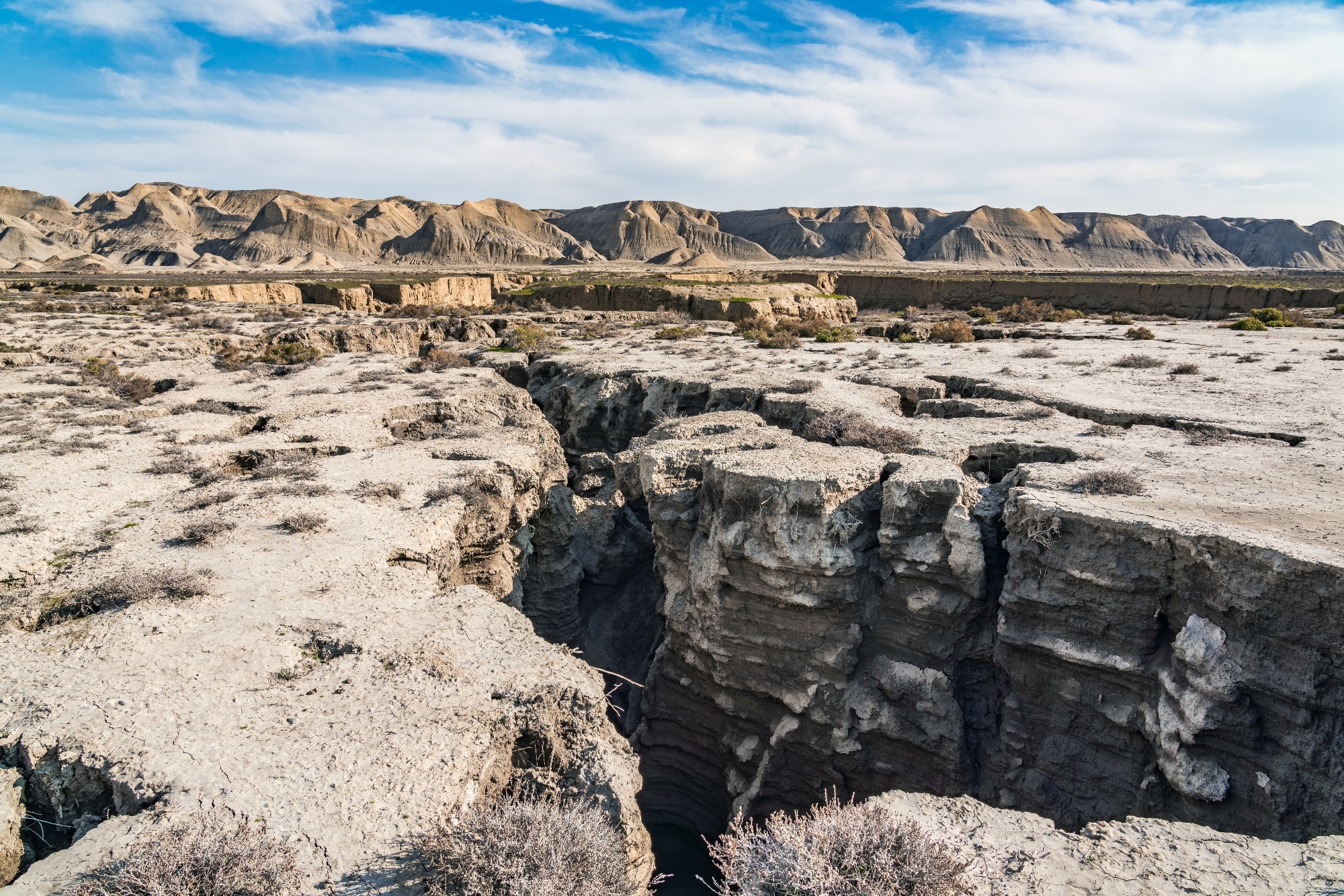
Image Credit: Vastram/Shutterstock.com
Background
Subduction zones involve one tectonic plate descending beneath another, carrying hydrated oceanic crust and mantle rich in water-bearing minerals such as serpentinized peridotite. These hydrous minerals are the product of prolonged processes, including seawater infiltration and metamorphic reactions during subduction. Their decomposition releases fluids critical to fault mechanics and seismicity. Prior research identifies that steeply dipping slabs typically preserve continuous hydrated shear zones along the plate interface, providing a reservoir of hydrous minerals.
Fluid pressure variations and permeability within these zones significantly affect seismic behavior; fluids reduce the effective normal stress, facilitating fault slip and aftershock propagation. Moreover, previous petrological and geodynamic models suggest that slab dip influences the stability and spatial distribution of hydrous mineralogy, linking slab geometry with seismic activity patterns. However, the variability in aftershock productivity, even among earthquakes of similar size, remains poorly understood.
The Study
The authors compiled global seismic data for large and major earthquakes (Mw > 6.8) occurring in subduction zones, specifically focusing on event pairs with similar magnitudes but contrasting aftershock productivity. These events were selected near transitions between steep and flat slab geometries to minimize confounding variables such as tectonic setting, convergence rate, and lithospheric age. Aftershock counts were collected from international seismic catalogs, focusing on aftershocks with magnitudes greater than 4 within 3 weeks to 3 months following mainshocks.
They utilized slab depth and geometry models (Slab2.0) to determine local slab dip angles and to establish the spatial relation of rupture planes to hydrated slab interfaces. Focal mechanisms of the mainshocks were analyzed to identify fault types and rupture orientations, whether parallel or oblique to the hydrated mineral layers. Heat maps were generated to visualize aftershock spatial densities. Petrological data and pressure-temperature stability fields of hydrous minerals like serpentine and chlorite were incorporated to understand mineral dehydration potential during coseismic slip. The authors normalized aftershock productivity metrics to remove the magnitude effect and highlight systematic differences related to slab dip and rupture geometry.
Results and Discussion
The analysis reveals a clear pattern where earthquakes in steeply dipping subduction zones rupture along interfaces rich in hydrated minerals and generate abundant aftershocks - often thousands above Mw 4 in the first three months. For instance, a Mw 6.9 earthquake in southern Chile with a shallow dip thrust fault produced over a thousand aftershocks in three months. Conversely, earthquakes of similar magnitude but occurring in flat-slab regions, where the slab dip is low and thermal conditions reduce hydration continuity, exhibited very limited aftershock sequences. These earthquakes often displayed rupture planes oriented obliquely to the slab interface, thereby limiting their access to voluminous hydrous mineral deposits. For example, a Mw 6.8 thrust event in a flat-slab area in Chile generated just seven aftershocks in the same time frame.
Statistical comparisons showed a logarithmic correlation between aftershock productivity and slab dip angle. Steeper slabs, maintaining cooler temperatures, stabilize more hydrous minerals such as serpentine, chlorite, and smectite, which are capable of releasing high volumes of fluid upon frictional heating. This devolatilization process provides a sustained source of pressurized fluids that support prolonged aftershock sequences. In contrast, flat-slab segments exhibit lower hydration and a more discontinuous mineralogical distribution, resulting in smaller fluid volumes during rupture and, correspondingly, subdued aftershock activity.
The rupture geometry is equally critical. Faults oriented parallel to the hydrated slab interface penetrate a continuous hydrous mineral network and promote extensive fluid release. Events with strike-slip, normal, or reverse faults that intersect the interface at high angles tend to rupture intraslab regions, accessing less hydrated rock and thereby yielding fewer aftershocks. This distinction aligns with observed focal mechanisms and aftershock distributions.
From a mineralogical viewpoint, serpentinized mantle peridotite stands out as a major fluid source due to its high bound water content (3.3 to 6.5 weight percent in steep slabs versus 0.5 to 3.3 weight percent in flat slabs). Thermal models show that frictional heating during rapid coseismic slip can induce dehydration reactions in these hydrous minerals, releasing fluids that elevate pore pressures.
Conclusion
This study offers a physically grounded explanation linking tectonic geometry, mineralogy, and aftershock behavior, suggesting that coseismic thermal decomposition of hydrous minerals is a key driver of prolonged aftershock sequences. It underscores the importance of mineralogical characteristics - especially hydration state and water content - in understanding seismic hazards related to aftershock generation. Future research is encouraged to model thermal structures of slabs and mineral stability fields quantitatively to refine predictions of fluid release and aftershock occurrence.
Journal Reference
Gunatilake T., Gerya T., et al. (2026). Rupture access to hydrous minerals controls aftershocks in subduction zones. Scientific Reports. DOI: 10.1038/s41598-026-38159-6, https://www.nature.com/articles/s41598-026-38159-6