Chinese Firms Tighten Their Grip on Global Supply
Argentina and the DLE Inflection Point
A More Complex Intermediates Market Takes Shape
Demand Growth Moderates, but Energy Storage Punches Above Its Weight
How Long Can the Price Rally Last?
Conclusion
References and Further Reading
The lithium market is at a crossroads. After prices hit their lowest point since early 2021 in mid-2025, a recovery has taken hold - yet the structural forces driving both supply and demand are growing more complex by the month. As of early 2026, battery-grade lithium carbonate has risen by more than 125 % from its June 2025 trough, though analysts remain divided on whether the fundamentals justify sustained higher prices or whether speculative activity is doing much of the heavy lifting.1 This article examines five themes that will shape the lithium industry through 2026 and beyond, drawing on the Wood Mackenzie January 2026 outlook alongside recent market analysis.
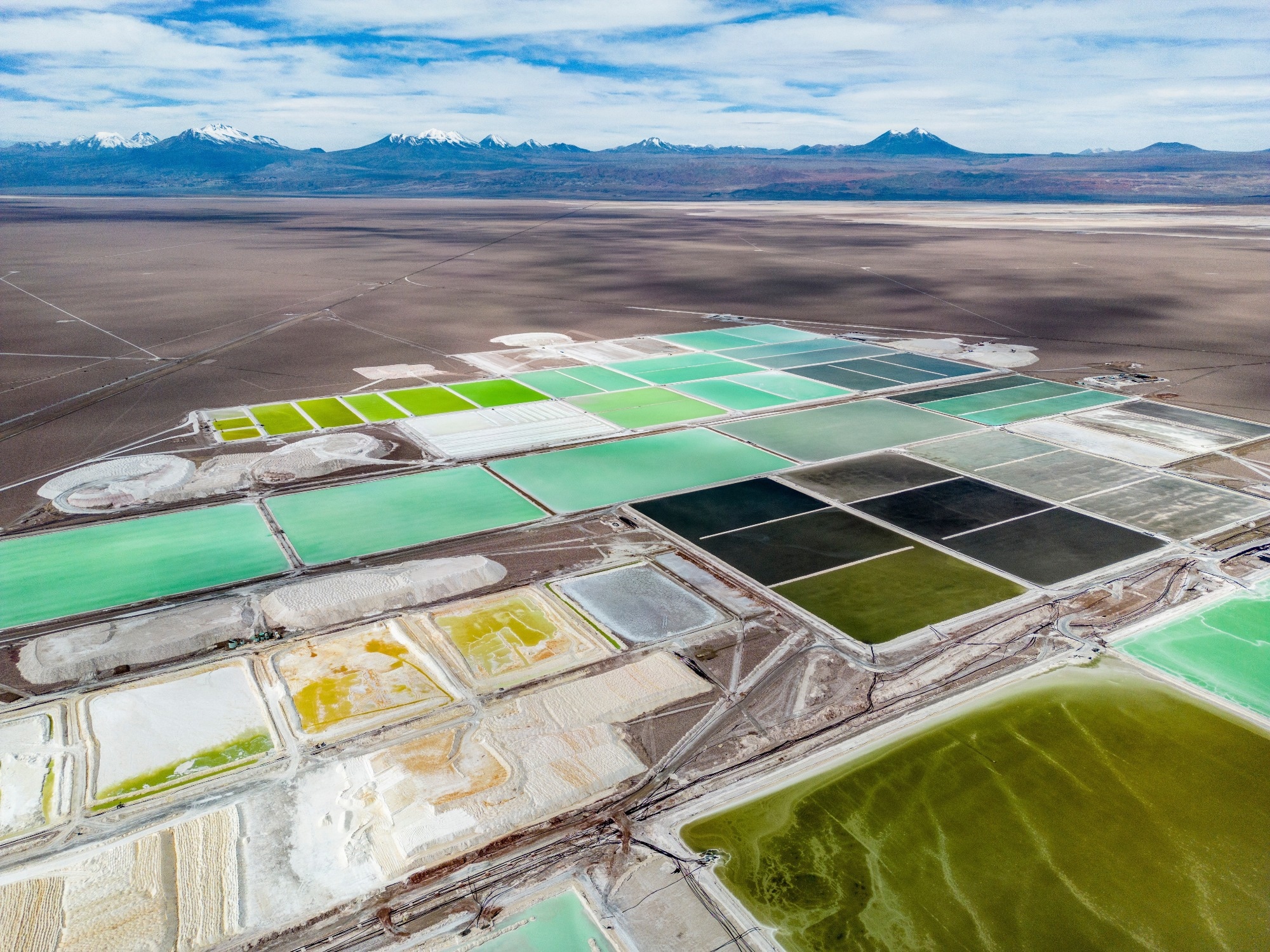
Image Credit: Freedom_wanted/Shutterstock.com
Chinese Firms Tighten Their Grip on Global Supply
China's position in the lithium supply chain is expanding. By 2027, Chinese entities are forecast to control around 50 % of total global lithium production, up from approximately 35 % five years ago, including domestic output and overseas projects.2 The remaining 50 % is largely composed of spodumene concentrate, a raw form of lithium that must be refined before it can be used in batteries, and the refining infrastructure to do that sits overwhelmingly in China.
One analysis by Wood Mackenzie estimates that Chinese domestic plants will account for 81 % of global spodumene conversion capacity, effectively giving Beijing a second chokehold beyond the mine gate.3
The geographic footprint of Chinese investment is telling. In Zimbabwe, Chinese capital has driven lithium output from under 10 kt LCE per year before 2023 to an expected 150 kt LCE in 2025, roughly a third of Australia's total output, in just a few years.2 Ganfeng Lithium has backed the Goulamina project in Mali, and Zijin is constructing the Manono Northeast mine in the DRC. These are large strategic assets being brought into production at pace.
A February 2026 report from the Council on Foreign Relations noted that China has used its position in supply chains to restrict access to rare earth elements, following expanded export controls in late 2025.4 The United States has taken steps to support domestic production, including investing in companies such as Lithium Americas and USA Rare Earth. However, many analysts view the gap as structural and not easily addressed in the short term. As one Kleinman Center analysis observed, China’s early lead - built over decades of coordinated industrial development - has enabled it to establish a strong position in the market ahead of potential competitors.5
Argentina and the DLE Inflection Point
Among the five major lithium-producing nations, Argentina is projected to record the highest percentage supply growth in 2026, exceeding 60 %, driven by projects deploying direct lithium extraction (DLE) technology.2 DLE, which pulls lithium directly from brine without the lengthy evaporation pond process, has long been discussed as a potential game-changer, but 2026 is the year several operations must prove it works at a commercial scale.
Rio Tinto's Rincon project (valued at US$2.5 billion) has begun construction, while its Fenix expansion is targeting first production this year using selective adsorption DLE. Eramet's Centenario and POSCO's Sal de Oro projects are ramping up after encountering execution challenges in late 2025. The execution risk around DLE, the gap between pilot-scale success and full commercial operation, remains the defining variable for investors and project planners alike.2 A hybrid approach, combining DLE with conventional solar evaporation, is gaining traction as a risk mitigation strategy. Ganfeng and Lithium Argentina are due to publish a technical report in 2026 on their Pozuelos Pastos Grandes project outlining the proposed process design.
Want to save this article for later? Click here.
The stakes extend beyond Argentina. DLE is the only viable method for extracting lithium from oilfield and geothermal brines, and producers in North America and Europe are watching Argentina's results closely. Chevron and ExxonMobil are already acquiring acreage in lithium-bearing formations in the US.6
The lithium supply chain has historically operated in two segments: miners producing mineral concentrations, and refiners converting those concentrates into battery-grade chemicals. That division is starting to blur. In 2026, a cluster of producers is introducing intermediate products, lithium chloride, and lithium sulphate, that sit between raw mineral and finished chemical output.
Galan Lithium's Hombre Muerto West project in Argentina is set to commence lithium chloride production this year, citing downstream flexibility and lower operating costs compared to full chemical refining at source.
Ganfeng's Mariana brine asset, also in Argentina, began producing lithium chloride in early 2025, shipping it to China, where Ganfeng's established refining infrastructure can convert it into carbonate or hydroxide, depending on market conditions.2 Zimbabwe has mandated that producers add midstream value domestically rather than export raw concentrates; Prospect Lithium Zimbabwe is building a 50 kt/year lithium sulphate plant at its Arcadia mine in direct response to this export ban.
The net effect is a more fragmented, but potentially more resilient, global supply chain - in theory. In practice, much of the investment driving this intermediates layer is Chinese in origin, raising the possibility that diversification in product form does not translate to diversification in control.
Demand Growth Moderates, but Energy Storage Punches Above Its Weight
After 26 % demand growth in 2025, the lithium market is expected to see a more moderate pace in 2026.2 The automotive sector will remain the dominant end-use, accounting for around 60 % of total lithium demand, but the share held by energy storage systems (ESS) has climbed from 9 % three years ago to an expected 18 % in 2026.2
The 2025 demand surge had several specific drivers that are unlikely to recur: front-loaded ESS procurement tied to China's "531" solar installation policy, US developers rushing to stockpile Chinese cells ahead of tighter FEOC restrictions, and the continued effect of EV subsidies in Europe and the US. As those tailwinds fade, Wood Mackenzie anticipates demand growth settling into a more sustainable trajectory, a normalization, rather than a collapse.2 S&P Global's December 2025 assessment put forecast lithium chemicals consumption growth at 13.5 % year-on-year for 2026.7
The ESS story, however, warrants particular attention. Another 2026 analysis noted that energy storage demand in the battery sector could account for 31 % of overall lithium consumption by end-2026, up from 23 % the previous year, according to Guotai Junan projections.8 Google alone uses over 100 million lithium-ion cells globally, and is adding an additional layer of structural demand that did not exist five years ago.9
How Long Can the Price Rally Last?
Lithium carbonate prices bottomed out at around US$7,700/t in June 2025, a 20 % drop from the start of that year. By the end of December 2025, they had recovered by approximately 50 %, and the rally continued into January 2026, with GFEX futures surging roughly 20 % in the first few trading days of the year.2 By late February 2026, the lithium spot price had risen 125 % over the preceding 12 months.1
The fundamental picture, however, does not obviously support that trajectory. Wood Mackenzie forecasts a surplus for lithium chemicals overall in 2026, while S&P Global put the surplus at approximately 109,000 mt LCE - narrower than 2025's 141,000 mt, but a surplus, nonetheless.7 Morgan Stanley projects an 80,000 mt LCE deficit, while UBS estimates a 22,000 mt deficit, suggesting significant uncertainty among analysts.8
The spodumene segment presents a different picture: a genuine tightness is expected in 2026, driven by Australian production curtailments and permit cancellations at Jiangxi mines in China.7 CATL's suspension of operations at its Jianxiawo mine acted as a catalyst for the H2 2025 recovery, and market psychology remains sensitive to supply-side signals from China's mining regions.
The honest answer to whether the rally continues is: it depends on whether markets are trading physical fundamentals or macro sentiment. Lithium's financialization, the growing influence of futures activity, speculative positioning, and commodity macro trades, means prices can diverge from supply-demand balances for longer than might be expected. As Sprott's February 2026 analysis put it, the market is no longer trading on a simple surplus/deficit narrative but on perceived supply reliability and near-term demand momentum.
Conclusion
The lithium market in 2026 is neither the straightforward recovery story some anticipate, nor the prolonged oversupply scenario others have predicted. Instead, it reflects a more complex transition across several dimensions - technological, financial, and structural.
Key developments include shifts in supply chain dynamics, the commercial scaling of DLE in Argentina, the emergence of intermediates trade, evolving patterns of demand growth, and a pricing environment influenced by fundamentals and market sentiment. These factors do not point to a single clear outcome, but together they shape the landscape that producers, investors, and battery manufacturers must navigate this year.
References and Further Reading
- Sprott Asset Management. (2026). Lithium enters a new era of strategic demand and policy support. https://sprott.com/insights/lithium-enters-a-new-era-of-strategic-demand-and-policy-support/
- Wood Mackenzie. (2026). Lithium: 5 things to look for in 2026 [Internal client report].
- Wood Mackenzie. (2025). Easing global reliance on Chinese lithium supplies. https://www.woodmac.com/news/opinion/easing-global-reliance-on-chinese-lithium-supplies/
- Crebo-Rediker, H., & Khan, M. (2026). Leapfrogging China’s critical minerals dominance. Council on Foreign Relations. https://www.cfr.org/reports/leapfrogging-chinas-critical-minerals-dominance
- Kleinman Center for Energy Policy. (2025). Battling for batteries: Li-ion policy and supply chain dynamics in the U.S. and China. University of Pennsylvania. https://kleinmanenergy.upenn.edu/research/publications/battling-for-batteries-li-ion-policy-and-supply-chain-dynamics-in-the-u-s-and-china/
- Johnson, C. A. (2026). The US is unlikely to curtail China’s critical minerals dominance. Asia Times. https://asiatimes.com/2026/03/the-us-is-unlikely-to-curtail-chinas-critical-minerals-dominance/
- S&P Global. (2026, January 9). Commodities 2026: Lithium carbonate surplus to narrow; energy storage to drive growth. https://www.spglobal.com/energy/en/news-research/latest-news/metals/010926-commodities-2026-lithium-carbonate-surplus-to-narrow-energy-storage-to-drive-growth
- Mining.com. (2026, January 4). Energy storage boom strengthens demand outlook for beaten-down lithium. https://www.mining.com/web/energy-storage-boom-strengthens-demand-outlook-for-beaten-down-lithium/
- Sprott Asset Management. (2025). Lithium gains momentum in 2025. https://sprott.com/insights/lithium-gains-momentum-in-2025/
Disclaimer: The views expressed here are those of the author expressed in their private capacity and do not necessarily represent the views of AZoM.com Limited T/A AZoNetwork the owner and operator of this website. This disclaimer forms part of the Terms and conditions of use of this website.