The rapid growth of urban development and infrastructure has made sand one of the most demanded natural resources. Currently, sand is the world's most exploited resource after air and water, with an annual usage of 50 billion tonnes. Moreover, the usage of sand in buildings alone will rise by 45% by 2060.1-4
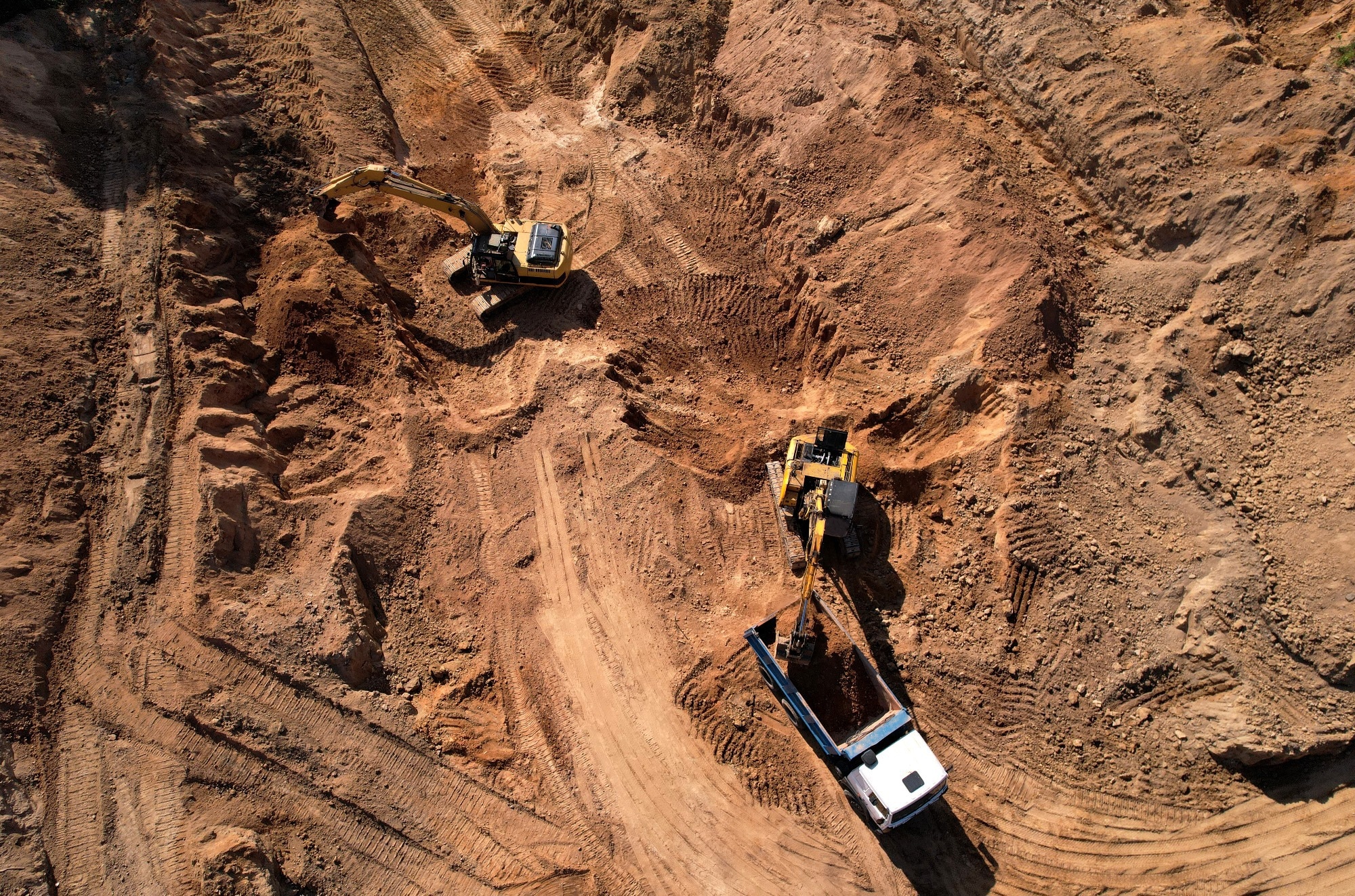 Image Credit: Maksim Safaniuk/Shutterstock
Sand provides critical habitats for numerous species, maintaining ecological balance and supporting biodiversity. It is essential for nature, water, and food security. Yet, illegal and excessive sand mining has severely damaged rivers, coastlines, and wildlife habitats, creating serious environmental concerns. To reduce these harmful impacts, sustainable solutions are required, including alternative construction materials and stringent mining regulations.1,2,4
Environmental Impacts of Sand Mining
Rising marine sand mining is affecting the seabed fauna and flora, resulting in a net decline in faunal biomass owing to dredging and the extraction of aggregates from the bottom of the sea. Continuous sand mining also leads to the degradation of rivers due to the depletion of natural sand.1,4
Additionally, excessive mining causes erosion of riverbanks and deepening of rivers with the enlargement of river mouths and coastal inlets, leading to the destruction of aquatic life. Bed degradation results in changes to riverbed morphology, affecting aquatic habitats.1,4
Moreover, excessive pumping of groundwater during mining depletes the groundwater level, causing subsidence and ground fissures in adjacent areas. This also leads to a scarcity of drinking and irrigation water.1
Guidelines for Sustainable Sand Mining
The guidelines for sustainable mining in countries like India prioritize the preservation of natural resources for future and present generations. Survey reports are important for the management of river resources.1
In the guidelines, these processes include identifying areas of deposition where mining is permitted, while banning areas close to infrastructure and installations, and areas prone to erosion.1
Similarly, areas of sand deposition and their quantities are identified using satellite images. Correspondingly, the annual replenishment rate and the replenishment time after mining are determined.1
Steps for protecting the environment and ecology are established to identify potential approaches to systematic, scientific mining. A benchmark concerning the mean sea level is determined for a crucial in-mining channel reach, and no mining operation is permitted below the benchmark level.1
Permanent gauging facilities are established to monitor excessive operations at mining sites. In a particular area, the production of aggregate is a function of the size of the population, the economy of the area, and the availability of natural resources.1
Best Mining Practices for Sustainability
Globally, different countries have implemented several steps to ensure sustainability in river sand mining. For instance, in the Telangana state of India, sand mining or transportation is not allowed in areas where groundwater is overexploited or affected; near drainage structures, dams, or bridges; and in streams or rivers where the sand layer is less than 2.00 m thick.2
Mining is also not permitted near river banks up to 1/5th the width of the streambed or 15 m from the bank. Additionally, the state has taken several steps to curb illegal sand mining, including arresting unauthorized transportation; establishing check posts at high-risk locations; forming mobile squads with government officials for every district to prevent illegal sand mining; and imposing higher fines for repeated offenses.2
Similarly, in the United Kingdom (UK), sea dredging of aggregates is more relevant, as river dredging is permitted only for flood control purposes. Annually, 14 million tonnes of aggregates are mined for the UK market.2
The effects of sea dredging have been explored extensively based on potential economic, social, biological, and physical impacts. Based on these studies, the British Marine Aggregate Producers Association Good Practice Guidance was developed in 2017, which is applied rigorously and reported transparently.2
In Alberta, Canada, gravel and sand mining predominates, with 40% coming from rivers. Currently, mining in rivers requires extensive hydrogeological and hydraulic studies, with no extraction permitted in the main river channel. A detailed Code of Practice is being developed with the industry.2
Alternative Solutions
Excessive sand mining causes irreversible ecological damage by weakening ecosystems and reducing their natural resilience. Current extraction rates are environmentally unsustainable, and thus, several technological, material, and policy-based alternatives to river sand are being developed and promoted.2
These alternatives are grouped into three approaches, including promoting alternative construction materials, adopting a circular economy to reduce dependence on mined natural resources, and strengthening administrative and legal frameworks to minimize environmental impacts.2
A key approach is the use of sand from non-river sources, such as desilted dams and reservoirs, off-channel dry mining, and floodplain deposits, rather than in-stream or in-channel mining, which reduces direct river disturbance.2
Saving this for later? Download a PDF here.
Reductions in sand use could be achieved by incorporating energy-efficient biomass-based technologies into water harvesting systems, buildings, retaining walls, and roads. This can potentially reduce sand consumption by up to 30%.2
Additional alternatives include waste plastics for partial sand replacement in concrete and mortar; aggregates derived from end-of-life tires; and the use of fly ash concrete, fly ash blocks, and gypsum blocks, collectively referred to as “green concrete”.2
Role of Manufactured Sand
In concrete or mortar, sand could be partially replaced with recycled or reused waste from construction or demolition sites as manufactured sand. Additionally, industrial by-products like quarry dust, stainless steel slag, sheet glass powder, foundry sand, copper smelting slag, and granulated blast furnace slag could be converted to manufactured sand.1,2
Manufactured sand is already used in countries like Norway, South Africa, India, and Australia. In the United States, rock resources like limestone and granite account for about 86% of production, with other sources including basalt, dolomite, sandstone, and quartzite contributing to manufactured sand production.1,2
Importance of Sustainable Sand Mining
Sand mining can become more sustainable through strict regulations, scientific monitoring, and designated mining zones that protect sensitive river and coastal ecosystems while allowing natural replenishment. Sustainable practices include banning extraction in vulnerable areas, enforcing legal controls, and using satellite surveys.
Shifting to alternative materials like manufactured sand, recycled construction waste, and industrial by-products, along with circular economy approaches, can reduce dependence on natural sand and lower environmental damage.
References and Further Reading
- Bhoopathy, V., & Subramanian, S. S. (2022). The way forward to sustain environmental quality through sustainable sand mining and the use of manufactured sand as an alternative to natural sand. Environmental Science and Pollution Research, 29(21), 30793-30801. DOI: 10.1007/s11356-022-19633-w, https://link.springer.com/article/10.1007/s11356-022-19633-w
- Bhatawdekar, R. M., Singh, T. N., Mohamad, E. T., Jha, R., Armagahni, D. J., & Hasbollah, D. Z. A. (2022). Best river sand mining practices vis-a-vis alternative sand making methods for sustainability. Risk, Reliability and Sustainable Remediation in the Field of Civil and Environmental Engineering, 285-313. DOI: 10.1016/B978-0-323-85698-0.00007-1, https://www.sciencedirect.com/science/chapter/edited-volume/abs/pii/B9780323856980000071
- Sand: Wanted dead and alive. Use it wisely, warns the UN [Online]. Available at https://www.unep.org/news-and-stories/press-release/sand-wanted-dead-and-alive-use-it-wisely-warns-un (Accessed on 14 May 2026)
- Rentier, E., & Cammeraat, L. (2022). The environmental impacts of river sand mining. Science of The Total Environment, 838, 155877. DOI: 10.1016/j.scitotenv.2022.155877, https://www.sciencedirect.com/science/article/pii/S0048969722029746
Disclaimer: The views expressed here are those of the author expressed in their private capacity and do not necessarily represent the views of AZoM.com Limited T/A AZoNetwork the owner and operator of this website. This disclaimer forms part of the Terms and conditions of use of this website.