For most people, kale belongs in a salad bowl, not a metallurgical lab. However, research suggests that certain leafy vegetables are biologically equipped to extract valuable metals from contaminated soils. This process, known as phytomining, involves special plants that absorb metals through their roots and concentrate them in their leaves, creating a harvestable bio-ore.
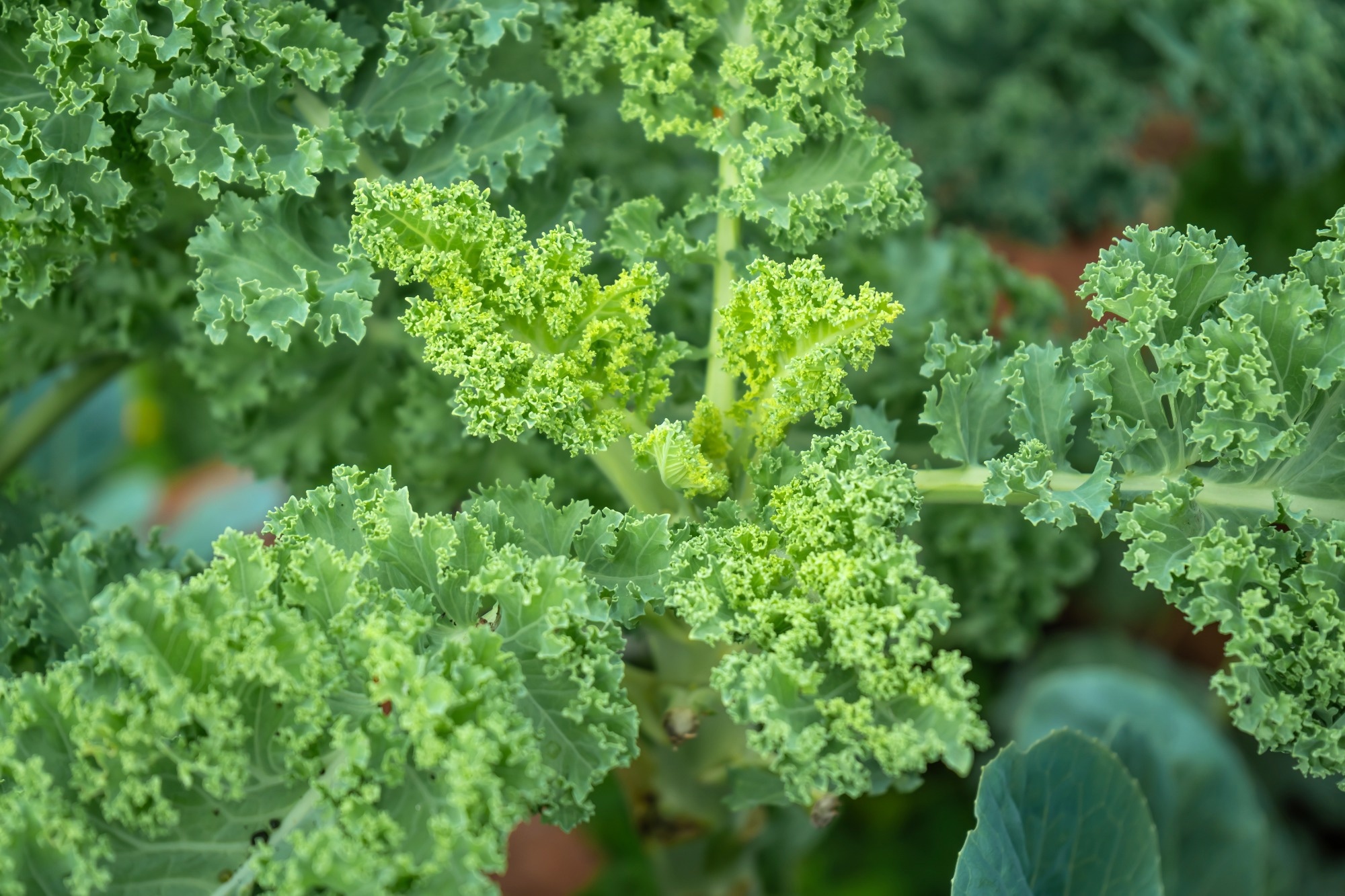 Image Credit: YuRi Photolife/Shutterstock
These plants, called hyperaccumulators, can tolerate and accumulate metals at levels far beyond what typical plants can handle. For example, certain Brassica species can absorb thallium at concentrations hundreds of times higher than the usual threshold.1,2
The Brassicaceae Advantage
The Brassicaceae family, which includes kale, cabbage, broccoli, cauliflower, mustard, and Brussels sprouts, stands out for its documented capacity to hyperaccumulate the heavy metal thallium. Researchers at the University of Queensland's Sustainable Minerals Institute confirmed that these crops accumulate thallium through mechanisms evolved, drawing the metal from polluted soil via their roots and transporting it upward into leaves.1
What makes this family particularly compelling is the combination of fast growth, wide geographic distribution, and readily available seeds. Indian mustard (Brassica juncea), among the most geographically distributed Brassicaceae species, can tolerate high thallium concentrations while offering potential for phytoextraction and bioprospecting. These practical agronomic traits make Brassica crops ideal test subjects for scaling up phytomining operations.3
Thallium and Its Industrial Value
Thallium occupies an unusual position in the periodic table of economic significance. Although extremely toxic, it commands a market price of approximately $8,800 USD/kg, driven by its use in medical isotopes, optical glass manufacturing, and superconductors. That combination of toxicity and value creates a compelling argument for plant-based extraction from contaminated land rather than leaving the metal to leach uncontrolled through soil and water.3
The scale of potential yield is quantifiable. Based on an estimated four tons of Biscutella laevigata biomass with 425 µg of thallium per gram and 50 plants per square meter, thallium yields of 1.7 kg per hectare per year would generate approximately $14,960 USD. For Iberis linifolia with 10 tons of biomass at 800 µg/g, the annual yield rises to 8 kg/hectare, valued at $70,400 USD before production and refining costs.3
Inside the Leaf: Crystals at the Nanoscale
A 2026 study published in the journal Metallomics by Corzo-Remigio et al. provided an unprecedented view of where and how thallium is stored inside kale leaves. Using simultaneous micro-X-ray fluorescence (µXRF) and micro-X-ray diffraction mapping (µXDM) at the PETRA III synchrotron facility in Germany, the researchers confirmed that thallium concentrates along the leaf margins, particularly near vascular bundles, forming dense clusters of cubic thallium chloride (TlCl) crystals approximately 5 µm in size.3
This crystallized form of thallium has direct implications for metal recovery. Thallium chloride crystals are potentially compatible with metallurgical extraction methods, and thallium can be extracted from plant biomass using carboxylic acids. The crystalline accumulation mirrors mechanisms seen in halophytes, plants that expel excess salt through leaf glands, suggesting that kale uses a similar strategy to manage toxic metal overload.3
One of the strongest arguments for plant-based metal extraction is that it simultaneously remediates degraded land and produces a recoverable resource. Conventional mining rehabilitation typically involves stripping and displacing contaminated topsoil at high financial and ecological cost. Phytomining inverts that logic by treating the contaminated site as a productive field, generating economic return while drawing down metal concentrations over successive growing seasons.2,4
Phytoextraction is followed by a series of metallurgical processes applied to the harvested plant biomass. These include hydrometallurgy, pyrolysis, and pyrometallurgy, with refining pathways already being developed for nickel bio-ores that offer a template for thallium and other metals. Experts at the Sustainable Minerals Institute stated that non-conventional mining methods, such as phytomining, will become central to securing the metals needed for medical technologies and the renewable energy transition.1,3
Enhancing What Nature Built
The natural accumulation rates of hyperaccumulator plants, while remarkable, can be further amplified through targeted interventions. Genetic engineering approaches that modulate the expression of metal transporter proteins allow plants to concentrate higher metal loads without succumbing to phytotoxicity, directly improving biomass yield and metal recovery per growing cycle.4
Soil amendments also play a role. Biochar, chelating agents, and microbial inoculants improve metal bioavailability in the rhizosphere, the zone of soil immediately surrounding the root system, making it easier for plants to absorb and translocate metals into harvestable shoot tissue. Combining selective breeding with microbial-assisted strategies provides a practical roadmap to make phytomining economically competitive with conventional extraction at sites where ore grades are otherwise too low to justify excavation.4,5
Food Safety and the Dual-Use Dilemma
The same trait that makes Brassica crops attractive as phytomining agents also raises food safety concerns that demand clear management. Kale grown in soils containing between 0.1 and 124 µg of thallium per gram showed the highest bioconcentration factor among the tested vegetables, ranking it as the highest dietary health risk to humans in contaminated regions.
Regulatory thresholds vary considerably across jurisdictions: Germany sets a maximum permissible thallium level in food at 0.5 mg/kg, while the European Food Risk Assessment body has called for broader dietary intake evaluations.3
The solution lies in deliberate land-use separation. Plants grown for phytomining on dedicated contaminated sites, not in agricultural fields, pose no food chain risk. This separation is already standard practice in nickel phytomining projects, where crops are treated as an industrial input rather than a food product. Keeping the two use cases distinct allows the technology to advance without undermining public confidence in Brassica vegetables as food.1,3
The convergence of rising critical mineral demand, post-mining land degradation, and advances in plant science has made phytomining a credible industrial strategy. The research published in Metallomics represents a pivotal step, moving the science from observational studies to mechanistic clarity. It shows precisely how thallium is stored, in what chemical form, and where in the plant it concentrates. That knowledge directly informs the downstream metallurgical processes needed to turn a kale harvest into a refined metal output.3
The path forward requires collaboration between plant biologists, geochemists, and metallurgists to develop crop-specific refining protocols and validate yields at the field scale. With thallium priced at thousands of dollars per kilogram and growing demand from the superconductor and semiconductor industries, the economic case for deploying leafy vegetables as sustainable mining tools is becoming difficult to overlook.2,3
References and Further Reading
- Leafy vegetables identified as potential metal mining tools. (2026). The University of Queensland. https://news.uq.edu.au/2026-04-leafy-vegetables-identified-potential-metal-mining-tools
- Akinbile, B. J., & Mbohwa, C. (2025). Incorporating hyperaccumulating plants in phytomining, remediation and resource recovery: recent trends in the African region – a review. RSC Sustainability. DOI:10.1039/d5su00021a. https://pubs.rsc.org/en/content/articlehtml/2025/su/d5su00021a
- Corzo-Remigio, A. et al. (2026). The nature of thallium crystals in Brassica oleracea (kale): A synchrotron multi-technique investigation. Metallomics, 18(1). DOI:10.1093/mtomcs/mfag010. https://academic.oup.com/metallomics/article/18/1/mfag010/8494855
- Dr. Raj Shah and Michael Lotwin. (2025). A Review of Recent Advances in Metal Recovery through Hyperaccumulator Phytomining. altenergymag.com. https://www.altenergymag.com/article/2025/03/a-review-of-recent-advances-in-metal-recovery-through-hyperaccumulator-phytomining/44980
- Cozma, P. et al. (2025). Phytoremediation: A sustainable and promising bio-based approach to heavy metal pollution management. Science of The Total Environment, 1001, 180458. DOI:10.1016/j.scitotenv.2025.180458. https://www.sciencedirect.com/science/article/pii/S0048969725020984
Disclaimer: The views expressed here are those of the author expressed in their private capacity and do not necessarily represent the views of AZoM.com Limited T/A AZoNetwork the owner and operator of this website. This disclaimer forms part of the Terms and conditions of use of this website.