Glycerol-stimulated microbes convert uranium into stable forms, including persistent pentavalent species. This mining approach improves long-term immobilization and offers a more resilient strategy for contaminated water remediation.
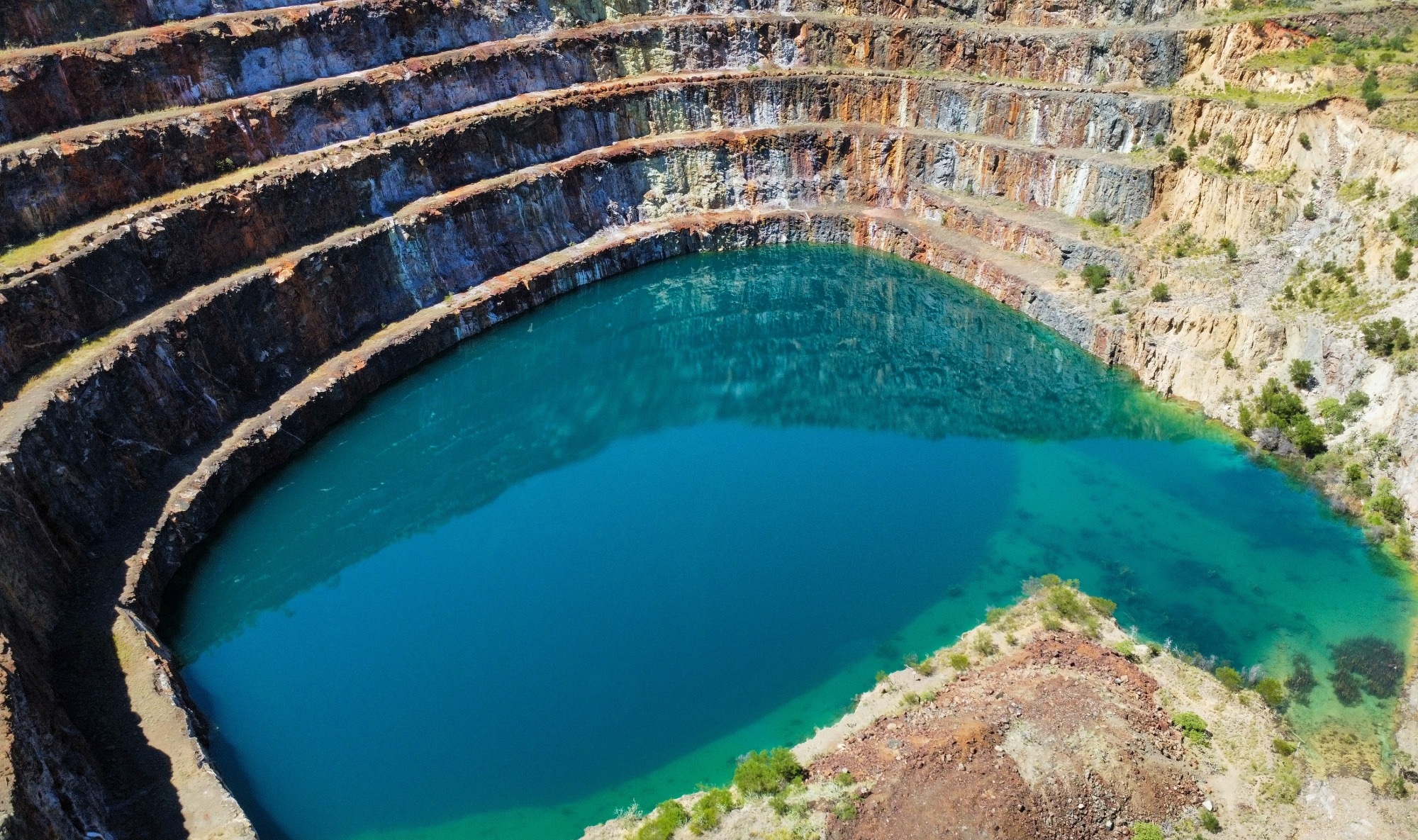 Study: Pentavalent and tetravalent uranium formation via glycerol-stimulated bacteria in mine water. Image Credit: Patsperspektive/Shutterstock
A recent study published in Nature Communications investigates how glycerol-stimulated microbial activity influences uranium transformation in contaminated mine water systems. The study combines advanced spectroscopic, microscopic, and microbiological analysis to show that microbial reduction produces both stable tetravalent uranium (U(IV)) and pentavalent uranium (U(V)).
The findings demonstrate that U(V) exists as a stable intermediate under mine-like water conditions, providing new insights into uranium immobilization processes and their significance for long-term remediation strategies.
Addressing Uranium Mobility
Uranium contamination in mine water continues to threaten ecosystems and human health in many former and active mining regions. Under oxidizing conditions, uranium mainly exists as hexavalent uranium (U(VI)), which forms highly soluble uranyl carbonate complexes in groundwater.
Researchers traditionally focused on converting U(VI) into insoluble tetravalent uranium (U(IV) which commonly precipitates as uraninite. However, uraninite can re-oxidize under changing environmental conditions, limiting the long-term stability of conventional remediation approaches.
Previous studies largely described uranium reduction as a direct transformation from U(VI) to U(IV). Researchers considered pentavalent uranium (U(V)) to be a short-lived intermediate with limited environmental relevance. Earlier experiments relied on simplified laboratory systems containing pure bacterial cultures and unrealistically high uranium concentrations.
As a result, scientists did not clearly understand whether U(V) could form and remain stable under realistic mine-water conditions containing complex microbial communities and lower uranium concentrations.
This study addresses that gap by investigating uranium reduction in glycerol-stimulated mine-water microcosms from the Schlema-Alberoda mining site in Germany. The findings demonstrate that U(V) can persist under environmentally relevant conditions and plays an important role in uranium immobilization. This improved understanding of uranium biogeochemistry provides a new direction for sustainable mine-water remediation strategies.
Integrated Experimental Design
Researchers selected glycerol as the electron donor because it is an inexpensive byproduct of biodiesel production and strongly stimulates anaerobic microbial activity. Researchers developed controlled anoxic microcosm experiments using mine water from the Schlema-Alberoda uranium mining site in Germany. They added 10 mM glycerol to untreated mine water stored in two-litre serum bottles to stimulate indigenous uranium-reducing microorganisms. The experimental setup also included untreated mine water without glycerol and sterilized mine water containing glycerol as control systems.
The team incubated all microcosms in triplicate for 130 days under oxygen-free conditions at approximately 28 °C. During incubation, the researchers continuously monitored uranium, iron, sulfate, arsenic, pH, and redox potential using inductively coupled plasma mass spectrometry and ion chromatography. They also applied thermodynamic modelling and Pourbaix diagrams to predict uranium speciation under evolving geochemical conditions.
The team characterized the uranium oxidation states and local atomic structures using advanced synchrotron-based analytical techniques. The techniques quantified U(IV), U(V), and U(VI) species and provided detailed information on uranium coordination environments and carbonate interactions. The researchers collected samples at different reduction stages corresponding to approximately 20%, 60%, and 90% decreases in dissolved uranium concentrations.
The team further analysed nanoparticle structure and elemental distribution at microbial surfaces using advanced electron microscopy techniques. These analyses identified nanoscale uraninite and FeU(V)O4 particles. The researchers also used 16S rRNA gene sequencing and meta transcriptomic analysis to identify microbial groups involved in uranium reduction and sulfate metabolism.
Microbial Control of Uranium Immobilization
Spectroscopic analysis showed that uranium reduction did not occur exclusively through the formation of U(IV). High-energy-resolution fluorescence-detected X-ray absorption near-edge structure spectroscopy (HERFD-XANES) measurements detected substantial amounts of U(V) in all analyzed precipitates.
During advanced reduction stages, nearly 70% of uranium existed as U(IV), while approximately 30% remained as U(V). The study further showed that U(V) persisted for at least 130 days under anoxic conditions and remained stable even after four weeks of oxygen exposure.
Extended X-ray absorption fine structure spectroscopy (EXAFS) analysis identified U(V) in two structurally distinct forms. The uranium-carbonate complexes contained bidentate carbonate coordination structures that stabilized U(V) under neutral-alkaline conditions.
Microscopy analysis further confirmed the coexistence of crystalline uraninite and FeU(V)O4 nanoparticles at bacterial surfaces. The size of nanoparticles was found to be between 2 and 3 nm in diameter. Crystallographic analysis identified characteristic uraninite lattice spacings together with distinct FeU(V)O4 structures.
The glycerol-amended microcosms developed strongly in reducing conditions during the 130-day incubation period. Redox potential steadily declined from highly oxidizing to reducing conditions, while dissolved uranium concentrations dropped by up to 96%.
Microbial community analysis revealed a marked enrichment of fermentative and sulfate-reducing bacteria following glycerol addition. Bacteria such as Desulfobulbus and Desulfovibrio became highly abundant under reducing conditions. Fermented microorganisms converted glycerol into compounds such as acetate and hydrogen, which stimulated uranium-reducing bacteria and supported both direct and indirect uranium-reduction processes.
Download the PDF of this page here
One of the most significant findings of the study was the environmental stability of U(V). Conventional remediation strategies often face challenges because U(IV) uraninite can re-oxidize and become mobile again under changing redox conditions. In contrast, FeU(V)O4 showed much higher resistance to oxidation. Even after oxygen exposure, U(V) remained the dominant oxidation state, highlighting its potential role in long-term uranium immobilization in contaminated mine-water systems.
Implications for Long-Term Remediation
This research establishes that uranium bioreduction in mine water involves complex pathways compared to the conventional direct conversion of U(VI) to U(IV). The study shows that glycerol-stimulated microbial activity can generate both uraninite nanoparticles and stable U(V) phases under environmentally realistic conditions.
The persistence of U(V) under both reducing and oxidizing environments demonstrates its importance in long-term uranium immobilization and highlights its role as a stable intermediate in uranium biogeochemistry.
The results show important insights into uranium remediation in mining environments, particularly in carbonate-rich mine waters where uranium mobility remains difficult to control. Stable FeU(V)O4 nanoparticles provide a more durable immobilization pathway than traditional U(IV)-based remediation strategies.
The study also shows that sulfate-reducing and fermentative microorganisms strongly influence uranium transformation and mineral formation, while glycerol acts as an effective and low-cost electron donor for stimulating these microbial processes.
Future research should investigate how factors such as pH, redox fluctuations, mineral composition, and groundwater chemistry influence the long-term stability of U(V) phases in different mining environments. Overall, the study provides a new perspective on uranium bioremediation and highlights the need for more resilient and sustainable mine-water treatment strategies.
Journal Reference
Newman-Portela, A. M., et al. (2026). Pentavalent and tetravalent uranium formation via glycerol-stimulated bacteria in mine water. Nature Communications, 17(1), 4030. DOI: 10.1038/s41467-026-72560-z, https://www.nature.com/articles/s41467-026-72560-z
Disclaimer: The views expressed here are those of the author expressed in their private capacity and do not necessarily represent the views of AZoM.com Limited T/A AZoNetwork the owner and operator of this website. This disclaimer forms part of the Terms and conditions of use of this website.