Phosphate mining residues enhance pollutant removal in constructed wetlands through adsorption and ion exchange. This mining-based approach supports water reuse and circular economy solutions in water-scarce regions.
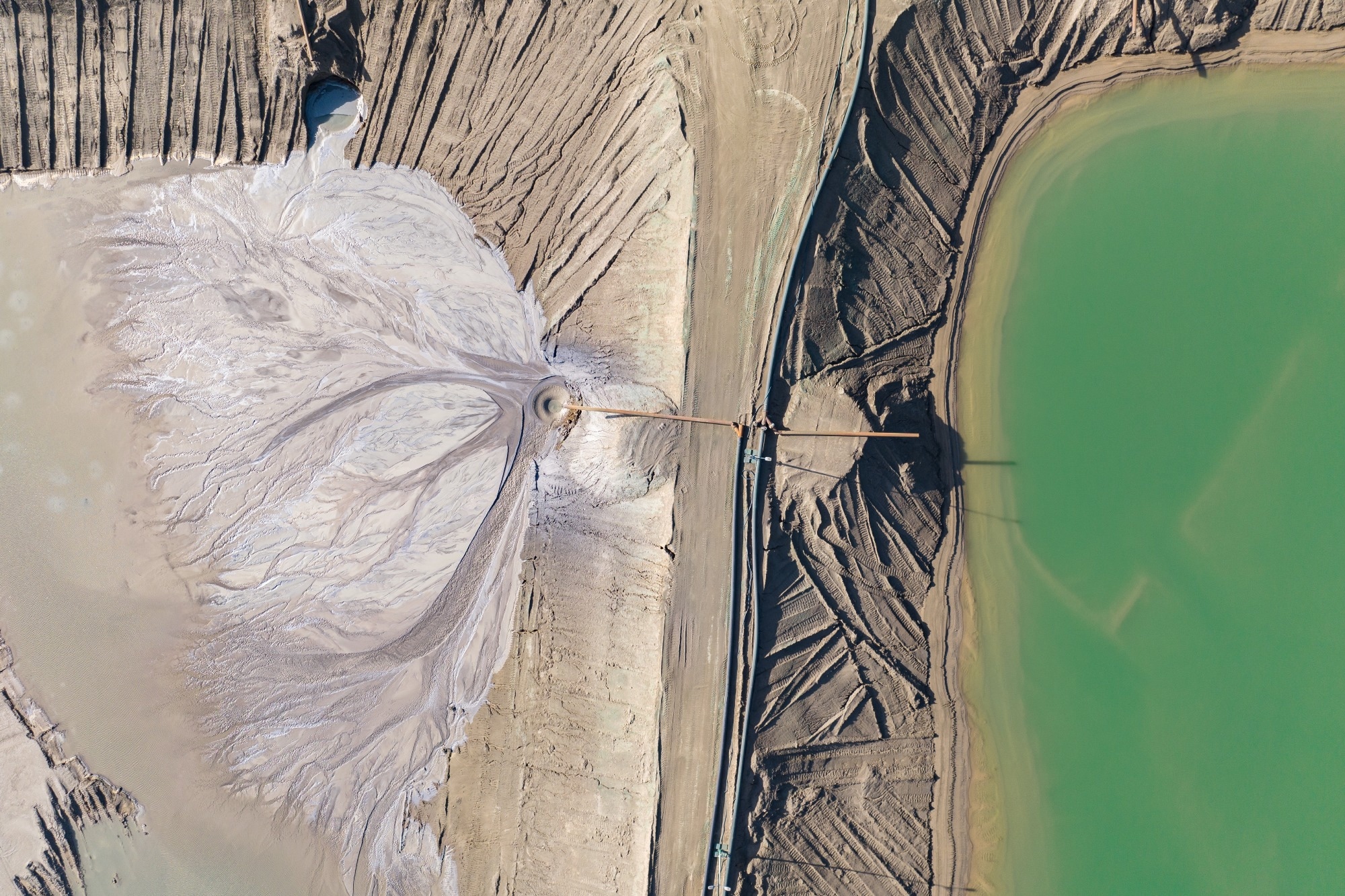 Study: Phosphate Mining Residues as Novel Substrate for Advanced Vertical Flow Constructed Wetlands: A Circular Economy Approach. Image Credit: Chawranphoto/Shutterstock
A recent study published in Agronomy investigates the use of phosphate mining residues from Morocco’s phosphate industry as reactive substrates in advanced vertical flow constructed wetlands for wastewater treatment.
The study evaluates the potential use of mining by-products to remove pollutants from wastewater while supporting circular economy goals. The results highlight the potential of transforming industrial mining waste into a valuable treatment material for sustainable water reuse systems in regions experiencing severe water scarcity.
Advancing Constructed Wetlands with Mining Residues
Water scarcity is emerging as a critical global challenge, particularly in arid and semi-arid regions such as North Africa and the Mediterranean. Climate change, rapid population growth, and rising agricultural demand continue to add pressure on limited freshwater resources.
As a result, treated wastewater is gaining attention as an alternative water source for irrigation and other non-potable uses. Treated wastewater still contains harmful contaminants, including heavy metals, pathogens, and excess nutrients, posing a significant risk to ecosystems and public health.
Constructed wetlands offer a low-cost, environmentally sustainable approach to decentralized wastewater treatment. These systems replicate the natural purification processes of wetlands through biological, physical, and chemical interactions. Researchers are increasingly exploring reactive substrates to overcome the limited treatment efficiency of conventional sand- and gravel-based wetlands, particularly under shorter hydraulic retention times, while also reducing the overall system footprint.
Morocco generates large volumes of phosphate-mining residues, which are largely stockpiled without productive reuse. This study addressed a major research gap by evaluating these calcium- and fluorapatite-rich residues as reactive substrates for constructed wetlands to enhance adsorption, precipitation, and ion exchange during wastewater treatment.
They examined pollutant removal performance, assessed the role of different reactive materials, analyzed the effect of hydraulic retention time, and also tested the possibility of using the treated wastewater for agricultural reuse under Moroccan standards.
Experimental Design and Treatment System Configuration
The researchers carried out the experiments at the Mohammed VI Polytechnic University experimental farm in Ben Guerir, Morocco. They developed four mesocosm-scale advanced vertical flow constructed wetlands using cylindrical plastic containers planted with Arundo donax, a wetland plant widely used in wastewater treatment systems. Each wetland contained a different substrate configuration to evaluate reactive media performance.
The control system used conventional sand and gravel, while the modified systems incorporated mixtures of pozzolan with phosphate mining residues, clay, or biochar. The researchers selected pozzolan because its porous volcanic structure helps maintain hydraulic conductivity. The researchers placed geotextile barriers between substrate layers to prevent particle loss and operated the wetlands for two months before testing to establish stable plant and microbial growth.
The researchers collected wastewater from the Ben Guerir wastewater treatment plant and increased cadmium and copper concentrations to create more demanding treatment conditions. They then operated the wetlands in batch mode under hydraulic retention times of 24, 48, and 72 hours to evaluate the effect of retention time on treatment performance.
The researchers monitored key water-quality parameters and applied advanced analytical techniques to characterize the reactive media and identify pollutant-removal mechanisms.
Improved Pollutant Removal through Reactive Media
The results showed that reactive media significantly improved wastewater treatment performance compared to the sand-based control system. Wetlands with biochar and phosphate mining residues exhibited the strongest performance, achieving high removal efficiencies for organic matter, suspended solids, nutrients, and heavy metals.
The modified systems achieved substantial reductions in chemical oxygen demand, with the biochar-rich wetland reaching removal efficiencies close to 80% under longer hydraulic retention times. Biochar’s porous structure and large surface area promoted microbial growth and oxygen transfer, which enhanced organic matter degradation. The modified wetlands also removed more than 84% of total suspended solids because the reactive media improved filtration and particle retention.
Clay- and mining-residue-based systems yielded good results because their mineral-rich composition enhanced adsorption and ion-exchange processes. The clay-amended wetland achieved nitrogen removal above 82%, while phosphorus removal was nearly 89% in the clay-based system and around 76% in the mining-residue system.
The wetlands also demonstrated strong heavy metal removal, with most systems removing more than 85% of cadmium and copper. Biochar enhanced metal adsorption, while phosphate-mining residues supported metal immobilization via calcium-phosphate precipitation.
The study also identified several operational limitations, such as faecal coliform removal during colder phases, and none of the systems had consistent pathogen limits required for agricultural reuse. Longer hydraulic retention times also increased evapotranspiration losses, with water loss reaching upto 28% under some conditions. Statistical analyses confirmed that both substrate composition and hydraulic retention time strongly influenced treatment efficiency.
Circular Economy Potential and Future Applications
This study demonstrated that phosphate mining residues can serve as effective reactive substrates in advanced vertical-flow constructed wetlands. The findings highlight a circular economy opportunity by converting industrial mining waste into a valuable treatment material.
Download the PDF of this page here
The researchers noted that single-stage wetlands cannot completely meet the Moroccan agricultural reuse standards, particularly for cadmium and pathogen removal. Additional steps, such as a secondary wetland stage or disinfection processes, will be necessary for safe reuse applications.
Future research should focus on evaluating long-term performance, optimizing substrate composition, and assessing economic feasibility. The proposed research technology has great potential for large-scale deployment as it could provide a low-cost and sustainable wastewater treatment solution for rural and mining regions facing growing water stress.
Journal Reference
Hididou, M., Necibi, M. C., et al . (2026). Phosphate Mining Residues as Novel Substrate for Advanced Vertical Flow Constructed Wetlands: A Circular Economy Approach. Agronomy, 16(10). DOI: 10.3390/agronomy16100954, https://www.mdpi.com/2073-4395/16/10/954
Disclaimer: The views expressed here are those of the author expressed in their private capacity and do not necessarily represent the views of AZoM.com Limited T/A AZoNetwork the owner and operator of this website. This disclaimer forms part of the Terms and conditions of use of this website.