In recent years, the growing market for batteries, driven by rising adoption of advanced technologies such as renewable energy storage and electric vehicles, has increased pressure on the supply of critical battery metals like nickel, cobalt, and lithium.
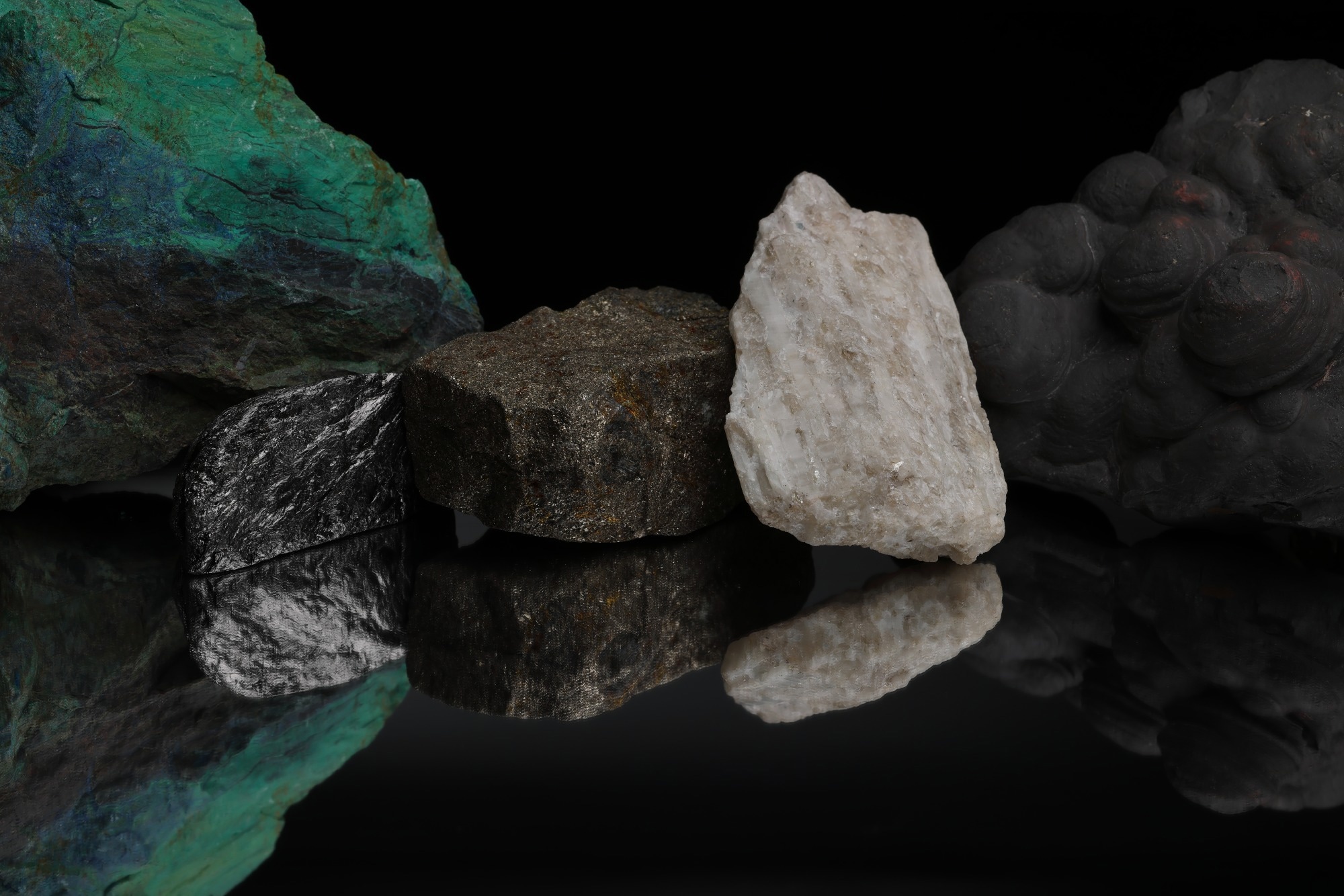 Image Credit: BJP7images/Shutterstock
Globally, critical mineral production patterns markedly differed across metals owing to limited refining capacity, environmental concerns, geopolitical risks, and resource scarcity. Addressing these supply issues is crucial to ensure sustainable growth.1-4
Lithium Electrochemistry and Supply Chain Vulnerabilities
Lithium, the charge carrier shuttling between electrodes, intercalates and de-intercalates during charge and discharge in the layered oxide cathode and in the anode in nickel–manganese–cobalt (NMC) cells.
Saving this for later? Download a PDF here.
Transition-metal redox and lithium-vacancy creation govern NMC electrochemistry as they collectively determine dominant fade pathways, operating voltage, and capacity. The lithium supply chain’s upstream segment has a level of geographic diversity, with raw lithium being extracted from brine deposits in countries like Argentina and Chile and from hard-rock mines in Australia, which offers supply resilience.1
However, the midstream has a critical vulnerability as the raw material in the form of brines or spodumene concentrate is primarily refined and processed into lithium hydroxide and lithium carbonate (battery-grade chemicals) in China. This results in a centralization of a key capital and energy-intensive supply chain stage in a single location.
Thus, any disruption to China’s refining capacity due to domestic energy constraints or trade policies could affect the global battery manufacturing industry even when raw ore flows remain unaffected across different countries. Additionally, freshwater resource depletion due to water-intensive lithium extraction in arid regions like South America’s Lithium Triangle is also a significant issue impacting raw lithium production.1,2
Sustainable Extraction and Recycling Solutions
These supply challenges can be addressed through sustainable mining technology development and by strengthening battery recycling and circular economy initiatives. For instance, direct lithium extraction (DLE) is a low-impact, low-water-use mining approach that enhances lithium recovery rates while reducing environmental impact. Lithium extraction from brines depends on evaporitic technology, which pumps saltwater to the surface from underground aquifers and relies on open-air evaporation to concentrate the brine.
This approach is extremely slow and cannot resiliently respond to market needs. Hence, newer extraction methods, such as DLE, electrochemical methods, and ion exchange methods, are being studiusing advanced material recovery methods, such as direct recycling and hydrometallurgical processesed to accelerate the lithium salt concentration process in all brines with diverse lithium concentrations at scale, effectively catering to growing market needs. Additionally, green extraction and biomining processes that use natural solvents and bacteria to extract metals can improve mining output while causing limited ecological disruption.2,3
Moreover, scaling battery recycling initiatives can quickly create a major secondary source for lithium. The establishment of closed-loop recycling systems allows the repurposing of electric vehicle batteries for new battery production. Most importantly, valuable metals can be efficiently extracted from spent batteries through advanced material recovery, such as direct recycling and hydrometallurgical methods.
However, government regulations and incentives are crucial to make recycling initiatives commercially viable. To address China’s chokehold in the midstream of the lithium supply chain, targeted incentives are essential to expand refining and processing outside China, thereby reducing regional dependency.1-3
Nickel and Cobalt Supply Challenges
Although ore deposits exist globally, nickel production is majorly concentrated in Southeast Asia, with Indonesia leading in refining and mining owing to the rapid growth of high-pressure acid leach plants and laterite operations. Other producers are Brazil, Australia, Canada, Russia, and the Philippines.
A few China-based multinational corporations currently dominate the system by connecting Indonesian and African mines to alloy and refining plants in China. The China–Indonesia production corridor reshaped the global primary nickel supply chain. While this structure increases efficiency, it also creates corporate and regional risks as refining, precursor processing, and mining are concentrated in a few vertically integrated companies and countries, making the entire supply chain structurally fragile.1
Unlike lithium, cobalt is extracted as a secondary product of industrial nickel mining operations. Raw cobalt flow begins in the Democratic Republic of the Congo (DRC), from where the flow is directed into a bimodal pipeline. China almost exclusively imports the raw material from DRC, with US$3 billion worth of cobalt imports alone in 2024.
Subsequently, Chinese facilities controlling 72% of the global refining capacity process the material into refined products. Thus, the global cobalt supply chain represents an uninterrupted, substantial flow from the DRC to China, posing a structural risk, as any disruption at either end would create a global crisis for cobalt-dependent industries such as battery production. Both nickel and cobalt mining lead to soil contamination, biodiversity loss, and deforestation in countries like the DRC and Indonesia.1,2
Diversification Strengthens Battery Metal Supply
The nickel and cobalt supply challenges clearly indicate that midstream bottlenecks and corporate concentration are more critical vulnerabilities than the distribution and production of raw materials, affecting the production scale-up to cater to market demand and reliable supply. Thus, diversification is the key to addressing these supply issues.
For nickel, refining and processing must be expanded outside the existing China–Indonesia production corridor to other countries with significant ore deposits. This approach will improve supply chain security and nickel supply for a growing market. Similarly, for cobalt, effective risk mitigation can be realized through strategic stockpiling, substitution, or recycling, instead of increasing the primary extraction.1,2
Alternative Battery Technologies
Researchers are also developing alternative battery technologies to reduce dependence on environmentally harmful or scarce battery metals. For instance, cobalt- and nickel-free lithium iron phosphate (LFP) batteries offer better longevity and safety at lower costs.
Similarly, sodium-ion batteries eliminate the requirement of cobalt, nickel, and lithium, making it a sustainable alternative with a reliable supply. Moreover, advances to convert Nickel II, like nickel pig iron, and then to nickel sulfate for manufacturing cathode using cost-efficient methods could effectively address the battery-grade nickel shortage issue.2-4
Overall, the growing demand for battery metals like lithium, nickel, and cobalt highlights critical supply chain vulnerabilities, particularly in refining, environmental impact, and geopolitical risks.
Addressing these challenges through sustainable extraction technologies, recycling, diversification of supply chains, and development of alternative batteries is essential to ensure a resilient, secure, and environmentally responsible future for global energy storage and electric mobility needs.
References and Further Reading
- Akhter, R., Palli, S. R., Walanjuwani, M., & Jones Jr, E. C. (2026). Mapping the Supply Chain of Lithium-Ion Battery Metals from Mine to Primary Processing by Country and Corporation. Commodities, 5(1), 2. DOI: 10.3390/commodities5010002, https://www.mdpi.com/2813-2432/5/1/2
- Amer, M., Elmojarrush, A., Nassar, Y. F., & Khaleel, M. (2025). Critical materials for EV batteries: Challenges, opportunities, and policymakers. International Journal of Electrical Engineering and Sustainability (IJEES), 119-133. DOI: 10.65998/ijees.v3i1.117, https://ijees.org/index.php/ijees/article/view/117
- Xiao, J. et al. (2025). From mining to manufacturing: scientific challenges and opportunities behind battery production. Chemical Reviews, 125(13), 6397-6431. DOI: 10.1021/acs.chemrev.4c00980, https://pubs.acs.org/doi/abs/10.1021/acs.chemrev.4c00980
- Chen, T., Li, M., & Bae, J. (2024). Recent advances in lithium iron phosphate battery technology: a comprehensive review. Batteries, 10(12), 424. DOI: 10.3390/batteries10120424, https://www.mdpi.com/2313-0105/10/12/424
Disclaimer: The views expressed here are those of the author expressed in their private capacity and do not necessarily represent the views of AZoM.com Limited T/A AZoNetwork the owner and operator of this website. This disclaimer forms part of the Terms and conditions of use of this website.