Remote sensing shows water use efficiency fell after Shengli coal mining disturbance, then improved with restoration, but surface deformation and soil damage still constrained ecosystem recovery over time across sites.
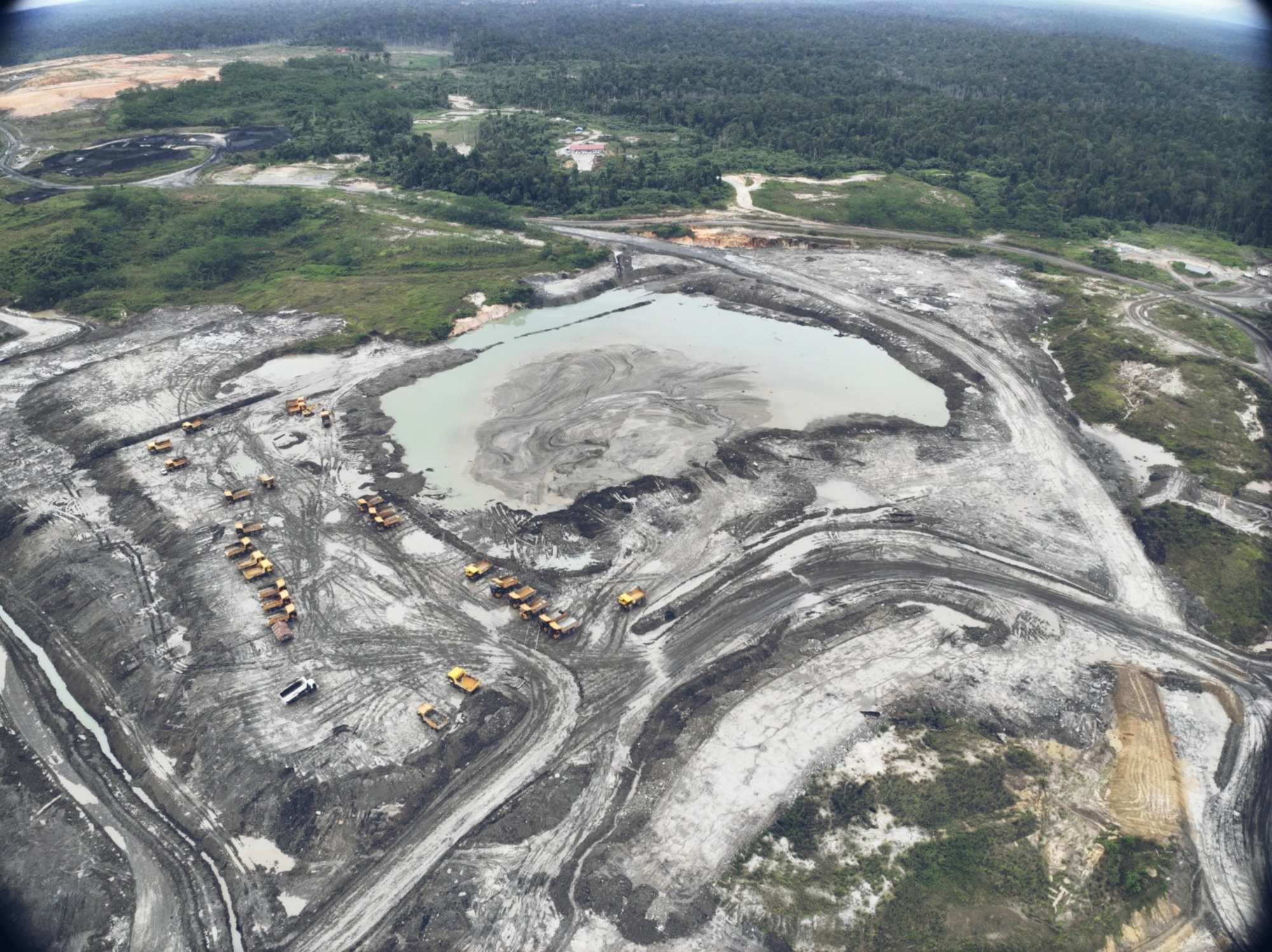 Study: The Sustainable Impact of Coal Mining on Water Utilization Efficiency in the Shengli Mining Area. Image Credit: Dian Nugraha Perdana/Shutterstock
In a recent article published in the journal Sustainability, researchers investigated the sustainable impact of open-pit coal mining on water use efficiency and ecological restoration in the Shengli mining area, revealing how mining disturbances and surface deformation affect vegetation and ecosystem functions.
Shengli Mining Area Context
Coal mining activities profoundly influence land surface conditions and ecosystem dynamics, notably impacting vegetation and water cycles. The Shengli mining area, one of China's largest lignite production bases, has experienced substantial ecological disruption due to intensive open-pit coal mining for over three decades.
This disturbance alters vegetation cover and ecosystem function, directly affecting water-use efficiency (WUE), a critical metric that reflects the coupling of carbon and water cycles in vegetation. Understanding how mining activities impact WUE provides insights into ecosystem health and restoration effectiveness in mining regions.
This study aims to quantify and analyze the temporal and spatial variations in WUE induced by coal mining and subsequent restoration in the Shengli mining area from 2001 to 2024.
Remote Sensing & Modeling
The study employs an advanced remote sensing approach using multi-source satellite data spanning from 2001 to 2024. The authors applied a random forest (RF) algorithm to spatially downscale Moderate Resolution Imaging Spectroradiometer (MODIS) net primary productivity (NPP) and evapotranspiration (ET) products from 500 m and 1 km resolutions to a finer 30 m scale.
This downscaling enhances the accuracy of WUE estimates within the heterogeneous landscape of the mining area. WUE was calculated as the ratio of NPP to ET to represent vegetation’s carbon assimilation efficiency per unit water lost. Surface deformation data were derived using Differential Synthetic Aperture Radar Interferometry (D-InSAR) from Sentinel-1 images for the period 2015–2024, capturing mining-induced terrain changes.
The study conducted spatial and temporal analyses of WUE dynamics and used Pearson correlation coefficients to identify driving factors, including vegetation cover (NDVI), deformation magnitude, climate variables, and mining activity intensity.
WUE Trends and Drivers
The results indicate that WUE in the Shengli mining area follows a distinct dynamic pattern characterized by an initial decline due to mining disturbance, followed by recovery during restoration efforts, and eventual stabilization at a new equilibrium. Specifically, the maximum WUE was observed early in the study (1.123 g C·m−2·mm−1 in 2002).
However, intensive mining activities caused a valley in WUE around 2010 (0.398 g C·m−2·mm−1), reflecting severe vegetation and soil disruption. From 2011 onward, ecological restoration led to an annual increase in WUE, which stabilized after 2013 but did not fully return to initial pre-disturbance levels. This indicates that continuous mining reduces vegetation's long-term water-use capacity.
Surface deformation negatively correlates with WUE (correlation coefficient of approximately -0.39), indicating that mining-related terrain subsidence and soil disturbance inhibit vegetation water-use efficiency. Deformation damages soil physical structure, reduces water retention, and disrupts the root zone, directly impacting plant water uptake and photosynthesis.
Conversely, NDVI, which represents vegetation greenness and cover, positively correlates with WUE (correlation coefficient of about 0.59), emphasizing the critical role of vegetation recovery in restoring WUE. Temperature and rainfall showed weaker yet positive influences on WUE, likely overshadowed by the dominant effects of mining disturbance during the study period.
Spatial analysis reveals that areas with active mining and significant deformation exhibit slower or lagged WUE recovery. In contrast, spoil dump sites undergoing ecological reclamation show faster restoration of vegetation cover and improved WUE.
The study posits that mining-induced changes in soil pore structure, infiltration, and mechanical damage to roots explain much of the reduction in water use efficiency. The degradation of soil nutrients and structure due to mining compounds these effects.
Importantly, the study highlights that vegetation restoration efforts must address not only plant growth but also the underlying soil and surface stability to effectively improve WUE.
Restoration Strategies Insights
This investigation into the Shengli mining area demonstrates that open-pit coal mining exerts a substantial and multifaceted impact on vegetation water use efficiency through surface disturbance and soil degradation.
While ecological restoration mitigates some harmful effects by promoting vegetation regrowth and increasing WUE, the ecosystem has yet to regain its original capacity fully after more than two decades of mining disruption. Surface deformation emerges as a key constraint on recovery, underlining that restoration efforts should prioritize stabilizing the terrain and enhancing soil water retention to support sustainable vegetation growth.
Download the PDF of this page here
Temperature and precipitation influences, although present, are secondary to direct mining impacts in shaping WUE trends. The research underscores the necessity for site-specific restoration strategies that integrate vegetation reconstruction with soil and surface engineering to optimize ecosystem function in mining areas.
Future work should expand to include soil moisture and nutrient data alongside long-term monitoring to deepen understanding of the mechanisms linking mining disturbance, soil degradation, restoration, and water use efficiency. Overall, the findings provide critical guidance for sustainable coal mining management and ecological restoration in semi-arid mining environments.
Journal Reference
Huang Y., Xia Z., et al. (2026). The Sustainable Impact of Coal Mining on Water Utilization Efficiency in the Shengli Mining Area. Sustainability 18(10):4811. DOI: 10.3390/su18104811, https://www.mdpi.com/2071-1050/18/10/4811