South America has long been the world's most consequential copper-producing region, but a new chapter in that story is now unfolding. Chile, Peru, and Argentina together hold vast Andean copper reserves, and their combined trajectory is drawing unprecedented capital from the world's largest mining companies, giving rise to what is being termed a "copper corridor.”
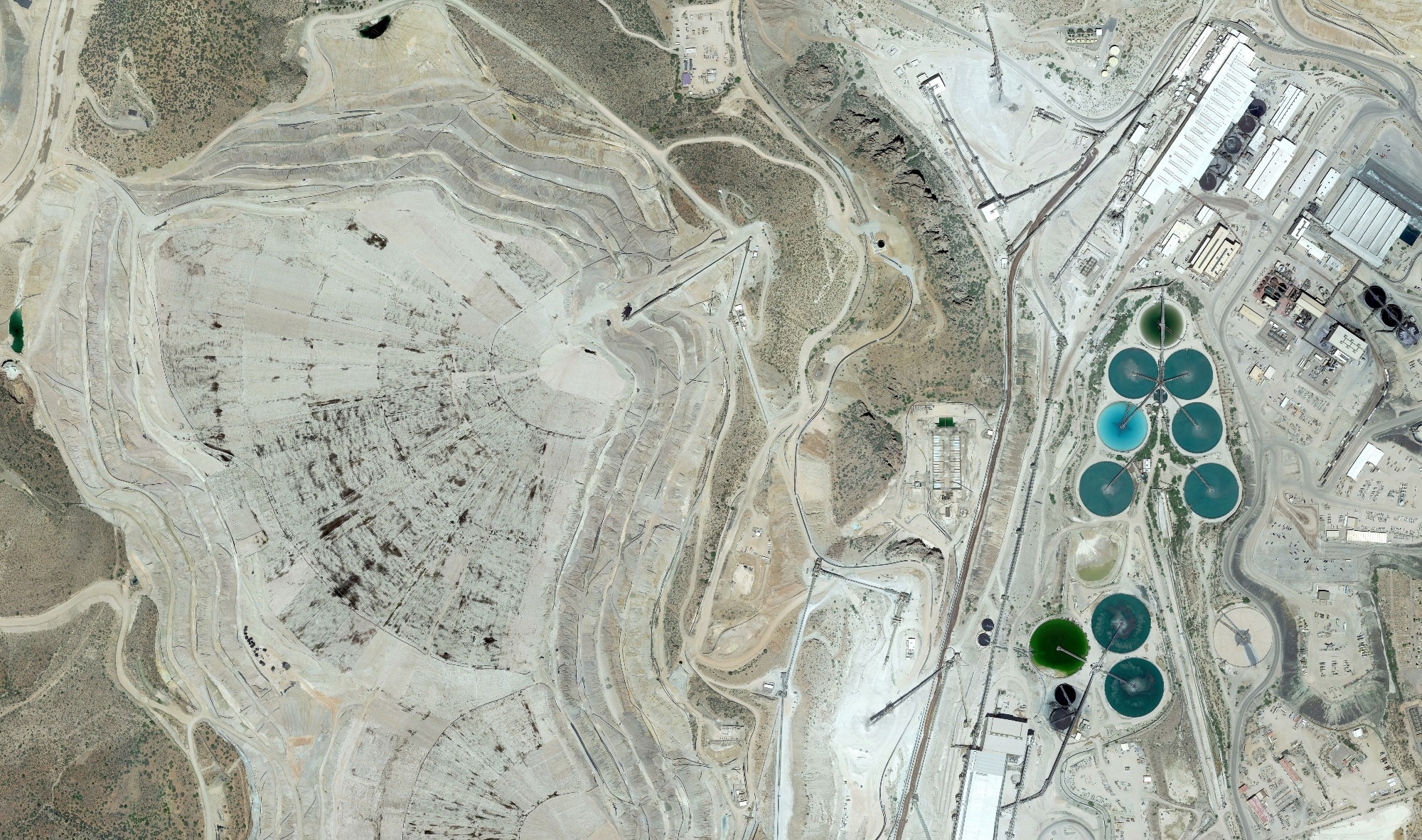 Image Credit: Aerial Viewer/Shutterstock
Copper demand is expected to outpace supply by 10 million metric tons by 2040. The rise of electrification and new technologies largely drives this increase. South America will play a vital role in meeting this challenge, as it currently contributes around 41% of the world's copper output.1-3
Three Nations, One Strategic Arc
The three nations forming this corridor bring different but complementary strengths to the table. Chile leads with mature infrastructure and an annual smelting capacity of 3.5 million tonnes. Peru contributes high-grade deposits with copper concentrations ranging from 1.2% to 2.5% and has a rapidly growing portfolio of 84 active exploration projects. Argentina adds value with the highest ore grades in the region, averaging 1.5% to 2.8% copper, and a geological frontier that remains largely unexplored.4,5
Together, the three countries currently produce approximately 8.1 million tonnes of copper annually. Industry projections point to a combined output target of 11 to 14 million tonnes by 2035, which could push the corridor's global market share to between 35% and 40%. That level of sustained output would make South America a structural anchor of the global copper economy for decades to come.2
Chile's Output Pressure
Chile is widely recognized as the world's leading copper producer, but the country faces mounting operational headwinds. Codelco, the state-owned mining giant, has struggled with declining ore grades for many years. The average copper grade at Chilean mines dropped from 1.14% in 2010 to 0.84% in 2023. As a result, Codelco has to process much more ore to obtain the same amount of copper. This change increases energy and water use, significantly raising operational costs.6
A fatal accident at Codelco's El Teniente mine in July 2025 further compressed production. This incident reduced output by about 33,000 tonnes, pushing August 2025 figures to hit a 20-year low of 93,400 tonnes. Production at El Teniente is expected to remain low for the next five years as recovery efforts continue in the affected areas. Despite these challenges, Codelco plans to invest $4.727 billion in capital in 2025. The focus of these investments is on improving the mine and managing ore quality at its most troubled sites.7,8
Peru's Logistical Frontier
Peru holds a different but equally significant set of challenges. The country's 482 km mining corridor highway connects copper operations in the Apurímac, Cusco, and Arequipa regions to coastal export terminals. This highway is now dealing with serious congestion.4
Beyond logistics, Peru is advancing a strong pipeline of new projects. Approximately $12 billion worth of development is underway along the mining corridor highway alone, including Southern Copper's Chancas and First Quantum's Haquira projects.2,4
Mining exploration investment is also rising from $644 million in 2024 to a projected $1 billion in 2025. With the upcoming operations at Toromocho, Tia Maria, and Chalcobamba, these investments are set to support a copper production growth rate of about 3% each year through 2030 in the region.2,5
Argentina's Emerging Role
Argentina stands out as the most dynamic growth story in the region. Mining minister Luis Lucero believes that within 10 years, Argentina could produce 1,641,000 tonnes of copper each year. This would help the country reach its goal of exporting a combined $32.7 billion worth of lithium and copper.1
In comparison, the total value of mining exports was only $6 billion in 2025. These projections indicate a more than fivefold increase and would provide a significant new source of hard currency for an economy that has often faced challenges with foreign-exchange shortages.1
Saving this for later? Download a PDF here.
Two flagship copper projects are anchoring this expansion. The Vicuña joint venture between BHP and Canada's Lundin Mining combines the Josemaría and Filo del Sol deposits in San Juan province, with a total estimated investment of up to $15 billion. Vicuña invested approximately $400 million in 2025 and aims to double that figure in 2026. McEwen Copper's Los Azules project is advancing in parallel, with most new Argentine copper operations targeting production starts around 2030.1,9
The RIGI Framework and Foreign Investment
A clear policy architecture backs Argentina's large-scale mining ambitions. President Javier Milei's Large Investment Incentive Regime, known by its Spanish acronym RIGI. This program provides tax benefits, customs flexibility, foreign exchange guarantees, and access to international arbitration for major export projects. The total value of mining projects approved and submitted under RIGI now amounts to $50.692 billion. The Milei administration aims to attract $70 billion in new interest projects within a year of launching the scheme.1
Rio Tinto became the first company to receive approval from RIGI for a mining project. In May 2025, the company won clearance for its Rincón lithium project in Salta province, which will cost $2.5 billion. This operation will have an annual capacity of 60,000 metric tons of lithium carbonate and a mine life of 40 years. The first production is expected in 2028.10
Meanwhile, the BHP-Lundin Vicuña venture has also applied for RIGI benefits under the long-term strategic export project category. This category requires a minimum investment of $2 billion during the first two years.11
A Corridor with Global Stakes
The emergence of South America's copper corridor is very timely because global supply chains need it now more than ever. Electric vehicles use four times as much copper as regular petrol cars. The International Energy Agency expects the demand for copper in renewable energy to almost double by 2030. Moreover, cumulative clean energy copper demand between 2022 and 2050 will exceed current known reserves, making further exploration in underdeveloped geologies a practical necessity.12
Mining minister Lucero put Argentina's position plainly. The country's comparative advantage lies in vast stretches of virgin territory and an untapped geological potential that the rest of the world is only beginning to measure.1,3
While Chile has a well-established mining industry facing cost challenges, and Peru is rapidly expanding its corridor, Argentina is beginning to grow quickly from a nearly inactive starting point. The three nations together form a supply response that is extremely difficult for other regions on Earth to match at present.1,3
References and Further Reading
- Sigal, L. (2026). Argentina sees lithium and copper exports at $32.7 billion in 10 years. Reuters. https://www.reuters.com/business/energy/argentina-sees-lithium-copper-exports-327-bln-10-years-minister-says-2026-05-06/
- Copper and lithium boom reinforces Latin America’s role in the future of mining. (2025). Mining Technology. https://www.mining-technology.com/analyst-comment/copper-lithium-boom-reinforces-latin-americas-role-future-mining/
- Georges, L. (2026). Copper supply gap to widen 24% by 2040 as electrification accelerates: study. S&P Global. https://www.spglobal.com/energy/en/news-research/latest-news/metals/010826-copper-supply-gap-to-widen-24-by-2040-as-electrification-accelerates-study
- Aquino, M. (2024). Along Peru's mining corridor, Big Copper faces a snarl of trucks. Reuters. https://www.reuters.com/markets/commodities/along-perus-mining-corridor-big-copper-faces-snarl-trucks-2024-06-19/
- Peru, Canada Sign Critical Minerals MOU with Investments in Mind. (2026). Industrial Info Resources. https://www.industrialinfo.com/news/article/peru-canada-sign-critical-minerals-mou-with-investments-in-mind--355184
- Codelco Grapples with Rising Costs and Declining Ore Grades. (2024). Mining Visuals. https://www.miningvisuals.com/post/codelco-grapples-with-rising-costs-and-declining-ore-grades
- Codelco’s August copper production falls to 20-year low. (2025). Mining Technology. https://www.mining-technology.com/news/codelcos-august-copper-production-dips/
- Chile’s Codelco targets 2025 copper output jump to 1.39 million tons, document shows. (2025). Mining Engineering. https://me.smenet.org/chiles-codelco-targets-2025-copper-output-jump-to-1-39-million-tons-document-shows/
- Sigal, L. (2026). BHP's Vicuña could double investment in Argentina copper project to $800 mln in 2026, executive says. Reuters. https://www.reuters.com/business/bhps-vicua-could-double-investment-argentina-copper-project-800-mln-2026-2026-02-09/
- Argentina gives green light to a $2.5 billion Rio Tinto’s lithium project. (2025). World Mining Congress. https://wmc.agh.edu.pl/argentina-gives-green-light-to-a-2-5-billion-rio-tintos-lithium-project/
- BHP, Rio advance projects in boost to Argentina mining ambitions. (2025). Mining.com. https://www.mining.com/web/bhp-venture-seeks-argentina-incentives-for-major-copper-project/
- Megatrends: could copper hold the key to energy transition? (2023). Evelyn Partners. https://www.evelyn.com/insights-and-events/insights/could-copper-hold-the-key-to-energy-transition/
Disclaimer: The views expressed here are those of the author expressed in their private capacity and do not necessarily represent the views of AZoM.com Limited T/A AZoNetwork the owner and operator of this website. This disclaimer forms part of the Terms and conditions of use of this website.