*Important notice: This news reports on an unedited version of the paper which has been accepted and is awaiting final editing. Therefore, the study should not be regarded as conclusive or treated as established information.
Coal mine collapse structures in Jharia act as high-temperature gas vents, driving extreme heating, greenhouse emissions, subsidence risks, and operational hazards that demand updated monitoring and mitigation strategies for safety.
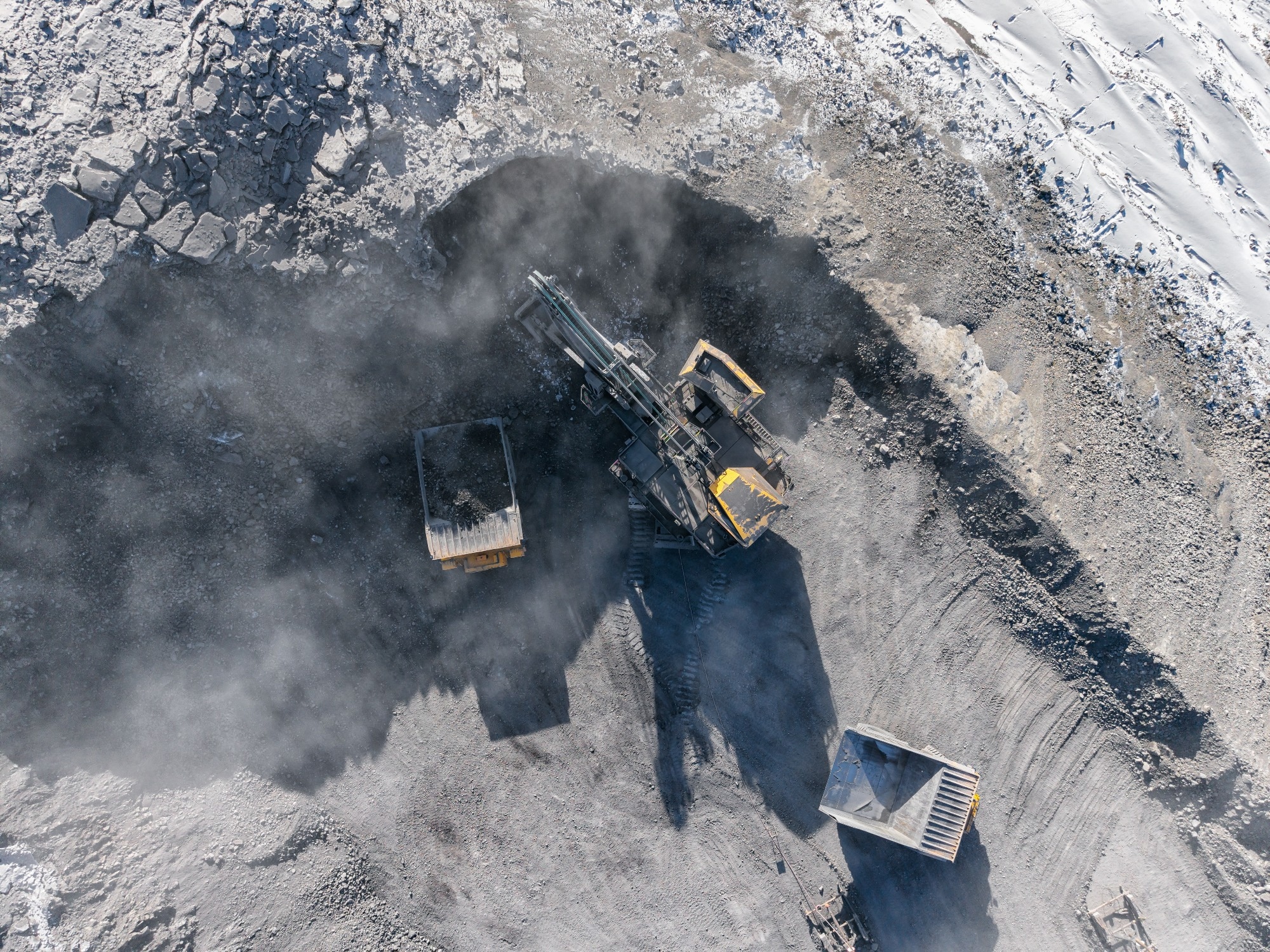 Study: Extreme environmental conditions in coal mine fire collapse structures. Image Credit: Parilov/Shutterstock
In a recent research article published in the journal Communications Earth & Environment, researchers investigated the formation and environmental impacts of collapse structures caused by underground coal mine fires in the Jharia coalfield, highlighting their role in extreme thermal conditions and gas emissions that affect mining operations.
Coal Mine Fire Context
Coal fires worldwide burn vast quantities of coal uncontrollably, releasing large greenhouse gas (GHG) emissions often underestimated in environmental audits. The Jharia coalfield, covering 450 km² with nearly 19.4 gigatonnes of reserves, has experienced subsurface fires for over a century, severely affecting mining viability.
These fires cause morphological changes such as ground deformation, collapse within coal seams and partings, and formation of glassy, pyrometamorphosed breccias. Previous research has documented the difficulty in extinguishing such fires and their environmental impacts, but less attention has been paid to detailed characterizations of the collapse structures, voids formed by fire-induced subsidence, and their role in venting combustion gases.
Jharia Fire Observations
The research was conducted in three open-cast collieries within Eastern Jharia, Ena, Rajapur/Bastacolla, and Tissera, allowing direct access to mine fire-impacted strata. Field investigations involved detailed mapping and sampling of collapse structures, ranging up to 10 meters in diameter.
Samples of glass, paralava (melted rocks), and partings were collected for laboratory analyses, including optical microscopy and electron microanalysis to identify mineralogical changes and microstructural features caused by fire.
Concurrently, a coupled mathematical model of flow and heat transport was developed to simulate fluid and thermal dynamics within the stratigraphy and collapse structures, incorporating coal seam and parting properties, permeability, porosity, and coal calorific values.
This modeling accounted for coal combustion and gas flow to estimate temperature fields and greenhouse gas emissions emanating from collapse vents. Emission estimates followed USEPA methodologies, focusing on CO2, CH4, and N2O contributions expressed as CO2 equivalents.
Thermal and Emission Insights
Field observations revealed that collapse structures were typically 3-10 meters in diameter and often occurred in clusters within fire-affected zones. Smaller structures (<3 m) typically had open voids with sooty deposits, whereas larger ones were frequently infilled with vesicular paralava and glasses indicating high-temperature melting and flow.
The collapse formations originate as overlying rock strata fall into voids created by the burning and degradation of underlying coal seams and partings. Pyrometamorphic changes in the breccia infill, including melting of sandstone clasts and formation of iron oxides and feldspars, confirm exposure to temperatures ranging from 700°C up to an extreme range approaching or exceeding 2000°C.
Microstructural analyses detected iron-rich monolayers resembling those on meteoroid fusion crusts, suggesting direct solid-gas interactions at very high temperatures within these structures.
Download the PDF of this page here
The numerical modeling indicated that larger collapse structures maintain the highest thermal activity and serve as principal conduits for combustion gases and heat release to the surface.
For example, a 10 m collapse pipe could combust over 270 kilotonnes of coal and emit approximately 703 megatonnes of CO2 equivalent annually from a one-square-kilometer area, almost double the reported emissions from comparable UK coalfields. Such elevated temperatures and emission rates pose challenges for mine operations, including ground stability, subsidence risks, and hazardous working conditions from toxic, hot gas venting.
The presence of interconnected voids within collapse structures further facilitates gas transmission, exacerbating emission hazards. Thermal modeling also demonstrated that fire-affected stratigraphy remains highly dynamic, with fires advancing into new coal reserves and triggering repeated cycles of collapse and emissions.
This study emphasizes the critical role collapse structures play in the venting and thermal behavior of coal fires, an area previously underestimated in mining hazard assessments. The formation of glass and paralava within collapse voids alters rock mechanics, potentially weakening the overburden and increasing the risk of subsidence.
Additionally, the data suggest that mine fire management must consider both combustion characteristics and collapse morphology to assess risks to ongoing extraction and to inform fire mitigation efforts.
Environmental and Mining Impacts
The research confirms that coal mine fire-induced collapse structures are characterized by extreme thermal and environmental conditions, with substantial implications for mining safety and emissions. Collapse structures up to 10 meters in diameter serve as primary vents for high-temperature combustion gases, releasing significant amounts of greenhouse gases and heat into the atmosphere.
Overall, mine fire management should incorporate monitoring and mitigation strategies, including collapsing structures, to reduce environmental damage and improve worker safety. These findings highlight the need to update mining hazard models to include the scale and intensity of thermal and mechanical impacts associated with collapsed structures.
Further research addressing soil, water, and ecological impacts around fires and collapse zones is recommended to develop comprehensive risk mitigation frameworks. The Jharia coalfield example serves as a global case study for understanding and managing coal mine fires in densely mined, fire-prone regions.
Journal Reference
Hills C.D., Tripathi N., et al. (2026). Extreme environmental conditions in coal mine fire collapse structures. Communications Earth & Environment. DOI: 10.1038/s43247-026-03546-4, https://www.nature.com/articles/s43247-026-03546-4