A portable ultrasonic wind sensor tested in a Chinese coal mine demonstrates high accuracy for underground airflow monitoring, according to a study in Scientific Reports.
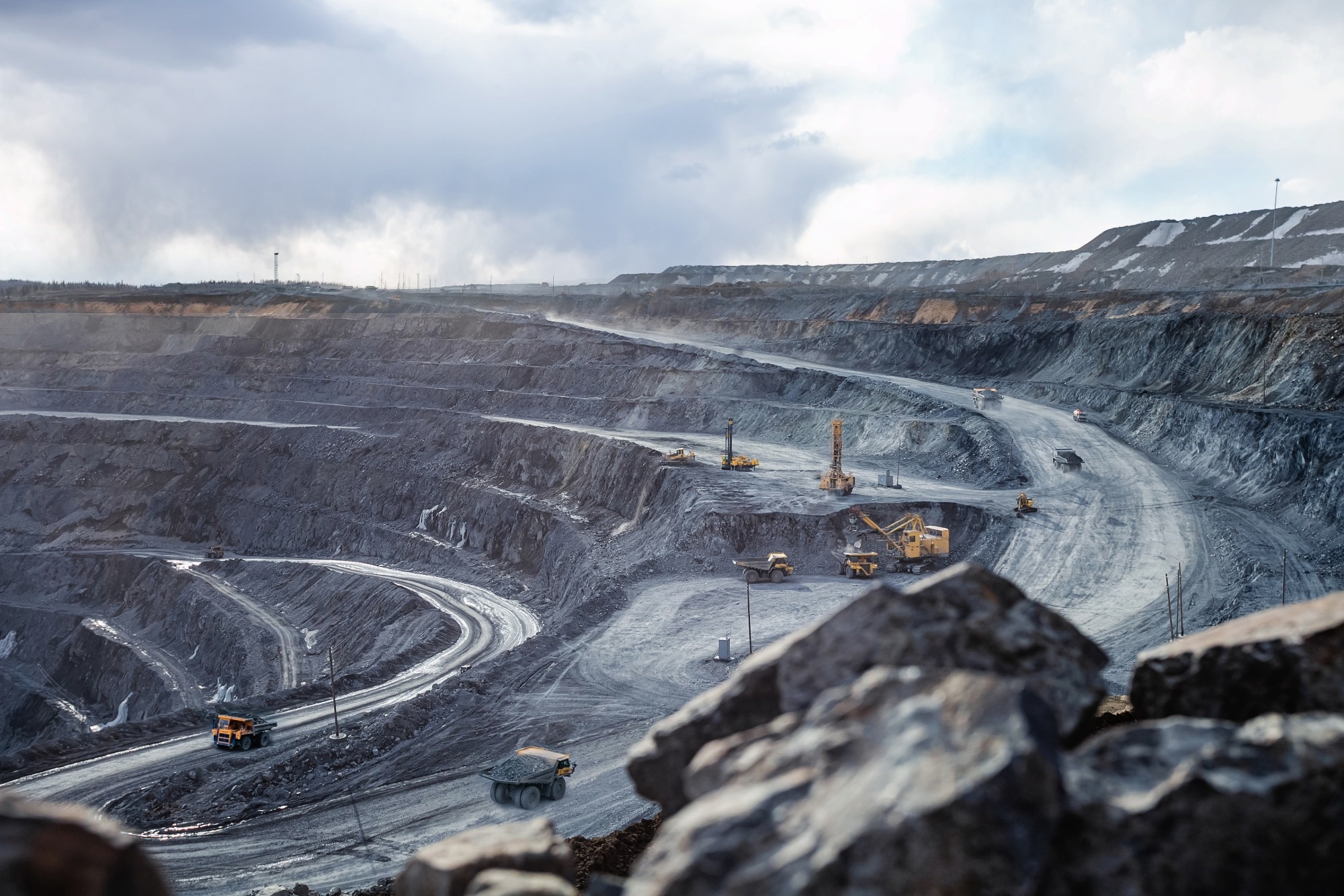 Study: Experimental study on portable multi-parameter intelligent wind measurement sensor. Image Credit: Evgeny_V/Shutterstock.com
The device is designed for deep mine ventilation, where accurate airflow data is essential for safety, disaster prevention, and efficient operations.
As mines go deeper, ventilation becomes harder to manage, and traditional mechanical anemometers can struggle to deliver the precision, speed, and reliability needed for real-time monitoring.
Saving this for later? Download a PDF here.
Airflow velocity across mine roadways is a key measure in ventilation management. Researchers have previously used field tests, mathematical models, simulations, and intelligent algorithms to study airflow distribution and estimate average wind speed in tunnels.
More recently, digital twin systems and deep learning models have been explored for adaptive ventilation control.
But all of these approaches depend on reliable wind speed measurements.
The Ultrasonic Study
The researchers developed a portable multi-parameter ultrasonic wind sensor for underground use. It uses a reflective ultrasonic transducer layout, along with temperature and humidity sensors and nanosecond-level timing electronics. The design is intended to improve measurement accuracy and stability in harsh mine environments.
To test the sensor, the team built a low-speed closed-circuit wind tunnel with a 0.7 m by 0.7 m cross-section. The system was used to simulate airflow in mine roadways at speeds from 0.5 to 5 m/s.
The study examined how sensor angle affected readings, compared the reflective layout with a direct-through ultrasonic design, and assessed performance in both wind-tunnel and field tests.
The researchers also developed a two-dimensional velocity field model to estimate average wind speed across a mine roadway cross-section.
Field validation was conducted at Gaojialiang Coal Mine, where model-based results were compared with conventional mechanical anemometer measurements.
Reflective VS Direct-through Design
The reflective layout performed better than the direct-through design in both accuracy and stability.
Across the tested wind-speed range, average measurement error was reduced by more than 75 %, while the standard deviation of the error fell by about fourfold.
The sensor was most accurate when aligned directly with the airflow at a 0° offset. As the angle increased, measurement error also increased, suggesting that correct positioning is important during field use.
Wind tunnel tests showed a generally uniform velocity distribution, with slightly higher speeds near the center and lower speeds near the edges. In the stable test region, average wind speed errors remained within ±0.1 m/s.
The study also introduced a model for estimating average wind speed across an entire roadway cross-section by combining spatial and temporal velocity data. This is important because ventilation decisions depend on cross-sectional airflow, not just single-point measurements.
Field tests at Gaojialiang Coal Mine supported the sensor’s practical performance under the tested conditions. Reported differences between the model-based results and mechanical anemometer measurements remained within ±0.1 m/s.
Wind speed contour maps also showed generally symmetric airflow patterns, with higher speeds in the center and lower speeds near the edges, broadly matching the wind tunnel results.
Improved Airflow Monitoring
The study suggests that a portable reflective ultrasonic sensor could improve airflow monitoring in deep coal mines. Its reflective structure delivered better accuracy and stability than a direct-through design, while the average wind speed model offers a practical way to assess airflow across roadway sections.
The work does not demonstrate a fully intelligent ventilation control system. But it does provide experimental support for more accurate, real-time airflow monitoring, which could help improve mine ventilation management and underground safety.
Journal Reference
Wang Z., et al. (2026). Experimental study on portable multi-parameter intelligent wind measurement sensor. Scientific Reports 16, 10934. DOI: 10.1038/s41598-026-45567-1, https://www.nature.com/articles/s41598-026-45567-1