An improved YOLOv11-based model with attention modules accurately detects unsafe miner behaviors in complex environments. It achieves high precision and enables real-time monitoring, enhancing safety and reducing accident risks in underground coal mining.
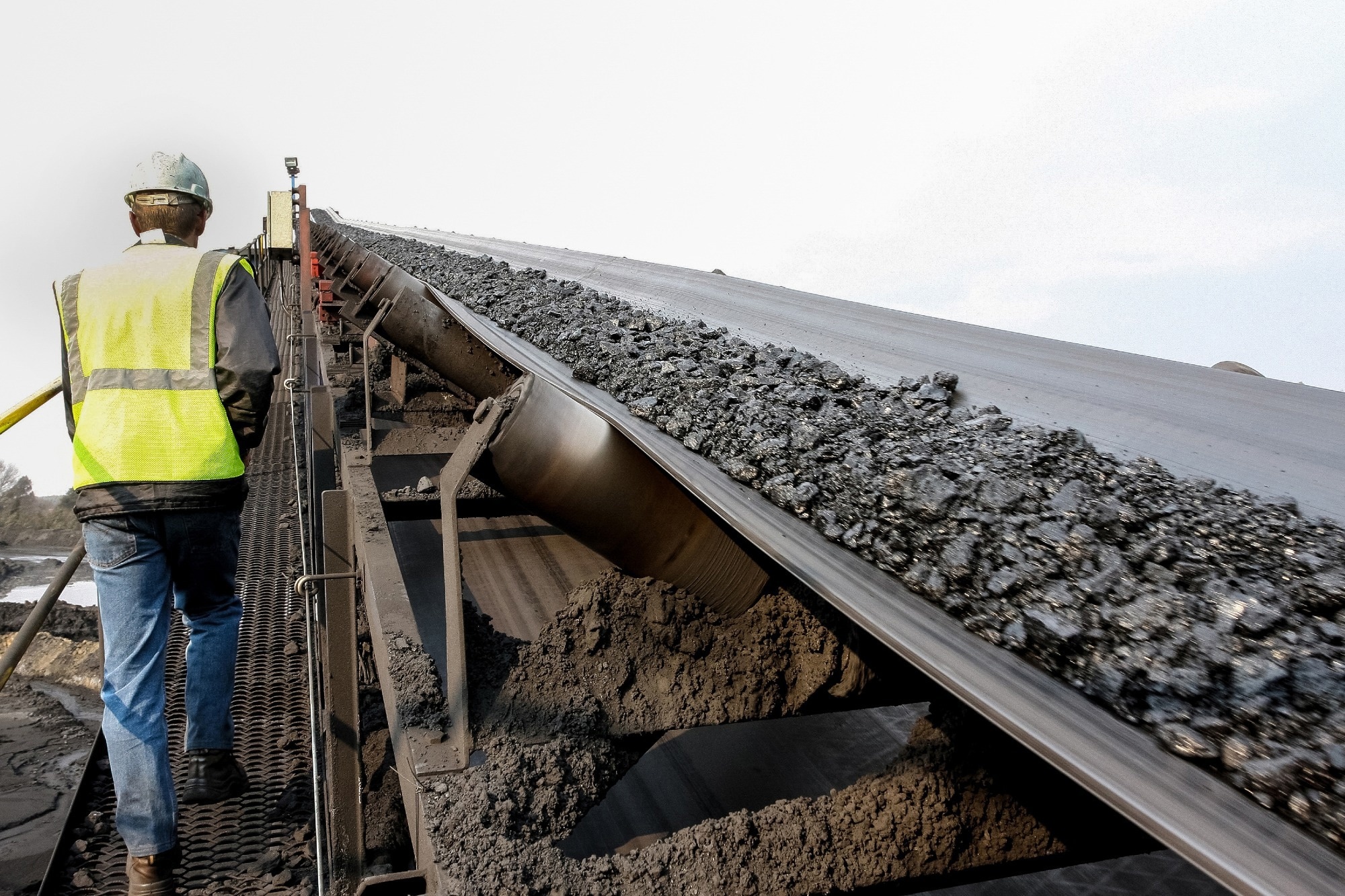 Study: Research on identification method and application of unsafe behavior of coal mine personnel. Image Credit: Wirestock Creators/Shutterstock
A paper recently published in Scientific Reports proposed an effective and rapid method for detecting unsafe behaviors among underground coal mine personnel in complex coal mine environments.
Coal Mining Safety Challenges
Coal miners execute complex tasks in confined underground spaces, which require continuous vigilance to prevent unsafe behaviors and ensure miner safety. Yet, unique coal mine conditions and significant job pressures can occasionally lead to unsafe behaviors, resulting in serious injuries, accidents, or fatalities.
Currently, personnel unsafe behavior identification in coal mines primarily relies on surveillance footage analysis and manual inspections, which pose challenges such as limited coverage of the operational area, high costs, low accuracy, significant subjectivity, and inefficiency. Thus, developing effective methods to prevent and detect unsafe behaviors among miners and improving coal mining operation safety standards are critical for the coal mining sector.
Advances in Behavior Detection
Constant advances in computer technology and machine vision have led to an increased application of machine vision in studies to detect unsafe behavior. Recent advances in unsafe behavior recognition approaches have relied on sensor fusion, deep learning (DL), machine learning (ML), and video analysis.
Among ML techniques, random forest (RF) and support vector machine (SVM) are commonly employed in detecting unsafe behavior. However, high recognition accuracy cannot be realized using these methods in complex environments.
DL methods, particularly Long Short-Term Memory Networks (LSTMs) and Convolutional Neural Networks (CNNs), have shown exceptional performance in time-series data and video analysis. For instance, unsafe behaviors by warehouse personnel were identified using CNN-based image classification methods that effectively handled issues such as changes in lighting conditions and occlusions. Recent research trends indicate a greater reliance on real-time intelligent warning systems and multimodal fusion technique integration in the field of unsafe behavior recognition.
The Study
In this work, researchers improved the conventional You Only Look Once version 11 (YOLOv11) algorithm for target detection and introduced an effective and fast approach for unsafe behavior identification among underground coal miners in complex coal mine environments.
Initially, they conducted a statistical analysis of the most common unsafe behavior types in existing underground coal mines, exploring the unsafe behavior classification into area-type, action-type, and item-type categories. Then, they proposed dataset augmentation and denoising preprocessing methods based on these unsafe behavior characteristics to improve fine-grained feature extraction.
In parallel, the Simple Parameter-free Attention Module (SimAM) was introduced to enhance the saliency mapping of behaviors. Eventually, researchers optimized the YOLOv11 algorithm by incorporating the K-means++ anchor frame and a function enhancement module, and proposed a dual-model recognition technique that integrated YOLOv11 with the YOLOv11-Pose algorithm for target detection. They tested the unsafe behavior recognition method using a self-constructed dataset to validate its performance.
The recognition capabilities in intricate backgrounds or critical areas were improved by integrating the Feature Enhancement Module (FEM) into the YOLOv11 model. FEM filtered out features containing invalid or extraneous information to indirectly augment pertinent information utilization, resulting in improvements in the algorithm’s predictive performance.
Additionally, the functional enhancement module consisted of a spatial attention module and a channel activation module working in tandem. The primary function of the channel activation module was to eliminate channels containing large amounts of invalid data, thereby indirectly increasing valid information while reducing redundancy.
This module was complemented by the spatial attention module on the local features. The K-means++ algorithm improves the initial centroids selection process to increase initialization diversity. Thus, this algorithm improved the detection algorithm’s accuracy and efficiency.
A complete dataset on the unsafe behaviors of underground miners was constructed by examining the potential consequences and underlying causes of these behaviors. Researchers generated the dataset by systematically classifying observable unsafe behaviors among miners in coal mining conditions. After data preprocessing, they developed an unsafe-behavior detection model by integrating the enhanced YOLOv11 network with the YOLOv11-Pose network. The model could recognize and provide early warnings about unsafe personnel behavior in challenging underground environments, thereby improving response timeliness and recognition accuracy.
Significance of the Study
Researchers successfully improved the YOLO-Pose and YOLOv11 target detection algorithms by integrating a denoising module and K-means++ anchor optimization. These improvements increased the efficiency and accuracy of detecting three categories of unsafe behaviors among underground coal miners.
The structured classification framework facilitated better analysis and management of safety risks in mining environments. Experimental results showed that the proposed method effectively recognized unsafe behaviors, outperforming conventional approaches. It achieved high performance on both self-constructed and public datasets, with a mean Average Precision of 95.7%, 95.3% accuracy, and a recall of 95.1%, displaying strong reliability.
In conclusion, the findings of this study demonstrated the feasibility of the proposed improved YOLOv11-based approach in preventing underground safety accidents.
Journal Reference
Juan, L., Zhu, Q., Jiang, D., Liu, Y., Chen, S., & Hao, Y. (2026). Research on identification method and application of unsafe behavior of coal mine personnel. Scientific Reports. DOI: 10.1038/s41598-026-47077-6, https://www.nature.com/articles/s41598-026-47077-6
Disclaimer: The views expressed here are those of the author expressed in their private capacity and do not necessarily represent the views of AZoM.com Limited T/A AZoNetwork the owner and operator of this website. This disclaimer forms part of the Terms and conditions of use of this website.