*Important notice: This news reports on an unedited version of the paper which has been accepted. and is awaiting final editing. Scientific Reports sometimes publishes preliminary scientific reports that are not fully edited and, therefore, should not be regarded as conclusive or treated as established information.
A transformer-based super-resolution model restores degraded coal mine images, improving clarity and detail. The approach enhances machine vision accuracy, supporting safer and more efficient autonomous mining operations.
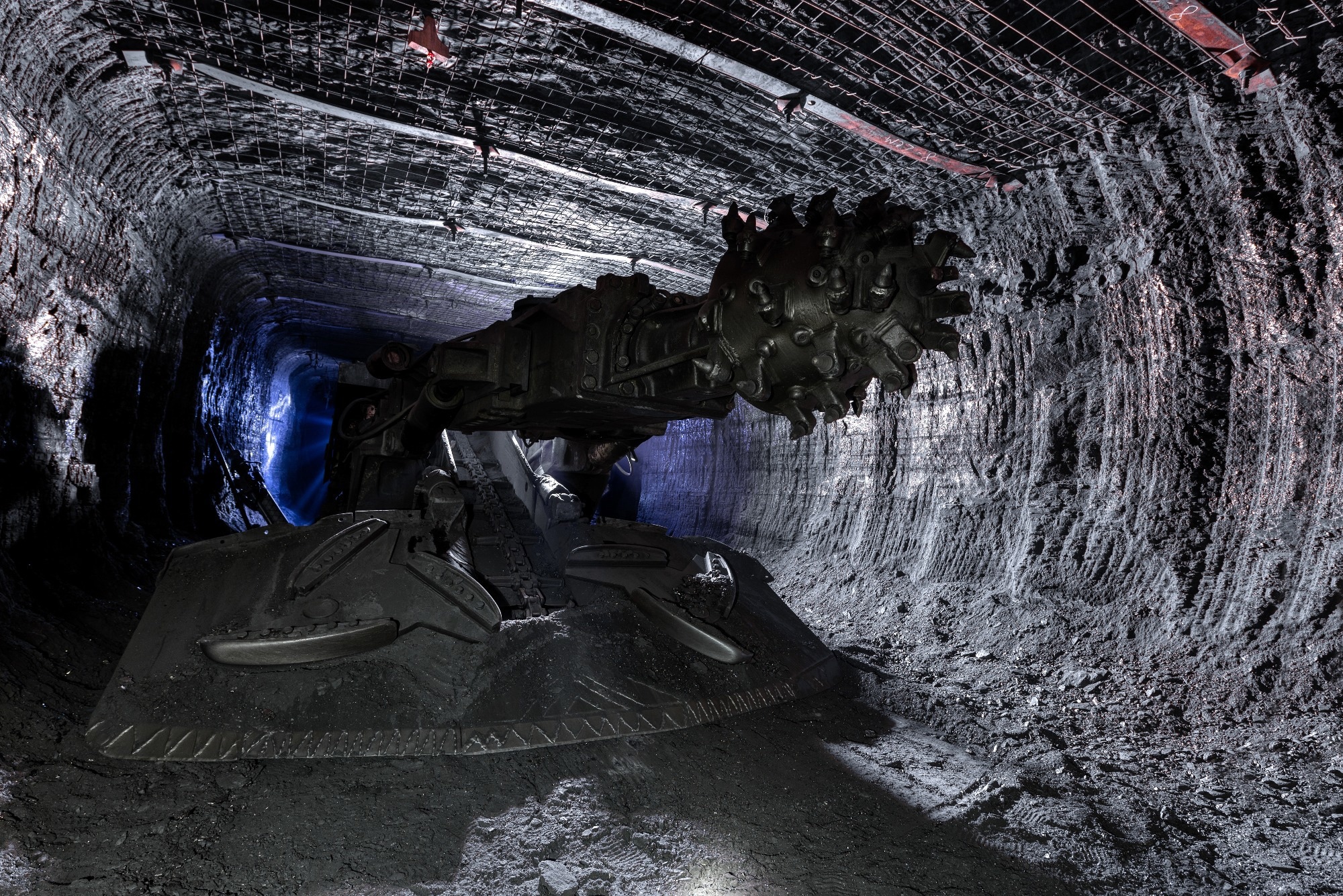 Study: BDL: transformer-based super-resolution network for degraded underground coal mine images. Image Credit: Nordroden/Shutterstock
In a recent article published in the journal Scientific Reports, researchers proposed a transformer-based super-resolution network called BDL (bidirectional adaptive interaction module (BAIM), dual-group feedforward network (DGFN), and local convolution block (LCB)) that effectively enhances degraded underground coal mine images by integrating local convolution and adaptive interaction mechanisms to improve image clarity and detail restoration under challenging conditions.
Operational Challenges in Underground Imaging
Underground coal mining remains a critical sector in global energy supply and economic development, despite challenges posed by environmental regulations and the push towards carbon neutrality. Ensuring safety and efficiency in these subterranean settings increasingly relies on intelligent and unmanned mining technologies, which depend heavily on high-quality visual data for monitoring and analysis. However, coal mine images captured underground are often plagued by poor lighting, dust interference, and motion blur caused by mining machinery, resulting in low-resolution and degraded images.
These conditions significantly impair the ability of automated systems and human operators to conduct accurate visual inspections and hazard detections. To address these challenges, super-resolution (SR) image restoration techniques have become an important research focus, aiming to enhance the resolution and clarity of these degraded images, thus improving the reliability of subsequent mining operations and safety measures.
Designing a Mine-Specific Super-Resolution Framework
The authors propose a novel Transformer-based super-resolution network named BDL, designed to effectively reconstruct high-resolution images from low-quality underground coal mine visuals. The network architecture incorporates three primary modules: the Bidirectional Adaptive Interaction Module (BAIM), the Dual-Group Feedforward Network (DGFN), and a Local Convolution Block (LCB).
Initially, shallow features are extracted via convolutional layers, capturing low-level image information such as edges and textures. Advanced feature extraction is performed using cascaded spatial and channel transformer blocks, which alternate between spatial window self-attention and channel-wise self-attention to model both local spatial and global channel relationships. The BAIM facilitates dynamic fusion of convolutional local features with transformer global representations via adaptive reweighting along spatial and channel dimensions.
The DGFN decouples channel preservation from spatial enhancement, balancing and protecting high-frequency details critical for interpreting structural elements in mining environments. The LCB incorporates multi-level convolution and squeeze-and-excitation channel weighting to restore fine-grained local details effectively. Together, these modules synergistically address the challenges posed by the dusty, poorly illuminated, and texture-rich images typical in underground coal mines.
The model is trained on a coal mine-specific dataset with augmented training strategies, including overlapping patches, L1 loss optimization, and a decreasing learning rate schedule. Evaluation metrics include peak signal-to-noise ratio (PSNR) and structural similarity index measure (SSIM), which quantitatively assess the fidelity of reconstructed images compared to original high-resolution targets.
Contribution of BDL Modules in Harsh Mining Conditions
Extensive experiments demonstrate that the BDL network significantly outperforms state-of-the-art super-resolution methods, including SRCNN, VDSR, EDSR, SwinIR, and DAT, on underground coal mine image datasets. In the ×2 upscaling task, the proposed method achieved a PSNR of 32.07 dB and SSIM of 0.9688 on the mine images, improvements of approximately 0.59 dB and 0.0036 over the previous best.
For ×4 scaling, it attained a PSNR of 28.10 dB and SSIM of 0.8836, surpassing other methods by margins of 0.24 dB and 0.0013. Visual inspections of reconstructed images reveal clearer equipment edges, enhanced texture details, and reduced noise, all of which are critical for accurate machine vision analysis in subterranean mining settings.
Download the PDF of this page here
The method’s balanced approach in fusing local convolution and global transformer features proved key to preserving high-frequency structural details often lost in harsh underground environments. Ablation studies highlight the individual contributions of the BAIM, DGFN, and LCB modules. BAIM’s bidirectional interaction was shown to outperform simple feature fusion methods, while DGFN effectively prevents information loss by decoupling channel and spatial processing pathways.
The LCB’s SE-attention mechanism contributed to finer detail restoration, facilitating better recognition of mining equipment and geological features in images. Computational efficiency analysis showed BDL achieved this improved reconstruction performance with relatively low model complexity and inference times compared to other transformer-based methods, making it more suitable for deployment in real-world mining systems where computational resources may be limited.
Implications for Autonomous Mining, Safety Monitoring, and Machine Vision
This research addresses the critical need for improving degraded image quality in underground coal mining environments by proposing a transformer-based super-resolution network that adaptively integrates local and global image features. By leveraging novel modules such as BAIM and DGFN, the model effectively reconstructs fine structural and texture details obscured by environmental factors like dust, low-light, and equipment motion blur.
This study lays a solid foundation for enhancing machine vision reliability in harsh mining conditions and underscores a promising direction for future work, including model lightweighting and robustness improvements. This advancement in image restoration technology holds significant practical implications for advancing automation and safety in underground coal mining operations.
Journal Reference
Hu T., Qiu J., et al. (2026).BDL: transformer-based super-resolution network for degraded underground coal mine images. Scientific Reports. DOI: 10.1038/s41598-026-48248-1, https://www.nature.com/articles/s41598-026-48248-1