Researchers have shown how repeated mining of thick coal seams changes the evolution of water-conducting fracture zones (WCFZ) in weak overburden, using theoretical analysis, numerical simulation, and field measurements taken at China’s Lingdong Coal Mine. The findings, published in Scientific Reports, provide new insights that could improve the safety of coal mining under water bodies.
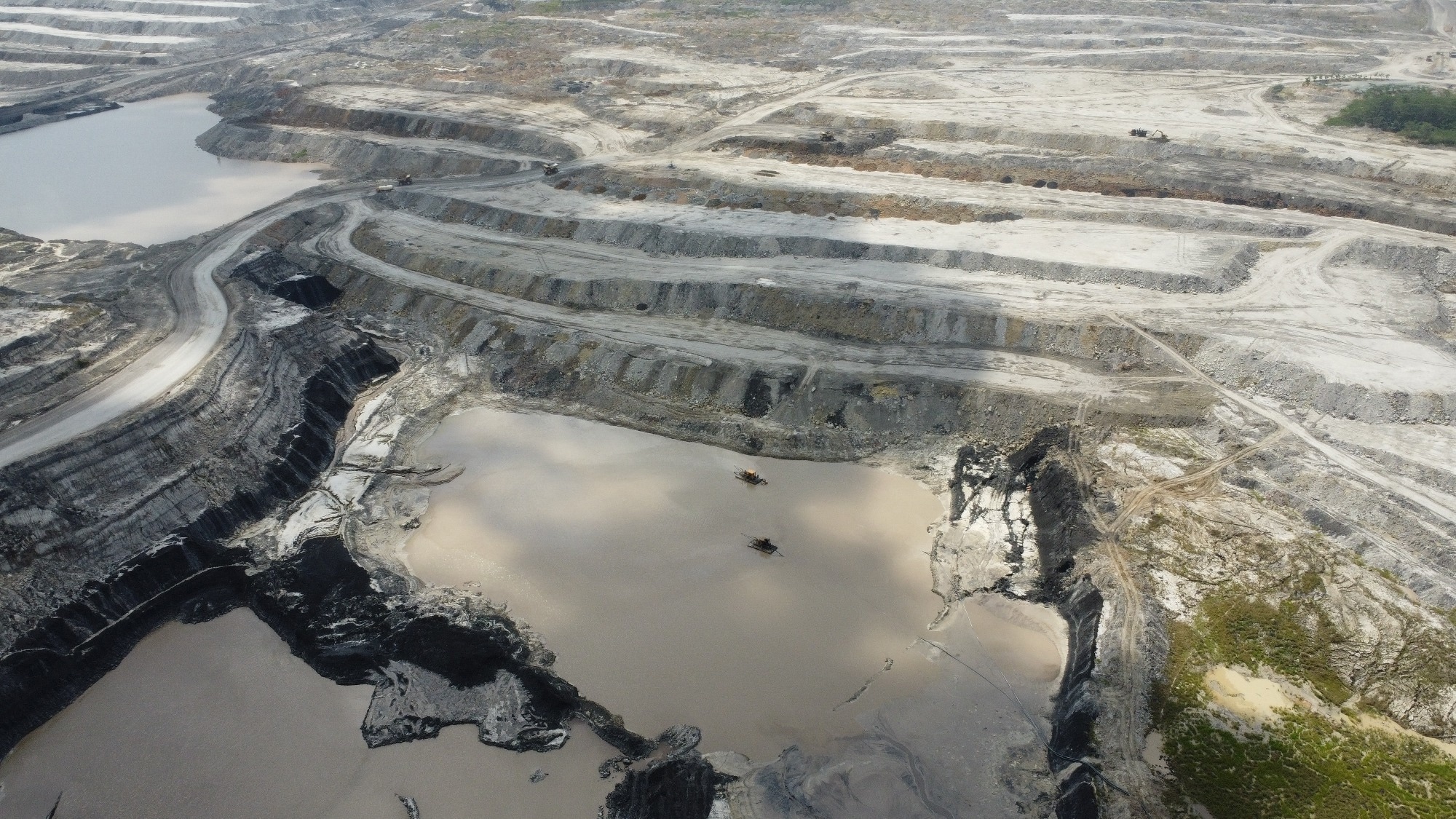 Study: Investigation on the water-conducting zone evolution in weak overburden due to repeated mining of thick coal seams. Image Credit: M.Taufiqur Rahman/Shutterstock.com
Lingdong Mine Geological Context
Mining thick coal seams causes a failure in the overlying rock strata. This leads to the development of WCFZs in the overburden. These zones can connect to surface water or aquifers, causing hazardous water inrush incidents that threaten mining safety.
It is thought that 285 key coal mines have experienced serious water inrushes, with billions of tons of coal reserves at risk. Predicting the height of water-conducting zones is vital but remains challenging due to variability in overburden mechanical properties and mining conditions.
No time to finish this now? Download a free PDF for later!
Traditional empirical prediction methods primarily focus on sandstone or hard strata, but in weakly cemented overburden such as mudstone-rich formations, fracture development mechanisms differ markedly. Repeated mining of stacked thick seams further complicates the fracture evolution.
This study focuses on the Lingdong Coal Mine in Inner Mongolia, China, where two thick coal seams (II2-1 and II3) have been extracted repeatedly beneath weak mudstone-dominated overburden, aiming to investigate how repeated mining influences WCFZ development and its implications for mining safety.
Key Strata Theory and Modeling
The investigation adopted a multidisciplinary approach comprising theoretical analysis, numerical simulation, and field measurements to explore the evolution of WCFZs under repeated mining conditions.
Numerical simulations were performed using the UDEC (Universal Distinct Element Code) software to model overburden fracturing during the progressive mining of the II2-1 and II3 coal seams. Simulations analyzed how fractures propagated upward with mining face advancement, the closure and compaction characteristics of fractures in the collapsed strata, and the eventual stabilization of the WCFZ’s height.
Field measurements employed the borehole water injection leakage detection method to empirically determine fracture-zone height. Boreholes were drilled at strategic angles adjacent to the mining faces, and leakage flow rates were monitored across segmented intervals using double-packer systems, high-pressure water injection pumps, and real-time flow meters. Changes in injection flow rates correlated with fracture development intensity, enabling in situ mapping of fracture-zone height and morphology.
The specific mining conditions studied included a working face on the II3 coal seam using sublevel fully mechanized top-coal caving with a combined cutting and caving height of approximately 12 meters. The overburden was characterized by about 70% weakly cemented mudstone with high clay mineral content, predominantly illite, known for swelling and softening behaviors.
Fracture-Zone Evolution Analysis
The theoretical analysis indicates that multiple key strata within the overburden control the evolution of the fracture zone, particularly thick mudstone layers that, despite weakness, provide bending stability and limit upward fracture propagation by accommodating deformation plastically rather than failing brittlely. The analytical model estimated the WCFZ height due to repeated coal seam mining to be approximately 83 meters.
A generalized empirical prediction formula, applied using a conservative medium-hard roof classification, yielded height estimates of around 79.3 meters for the fracture zone. These predictions, however, did not fully account for the weak mudstone's influence or repeated mining effects.
Numerical simulations revealed a distinct fracture evolution. As the mining face advanced, fractures initially propagated upward, aligned with roof fracturing, reaching heights up to 90 meters during early mining stages of the II2-1 seam.
With continued mining and the progression to the II3 seam, fractures in the central goaf area began to close and compact, transitioning into a stable compaction phase. Ultimately, the WCFZ stabilized at about 78 meters, prominently developing above the open-off cut and stopping line but remaining closed within the goaf center.
Field measurements using staged water injection boreholes confirmed the numerical and theoretical findings. Leak-off volumes increased significantly at fracture zones and decreased near the upper boundary, allowing for precise delineation of fracture-zone height.
Measurements ranged from 74.5 to 77.1 meters, with an average height of around 75.8 meters. The morphology of the fracture zone resembled a saddle shape, with variations in fracture development patterns linked to borehole inclination and local recompaction differences.
Implications for Safe Mining
This study systematically investigated the evolution of WCFZs in weak overburden subjected to repeated mining of thick coal seams at Lingdong Coal Mine.
Across the different methods, results were closely aligned. Field measurements recorded fracture-zone heights of 74.5 to 77.1 meters, averaging 75.8 meters, while numerical simulation produced a stabilized height of approximately 78 meters, and theoretical analysis yielded 83 meters.
Ultimately, these findings provide theoretical and practical insights for multi-seam coal mining beneath water bodies and weak overburden, potentially laying the foundation for future research into safer mining practices. The study emphasizes the need to tailor fracture zone predictions to overburden lithology and mining disturbance history, thereby improving water hazard control and sustainable coal resource exploitation.
However, the authors caution that the results are specific to the Lingdong mine, and future work should therefore test the framework under long-term disturbance and more complex geological structures.
Journal Reference
Yang Z., Niu X., et al. (2026). Investigation on the water-conducting zone evolution in weak overburden due to repeated mining of thick coal seams. Scientific Reports. 16. https://www.nature.com/articles/s41598-026-46365-5.