*Important notice: This news reports on an unedited version of an accepted paper and is awaiting final editing. Therefore, the paper should not be regarded as conclusive or treated as established information.
A recent study of potash mining’s impact on brine levels has highlighted the complex interactions between mineral extraction, groundwater recharge, and chemical evolution in continental salt lake systems. Using the Qarhan Salt Lake in China’s Qaidam Basin as a reference, researchers analyzed 177 sites, comparing historical baseline conditions with measurements collected in 2020 and 2024. Their findings were published in Scientific Reports.
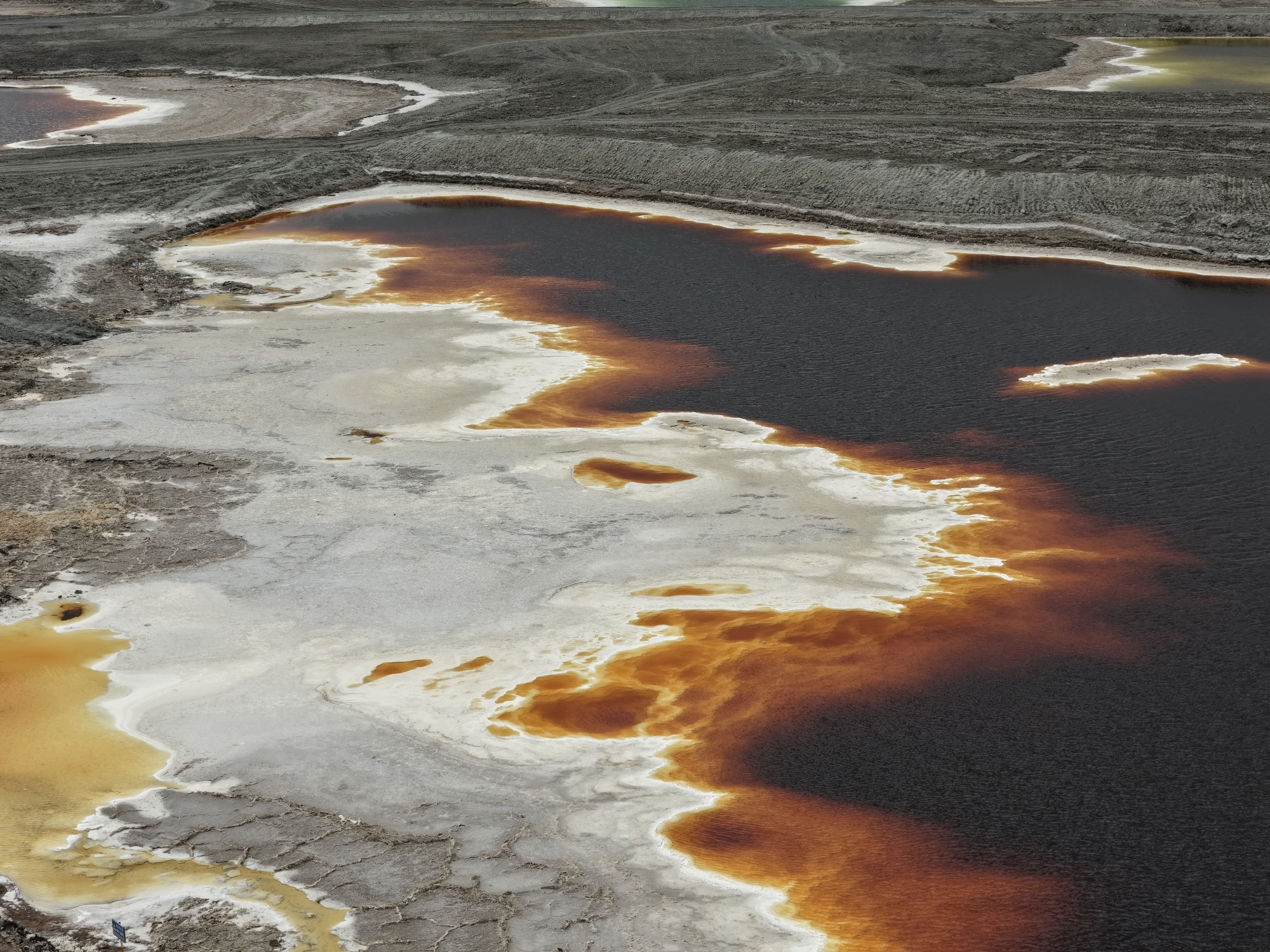 Study: Multi-temporal investigation of brine hydrogeochemical evolution under sustained potash mining in the Qarhan Salt Lake, Qaidam Basin, China. Image Credit: Studio YOBAEK/Shutterstock.com
Understanding the Hydrogeochemical Impact of Sustained Potash Mining
Salt lake brines contain valuable resources such as potassium, lithium, boron, and magnesium, which support fertilizer production, battery technologies, and industrial applications.
These brines form through evaporation, mineral dissolution, and groundwater movement. However, intensive mining can disrupt natural processes by removing mineral-rich brine faster than natural recharge can replenish it.
Qarhan Salt Lake covers about 5856 km2 in Qinghai Province, northwestern China, and is China’s largest potash-producing base. Commercial potash production began here in the 1960s. Mining operations pump up underground brine, concentrate it by solar evaporation, and recover KCl via selective crystallization.
Prolonged extraction can lower brine levels, alter groundwater flow, and change dissolved chemical concentrations. Groundwater inflow into depleted areas may also influence mineral dissolution and precipitation, affecting valuable resources and long-term stability.
Although previous studies have examined Qarhan’s geology, brine origins, and localized mining impacts, fewer have combined historical water-level records, chemical analysis, and spatial mapping across the mining district.
The researchers addressed this gap by analyzing brine levels, the concentrations of KCl, NaCl, MgCl2, LiCl, B2O3, total dissolved solids, and specific gravity to investigate how long-term potash mining has depleted brine reserves and reshaped the spatial distribution of brine chemistry.
Tracking Brine Levels and Dissolved Mineral Composition
The researchers established a monitoring network of 177 observation wells and sampling sites across the Qarhan mining district. They conducted field campaigns in the fourth quarters of 2020 and
2024 and used historical records as baseline data. By revisiting the same locations, they tracked changes in brine levels and chemical composition over time.
The team measured water-table depth using an electronic indicator with an accuracy of ±0.01 m. Before collecting brine samples, they purged at least three well volumes to improve sample representativeness. They stored the samples in clean polyethylene bottles and transported them to the laboratory under refrigerated conditions.
A precision densitometer was used to measure specific gravity, while gravimetric analysis determined total dissolved solids (TDS). Inductively coupled plasma optical emission spectrometry (ICP-OES) quantified the concentrations of potassium, sodium, magnesium, chloride, and boron, while inductively coupled plasma mass spectrometry (ICP-MS) was used for lithium.
To align the results with industrial practice, the researchers expressed potassium as equivalent KCl content, magnesium as equivalent MgCl2 content, and lithium as LiCl concentration.
The team used Golden Software Surfer to generate contour maps and visualize spatial patterns. Minimum-curvature interpolation estimated parameter distributions between monitoring sites. They also created difference maps comparing 2024 with 2020 to identify areas with substantial changes in water levels and brine chemistry.
This approach helped distinguish district-wide trends from localized changes associated with mining and groundwater recharge.
Potash Depletion and Shifting Brine Chemistry
The results reveal persistent declines in brine levels and KCl concentrations across the Qarhan mining district. Median water-table depth increased from -0.44 m at baseline to -2.98 m in 2020 and -3.95 m in 2024, indicating a further decline of 0.97 m over four years. The researchers attribute this drawdown to brine extraction exceeding natural recharge.
Median KCl concentration fell by 53% from baseline to 2024, with the strongest depletion in Bieletan and Qarhan, where water levels also declined substantially. Meanwhile, NaCl concentrations increased while MgCl2 concentrations decreased, suggesting that selective KCl recovery, halite dissolution, and dilution have reshaped residual brine chemistry.
Declining TDS and specific gravity indicate an overall reduction in brine concentration. However, median LiCl concentration rose by 35%, from 293 mg/L in 2020 to 397 mg/L in 2024.
Lithium enrichment may reflect its retention in residual brine, interactions with lithium-bearing clay minerals, and groundwater movement. In contrast, B2O3 concentrations declined by 25%, highlighting the different responses of individual dissolved components.
Download a free copy of this page here!
Spatial maps revealed greater depletion in central extraction zones, while peripheral areas retained comparatively less depleted brine. Localized lithium enrichment could create opportunities for integrated lithium–potash recovery.
However, substantial groundwater drawdown also warrants closer monitoring for potential subsidence, salt-crust collapse, and disruption of sensitive ecosystems.
Toward Sustainable Potash Extraction and Integrated Mineral Recovery
The study demonstrates that sustained mining has reshaped the hydrogeological conditions and brine chemistry of Qarhan Salt Lake. Declining water levels and KCl concentrations indicate increasing pressure on potash resources, while contrasting changes in sodium, magnesium, lithium, and boron highlight the influence of selective extraction, dilution, and water–rock interactions.
Spatial monitoring can guide sustainable extraction and identify opportunities for recovering additional resources from lithium-enriched brines. Managed aquifer recharge could help address declining water levels by replenishing groundwater reserves.
However, operators must carefully evaluate its potential to dilute valuable minerals. Hydrogeological modeling could help determine whether recharge would improve resource sustainability without compromising brine quality.
Significant groundwater drawdown may increase the risk of ground instability and disrupt sensitive hypersaline ecosystems. Continued monitoring of water levels, brine chemistry, and surrounding environments can help identify emerging risks and guide mitigation measures.
Overall, the research establishes a framework for assessing how sustained extraction changes mineral-rich brine systems. Long-term production will depend on balancing extraction with natural recharge, tracking chemical changes, and protecting surrounding ecosystems.
Journal Reference
Jing, Z., & Miao, Q. (2026). Multi-temporal investigation of brine hydrogeochemical evolution under sustained potash mining in the Qarhan Salt Lake, Qaidam Basin, China. Scientific Reports. DOI: 10.1038/s41598-026-68578-4. https://www.nature.com/articles/s41598-026-68578-4.
Disclaimer: The views expressed here are those of the author expressed in their private capacity and do not necessarily represent the views of AZoM.com Limited T/A AZoNetwork the owner and operator of this website. This disclaimer forms part of the Terms and conditions of use of this website.