Why Tailings Dams Fail
Climate Change as a Compounding Factor
The Environmental Consequences
Industry Response and Remaining Gaps
Conclusion
References and Further Reading
Every ton of metal produced at a mine leaves behind a far larger volume of waste. That waste, a fine-grained, water-saturated slurry of crushed rock, residual chemicals, and heavy metals known as tailings, must be stored somewhere, typically behind an earthen embankment. Global estimates place the total number of tailings storage facilities (TSFs) at 18,000-35,000, with thousands more in operation across China alone, and the volume they hold is growing as declining ore grades force miners to process more rock for the same metal output.1,2 A run of high-profile failures and an expanding body of research have pushed tailings management to the top of the mining industry’s environmental agenda.
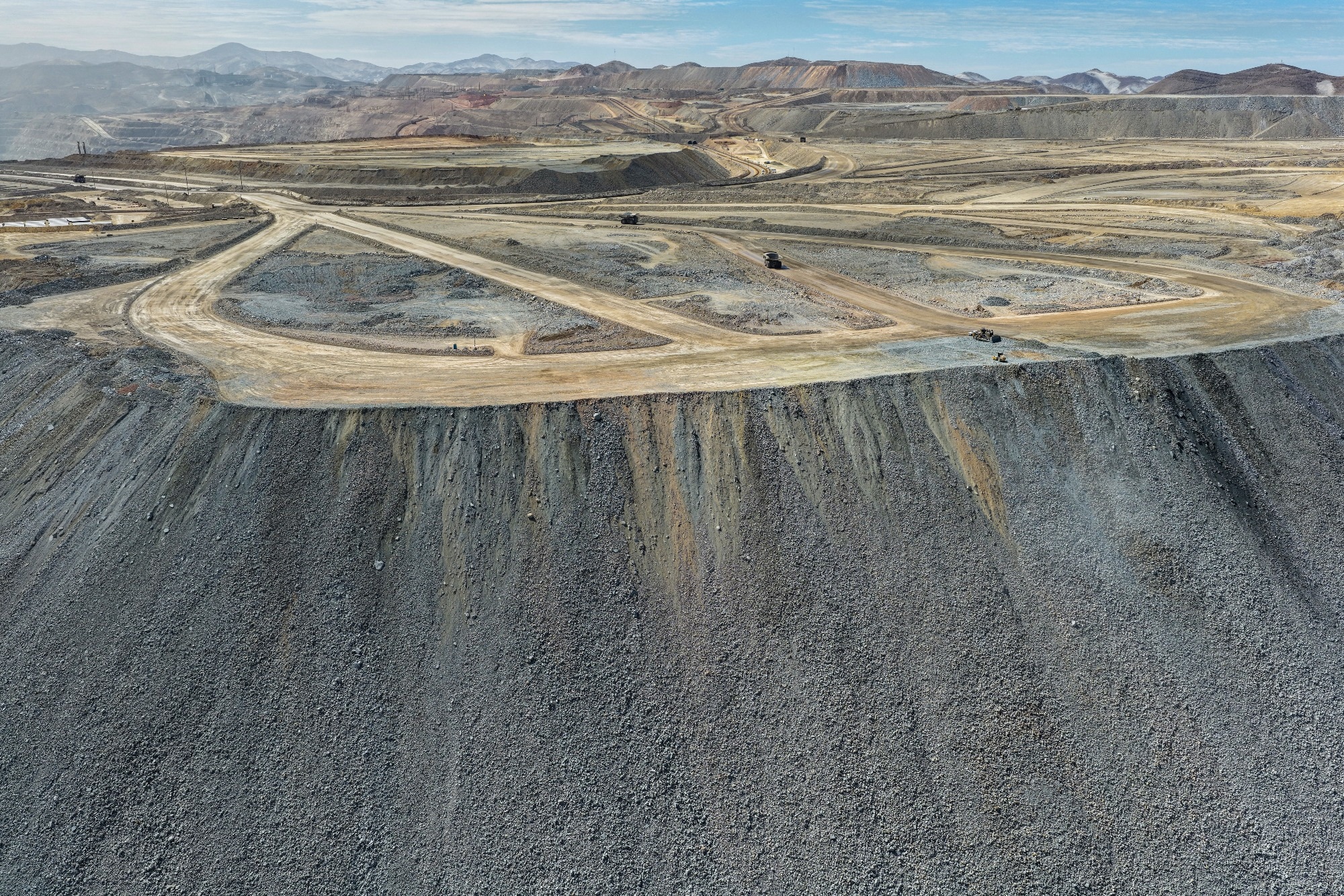
Image Credit: WILLIAM LUQUE/Shutterstock.com
Why Tailings Dams Fail
Tailings dams are structurally distinct from conventional water-retaining dams. Rather than being built in a single program of construction, they are raised in stages, sometimes over decades and across multiple owners, with fresh lifts placed on waste that may not yet have consolidated.3
The construction method used to raise the embankment directly affects stability. The cheapest and historically most common approach, the upstream method, in which each raise is built over previously deposited tailings, is also the most hazardous. A substantial proportion of global facilities were built this way, and upstream construction is consistently associated with a disproportionately high share of recorded failures; the method has the highest failure rate of any construction type, with cumulative failure probabilities estimated at 1.5 %-4.4 % across databases.4 Loose, saturated tailings can liquefy rapidly under seismic loading or elevated pore water pressure, converting a stable-looking embankment into a fast-moving flow within seconds.
Brazil banned the upstream method in 2019 after 270 people died when Vale’s Brumadinho dam collapsed; Chile banned it decades earlier following earthquake-related failures. The ban has not been adopted globally, leaving a significant legacy stock of at-risk structures in operation.
A 2025 peer-reviewed analysis in Environment, Development and Sustainability found that upstream construction and overtopping together explain most historical failures, and that failure rates reflect structural and maintenance deficiencies rather than simply increased mining activity.4
Climate Change as a Compounding Factor
Rainfall is implicated in roughly 25 % of global tailings dam failures.5 As precipitation patterns intensify, structures designed to historical rainfall norms face conditions they were never engineered to handle.
A 2025 review in Discover Geoscience found that extreme rainfall, rising temperatures, and permafrost degradation are reducing the structural integrity of TSFs across multiple continents, increasing the risk of seepage, erosion, and collapse.6
Events in early 2025 illustrated the real-world effect. In March, two tailings facilities at Indonesia’s Morowali Industrial Park and a third in Bolivia’s Llallagua District failed within days of each other during heavy rainfall events, killing workers and releasing mine waste into local waterways.
In Zambia, a February 2025 spill at a Copperbelt copper operation released an estimated 50 million liters of acidic waste into the Kafue river system, contaminating farmland, destroying aquatic life, and cutting off public water supply to more than 500,000 people. The facility had previously been flagged by regulators for leaking structures but continued operating.7
The Environmental Consequences
When a tailings dam fails, the released slurry can travel hundreds of kilometers. The 2015 Fundão dam failure in Brazil discharged an estimated 43.7 million cubic meters of iron ore tailings into the Rio Doce, contaminating the river along its entire 650-kilometer course to the Atlantic. A 2025 study in Current Opinion in Environmental Science and Health found that the estuary still shows suppressed biodiversity and elevated heavy metal concentrations a decade on.8
Beyond catastrophic events, chronic contamination from seepage is a persistent and often overlooked concern. Tailings commonly contain arsenic, lead, cadmium, and copper, along with residual processing chemicals.
Acid mine drainage, produced when sulfide minerals in tailings oxidize on contact with water and air, can persist for centuries after a mine closes, forming metal-laden, acidic leachate.1 The chronic dimension of the problem is reflected in long-term monitoring data: a March 2026 EPA working paper analyzing 864 US tailings dams over 33 years confirmed a statistically significant increase in failure probability as dams age, a concern given that much of the global stock dates from the 1960s and 1970s.9
Industry Response and Remaining Gaps
The Brumadinho disaster prompted the most coordinated industry response to date. In August 2020, ICMM, UNEP, and the Principles for Responsible Investment jointly published the Global Industry Standard on Tailings Management (GISTM), comprising 77 auditable requirements covering design, monitoring, closure, and community engagement. ICMM members committed to full conformance across all facilities by August 2025.10
The August 2025 progress report against that deadline was mixed: 67 % of the 836 assessed facilities had achieved full conformance, with stronger results, above 80 %, at facilities classified as extreme or very high consequence.11 The Global Tailings Management Institute (GTMI), established in January 2025, now administers independent third-party certification to shift oversight beyond industry self-reporting.
Click here to download a PDF copy of this page
Technology is also advancing. Dry-stack tailings, where water is removed before deposition, eliminating the risk of liquefaction, are gaining traction, though significantly higher capital and energy costs limit adoption in high-volume operations. A February 2026 study demonstrated that digital image processing and photogrammetry can track embankment deformation in real time, enabling earlier intervention before visible failure signs appear.12 Satellite monitoring and AI-driven risk alert systems are also being piloted across major mining jurisdictions.
The governance gap, however, remains the central problem. GISTM applies only to ICMM members. Smaller operators, state-owned enterprises, and artisanal miners, who account for a substantial proportion of global tailings, are not covered. Earthworks has called for a universal upstream construction ban, mandatory independent financial assurance for closure liabilities, and binding community consent requirements. None are currently required under international law.7
Conclusion
The technical knowledge to build and manage safer tailings facilities exists; the regulatory architecture to require it globally does not. As mining expands, tailings volumes will grow alongside it.
The events of 2025 in Indonesia, Bolivia, and Zambia are a reminder that the gap between what the industry knows and what it consistently does carries a measurable cost in lives, river systems, and long-term contamination. Addressing that gap requires binding global standards, full public transparency on facility data, and enforceable closure liability frameworks.
References and Further Reading
- United Nations Environment Programme. (2024). Knowledge gaps in relation to the environmental aspects of tailings management. https://www.greenpolicyplatform.org/sites/default/files/downloads/tools/Final%20Knowledge%20Gaps%20Report_Environmental%20Aspects%20of%20Tailings%20Management%20(January%202024)_1.pdf
- Earthworks. (2023). Tailings: Types and risks of tailings dams. https://earthworks.org/issues/tailings/
- National Park Service. (2023). Long-term risk of tailings dam failure. U.S. Department of the Interior. https://www.nps.gov/articles/aps-v13-i2-c8.htm
- Garcia, F. F., Rodriguez, J. A., & Smith, P. (2025). Mine tailings dams’ failures: Serious environmental impacts, remote solutions. Environment, Development and Sustainability, 27, 18179–18201. https://doi.org/10.1007/s10668-024-04628-z
- GRID-Arendal. (2016). Climate change and its effect on the stability and lifespan of a tailings dam. https://www.grida.no/resources/11425
- Eze, K. N., Okafor, C. U., & Nwankwo, E. I. (2025). Sustainability in management for unsaturated mine tailings dams amidst climate change. Discover Geoscience, 3, Article 112. https://doi.org/10.1007/s44288-025-00222-6
- Earthworks. (2025). A string of tailings dam failures shows the urgency of putting safety first. https://earthworks.org/blog/a-string-of-tailings-dam-failures-shows-the-urgency-of-putting-safety-first/
- Duarte, G., Silva, A. M., Oliveira, R., & Mendes, L. (2025). Tailings dam failures in Brazil: River contamination, ecosystem recovery, and institutional responses. Current Opinion in Environmental Science and Health. https://doi.org/10.1016/j.coesh.2025.100654
- Nehiba, C. (2026). Tailings dam failures and natural hazards in the US. U.S. Environmental Protection Agency. https://www.epa.gov/environmental-economics/tailings-dam-failures-and-natural-hazards-us
- International Council on Mining and Metals, United Nations Environment Programme, & Principles for Responsible Investment. (2020). Global industry standard on tailings management (GISTM). https://www.icmm.com/en-gb/our-principles/tailings/global-industry-standard-on-tailings-management
- International Council on Mining and Metals. (2025). Tailings progress report: Implementing the global industry standard on tailings management. https://www.icmm.com/en-gb/research/tailings-management/2025/tailings-progress-report
- Abankwa, B., Mensah, K., Osei, E., & Asante, F. (2026). Quantitative evaluation of displacement fields in a tailings dam physical model under elevated pore water pressure using digital image processing. MDPI Water. https://www.mdpi.com/2673-6489/6/1/17
Disclaimer: The views expressed here are those of the author expressed in their private capacity and do not necessarily represent the views of AZoM.com Limited T/A AZoNetwork the owner and operator of this website. This disclaimer forms part of the Terms and conditions of use of this website.