Why the Traditional Model is No Longer Sufficient
Decarbonizing Operations: Renewables, Electrification, and Green Hydrogen
Critical Minerals and the EV Supply Chain
Structuring Considerations: Risk, Governance, IP, and Exit
Conclusion
References and Further Reading
The mining industry has long used joint ventures (JVs) to share capital costs, pool expertise, and manage geopolitical risk. Traditionally, these arrangements brought together sector peers, including major miners, junior developers, and commodity trading houses, united by shared project economics. That model is now being supplemented, and in some cases displaced, by cross-sector alliances oriented around sustainability. Driven by investor pressure, tightening regulation, and the demands of the energy transition, mining companies are forming partnerships with renewable energy developers, equipment manufacturers, automakers, battery producers, and technology firms. These next-gen JVs differ from their predecessors in motivation, membership, and complexity, and they require correspondingly different legal and commercial frameworks.1
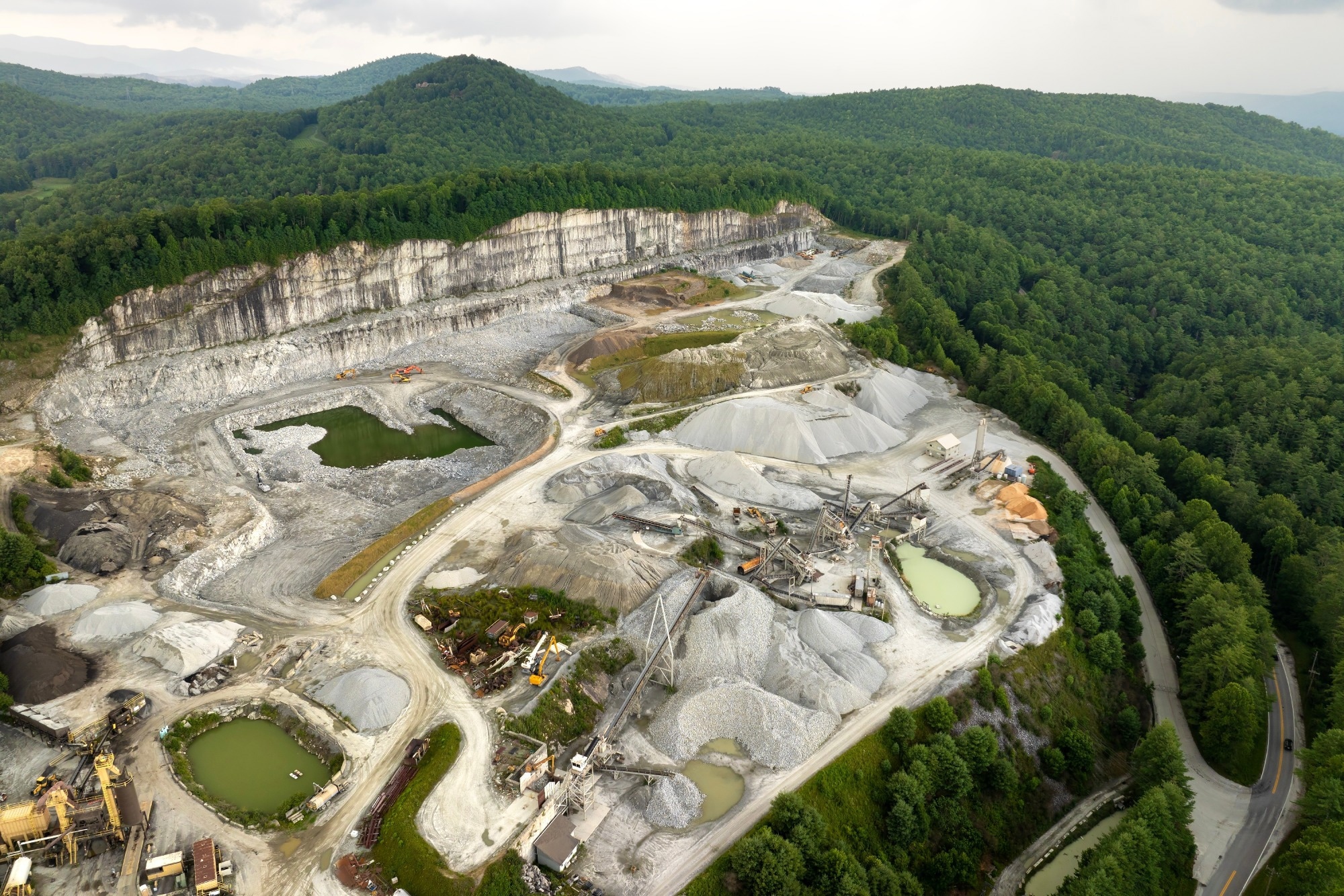
Image Credit: Bilanol/Shutterstock.com
Why the Traditional Model is No Longer Sufficient
Classic mining JVs were structured around shared asset development: jointly owned mines, with costs and revenues allocated according to equity stakes, and partnerships dissolving once the resource was exhausted. Partner selection typically remained limited to entities already familiar with the sector.
The sustainability imperative has changed that logic. Mining accounts for an estimated 4–7 % of global GHG emissions, with Scope 1 and 2 operational emissions at roughly 1 % and fugitive methane from coal mining making up much of the remainder.2 Meeting Paris Agreement targets requires action on both direct emissions and the downstream emissions embedded in the commodities produced, something no single company, or traditional JV structure, can accomplish alone. Bloomberg estimates the sector will require approximately USD 2.1 trillion in investment by 2050 to support net-zero goals, pushing miners toward partners they would not have considered a decade ago.1
Decarbonizing Operations: Renewables, Electrification, and Green Hydrogen
A 2025 bibliometric review of 186 peer-reviewed studies identifies renewable energy integration, fleet electrification, and green hydrogen as the primary technological pathways for mining decarbonization, while noting high upfront costs, remote-site logistics, and inconsistent policy as persistent barriers.3 Cross-sector JVs help address these constraints by bringing in capital and expertise from partners for whom solving them is core business.
Power purchase agreements (PPAs) with renewable providers are the most established form. BHP sources 100 % of the electricity for its Australian nickel operations from Enel Green Power's Flat Rocks Wind Farm under a 12-year PPA. Codelco contracts 375 GWh per year from an Atlas Renewable Energy solar-plus-storage project. Anglo American and EDF Renewables incorporated Envusa Energy, a jointly owned company, to develop a wind and solar ecosystem in South Africa.1
BHP's collaboration with Caterpillar, initiated in 2021 for zero-exhaust-emission haul trucks, had by 2024 extended to trialing technology capable of charging battery-electric trucks in motion. Fortescue's USD 2.8 billion agreement with Liebherr covers battery-electric trucks, excavators, and bulldozers toward a zero-emission fleet by 2030.1 These arrangements involve co-development obligations, shared IP, and performance risk that go well beyond a standard procurement contract.
Want to save for later? Click here.
Accenture's institutional investor research finds that JVs and R&D partnerships targeting Scope 3 emissions, those generated by the buyers and processors of mined output, are among the most valued decarbonization mechanisms. Surveyed investors ranked Scope 3 reduction above Scope 1 and 2 efforts in expected financial impact, supporting the commercial case for alliances with steelmakers, battery manufacturers, and automotive OEMs.4
Critical Minerals and the EV Supply Chain
A third category involves automakers and battery producers moving upstream to secure critical mineral supply.
PwC's Mine 2023 report notes that critical minerals dominated deal activity in recent years, with OEMs pursuing JVs and long-term offtake agreements to lock in supply chains.5
- General Motors formed a JV with Lithium Americas to develop a Nevada lithium mine
- Ford took a direct equity stake in an Indonesian battery-nickel facility alongside PT Vale and Huayou Cobalt
- Stellantis signed an offtake agreement with NioCorp for rare earth elements
- LG Energy Solution agreed to produce lithium hydroxide in Morocco with Yahua Industrial Group.1
These arrangements reflect OEM concern that commodity markets alone cannot reliably deliver the volumes and specifications required for scaled EV production. For miners, the benefit is offtake certainty and, in some cases, access to development capital.
Structuring Considerations: Risk, Governance, IP, and Exit
Cross-sector JVs are structurally more complex than traditional mining partnerships. Partners come from different business environments with distinct risk tolerances, regulatory exposures, credit profiles, and investment horizons, and the documentation must explicitly account for this. 1
Risk allocation is central. Where a miner partners with a cleantech developer deploying unproven technology, the agreement must specify where liability sits if the technology fails and causes an operational shutdown and assess whether the liable party can actually absorb that exposure. In equipment JVs, miners need contractual rights to product upgrades, performance warranties, and defined remedies for failure.1 Offtake structures raise additional questions: a lithium supply agreement between a miner and an automaker must address production shortfalls, startup delays, and force majeure, including whether the operator must source product from third parties to meet delivery obligations and who bears that cost.
Governance must reflect partner asymmetry. Where a large-cap miner is working with a founder-led technology company, the agreement should give operational control to the majority partner while protecting minority interests through reserved matters, information rights, and anti-dilution provisions. Deadlock resolution mechanisms are essential to prevent disputes from stalling operations.1
IP ownership requires early agreement. When partners jointly develop new technologies, the JV documentation must define who owns foreground IP, on what terms each party may commercialise it outside the venture, and how rights are allocated on termination. A perpetual licensing arrangement can work, but it depends on the parties maintaining a functional post-JV relationship, an outcome that cannot be taken for granted.1
Exit provisions need equal care. Miners will generally want to return to their core business once a JV has served its purpose; OEMs may want to retain offtake access after divesting equity; PPAs must contain continuity protections if the power provider changes ownership. The agreement must clearly distinguish rights that are stapled to the equity position from those that are severable and can be retained or transferred independently.1
Conclusion
The growth of cross-sector sustainability JVs reflects a structural shift in how the mining industry is organising to meet the demands of the energy transition. Partnerships with renewable providers, equipment manufacturers, technology companies, and automotive OEMs are moving from marginal to mainstream.
The sector is still in an early phase, and the performance record of these alliances is still forming. As A&O Shearman notes, participants will be monitoring which structures work and drawing conclusions for future agreements. What is already clear is that the legal and commercial frameworks governing these partnerships must be more sophisticated than those built for traditional mining JVs - designed to manage partners with divergent risk profiles, unsettled IP boundaries, and variable exit timelines in a regulatory environment that will itself continue to evolve.
References and Further Reading
- Johnson, M., Poustie, L., & Urda Kassis, C. (2025, January 29). Miners explore next-gen joint ventures in pursuit of sustainability. A&O Shearman. https://www.aoshearman.com/en/insights/miners-explore-next-gen-joint-ventures-in-pursuit-of-sustainability
- McKinsey & Company. (2020). Climate risk and decarbonization: What every mining CEO needs to know. https://www.mckinsey.com/capabilities/sustainability/our-insights/climate-risk-and-decarbonization-what-every-mining-ceo-needs-to-know
- Amegboleza, A. A., & Ülkü, M. A. (2025). Sustainable energy transition for the mining industry: A bibliometric analysis of trends and emerging research pathways. Sustainability, 17(5), 2292. https://doi.org/10.3390/su17052292
- Accenture. (2023, August 16). Investor expectations for ESG in mining industry: Mining's new role as a champion of decarbonization. https://www.accenture.com/us-en/insights/natural-resources/mining-decarbonization
- PwC. (2023). Mine 2023: The era of reinvention. https://www.pwc.com/mine
Disclaimer: The views expressed here are those of the author expressed in their private capacity and do not necessarily represent the views of AZoM.com Limited T/A AZoNetwork the owner and operator of this website. This disclaimer forms part of the Terms and conditions of use of this website.