Why Mine Closure Matters
Veolia's Approach
Wheal Jane, Cornwall, UK
Woodlawn, New South Wales, Australia
Eastern Germany - Lignite Sites with LMBV
The Bigger Picture
References and Further Reading
On a January morning in 1992, the Nangiles Adit at Wheal Jane tin mine in Cornwall collapsed without warning. Within 24 hours, roughly 50 million liters of acidic, metal-laden water had poured into the Carnon River and spread across more than six million square meters of the Fal Estuary, turning the water a vivid orange-brown that reached Falmouth Docks. The mine had closed less than a year earlier. No treatment plant was running. Nobody had been ready.
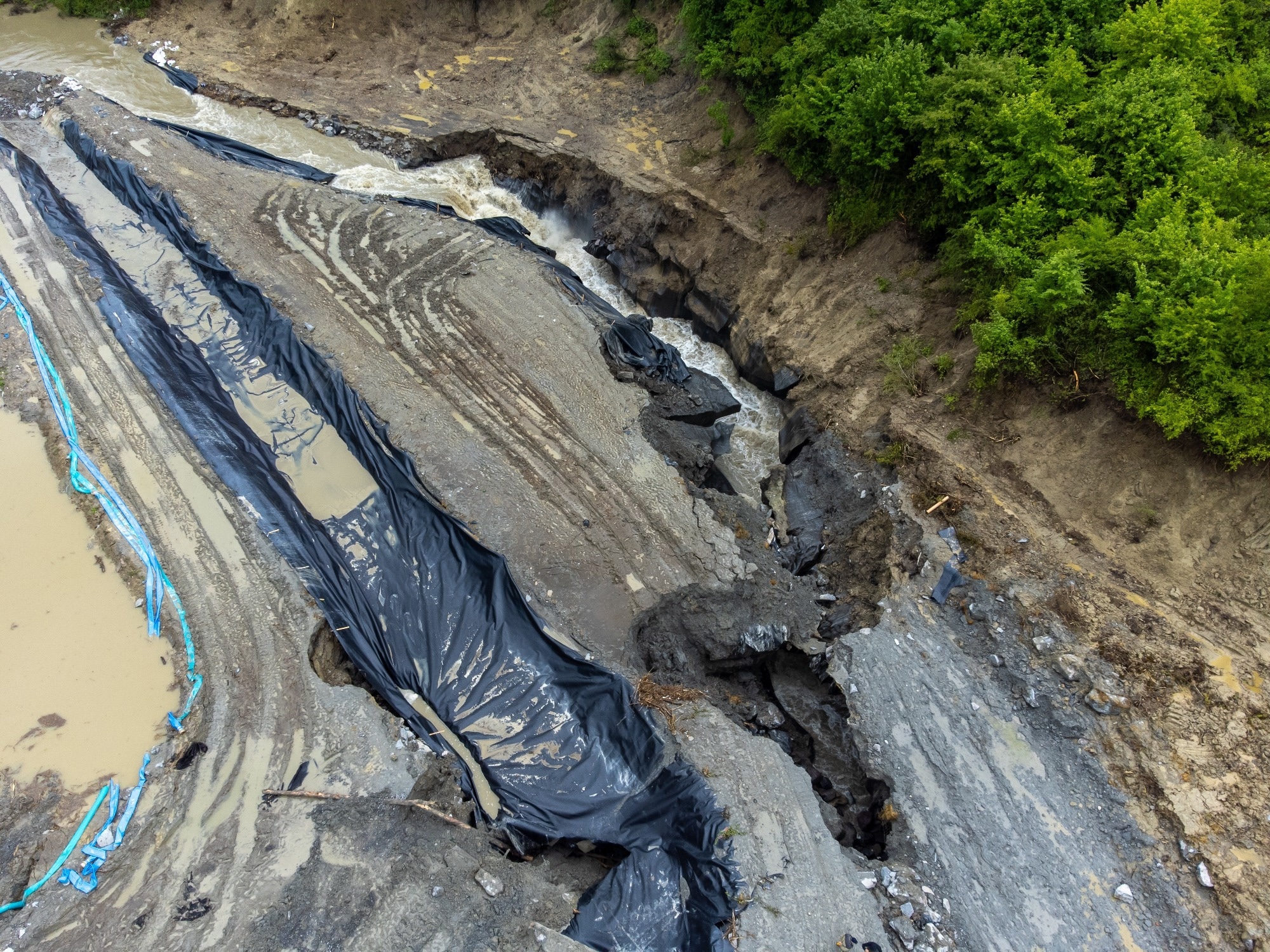
Image Credit: Sebastian_Photography/Shutterstock.com
That event is still cited in mine closure literature more than three decades on - not because it was uniquely catastrophic, but because it was preventable. It illustrated a problem the mining industry has long grappled with: the day a mine stops producing is often when its most demanding environmental work begins. Veolia, a French environmental services company operating across the water, waste, and energy sectors, has developed a mine closure practice that covers the full post-extraction challenge, from dismantling surface infrastructure and treating polluted groundwater to converting old mine voids into working facilities with a new purpose.
Why Mine Closure Matters
The core environmental risk from a closed or abandoned mine is acid mine drainage (AMD), the acidic, metal-laden water that forms when sulphide minerals in exposed rock react with air and water to produce sulphuric acid.1 This acid dissolves heavy metals, iron, zinc, cadmium, arsenic, and lead, and carries them into rivers and groundwater. Streams affected by AMD can reach pH levels of 4 or lower, comparable to battery acid, destroying fish populations and invertebrate communities.2 In Pennsylvania alone, AMD from old coal workings has affected more than 5,500 miles of waterways, and the problem spans mining regions across Australia, Canada, South Africa, Spain, and the UK.3,4
What makes abandoned mines particularly hard to manage is persistence. Once AMD begins, it can continue for decades or centuries.1 A literature review cited by Earthworks found no large-scale hard rock surface mine that has demonstrated AMD can be permanently halted once started, which makes proactive closure planning - not reactive clean-up - essential.2
Beyond water contamination, unmanaged sites pose risks of ground subsidence, toxic dust from tailings, and permanent land loss. Regulators in most jurisdictions now require operators to hold financial bonds before a licence is granted, reflecting the principle that the polluter, not the public, should pay.5 In the United States alone, more than 500,000 abandoned mines have been identified, particularly in western states, presenting ongoing risks to surface water, groundwater, and human health.1
Want to save for later? Click here.
Veolia's Approach
Veolia positions its mine closure offer across the full life of a site: decommissioning and dismantling infrastructure, soil and water remediation, and long-term environmental monitoring. A central product is the proprietary DenseSludge™ process, which treats AMD by producing high-density sludge, reducing the volume requiring management and cutting water treatment costs and energy consumption.5 The company also designs soil remediation programs and builds waste treatment infrastructure within former mine footprints.
Wheal Jane, Cornwall, UK
Veolia's work at Wheal Jane is the clearest illustration of what intervention looks like after an unmanaged closure event. The mine closed in March 1991, and pumps were switched off. Acidity built up as the workings flooded. When the Nangiles Adit failed in January 1992, contaminated water containing elevated levels of cadmium, arsenic, copper, and zinc spread across the Carnon River and the Fal Estuary, leaving a plume visible for miles.6
Veolia subsequently took on operations and maintenance of the site's wastewater treatment facilities. The active treatment plant, commissioned in 2000, pumps up to 660 liters per second of mine water, treating it through sludge recirculation, aeration, and lime dosing before discharge. It currently handles over 6000 m³ of polluted water daily at lower cost and energy use than the earlier configuration.5, 6 Operational responsibilities transferred to the Coal Authority on 1 April 2011, supported by £9.3 million in Defra funding as part of an expansion of the Authority's remit into non-coal mine water remediation.7 The scheme is now delivered by the Mining Remediation Authority as part of the national Water and Abandoned Metal Mines programme. The Carnon River remains the most metal-polluted river in England, a measure of how long the legacy of a single uncontrolled event can run.6
Woodlawn, New South Wales, Australia
The Woodlawn site, 250 km south-west of Sydney, shows what deliberate repurposing can achieve. The open-cut copper, lead, and zinc mine closed in 1998, leaving a void of approximately 33 million cubic meters and a degraded landscape. The previous owner left the site in receivership with little rehabilitation completed.9
Veolia invested A$100 million to convert it into the Woodlawn Eco-precinct. The centerpiece is a bioreactor landfill that accepts around 40 % of Sydney's putrescible waste within the old mine void. Methane generated by microbial breakdown is captured and fed to a bioenergy facility powering thousands of homes.8 On-site composting rehabilitates former mine land now used for sheep, cattle, and a fish farm. A wind farm also operates on the site, and rail-delivered waste removes 31,000 truck movements per year from local roads. Woodlawn is now a widely referenced example of post-mining land repurposing.9
Eastern Germany - Lignite Sites with LMBV
Following German reunification in 1990, around 32 open-cast lignite mines closed across Lusatia and Central Germany, leaving acidified pit lakes, destabilized overburden, and polluted groundwater. The state-owned Lausitzer und Mitteldeutsche Bergbau-Verwaltungsgesellschaft (LMBV) was established to rehabilitate over 1000 km² of former mining land.10
Veolia works with LMBV under contract, treating over 37 million m³ of mine water annually across multiple sites, using sludge reduction techniques and remote monitoring systems.5 The broader rehabilitation program has converted former mining areas into lakes, forests, and agricultural land, with tourism infrastructure built around the new Lusatian lake district. Forests now cover 53 % of the rehabilitated Lusatian land.10
The Bigger Picture
As energy transition policies phase out coal and accelerate demand for transition metals, the number of mines requiring formal closure programs will grow. The Woodlawn model, mine void to landfill, bioenergy plant, farm, and wind facility, is replicable where waste infrastructure is needed.
Wheal Jane is a reminder that inaction carries its own costs: polluted rivers, long-term remediation budgets, and communities left to manage consequences that were not of their making.
References and Further Reading
- United States Environmental Protection Agency. EPA Research Partner Support Story: Identifying Locations of Metals Loading to Surface Waters from Active and Abandoned Mines. https://www.epa.gov/research-states/epa-research-partner-support-story-identifying-locations-metals-loading-surface
- Earthworks. Acid Mine Drainage. https://earthworks.org/issues/acid-mine-drainage/
- Susquehanna River Basin Commission. Abandoned Mine Drainage. https://www.srbc.gov/our-work/pamphlets/abandoned-mine-drainage.html
- Munyai R, Ogola HJO, Modise DM (2021). Microbial Community Diversity Dynamics in Acid Mine Drainage and Acid Mine Drainage-Polluted Soils. Frontiers in Sustainable Food Systems. https://doi.org/10.3389/fsufs.2021.701870
- Veolia. Mine Closure Management. https://www.veolia.com/en/climate-change/CO2-emissions/mine-closure-management
- UK Government / Environment Agency. Wheal Jane Mine Water Treatment Scheme - Case Study. https://www.gov.uk/government/case-studies/wheal-jane-mine-water-treatment-scheme
- The Coal Authority. Annual Report & Accounts 2010–2011, HC 1377. https://assets.publishing.service.gov.uk/media/5a75c258e5274a545822e009/1377.pdf
- Veolia Australia and New Zealand. Let No Waste Be Wasted. https://www.anz.veolia.com/en-au/newsroom/blogs/let-no-waste-be-wasted
- University of Queensland, Centre for Social Responsibility in Mining. Woodlawn Mine Site Repurposing. https://www.mineclosure.net/elibrary/woodlawn-mine-site-repurposing
- LMBV. Mine Rehabilitation in Germany: Example LMBV. https://www.lmbv.de/wp-content/uploads/2023/08/Mine-rehabilitation-in-Germany-Example-LMBV.pdf
Disclaimer: The views expressed here are those of the author expressed in their private capacity and do not necessarily represent the views of AZoM.com Limited T/A AZoNetwork the owner and operator of this website. This disclaimer forms part of the Terms and conditions of use of this website.