In a recent review article published in the journal Sustainability, researchers examine how mining waste streams, including mine tailings, bauxite residue, waste rock, and metallurgical slags, could be repurposed as sustainable construction materials, outlining their applications, benefits, and the challenges that must still be addressed.
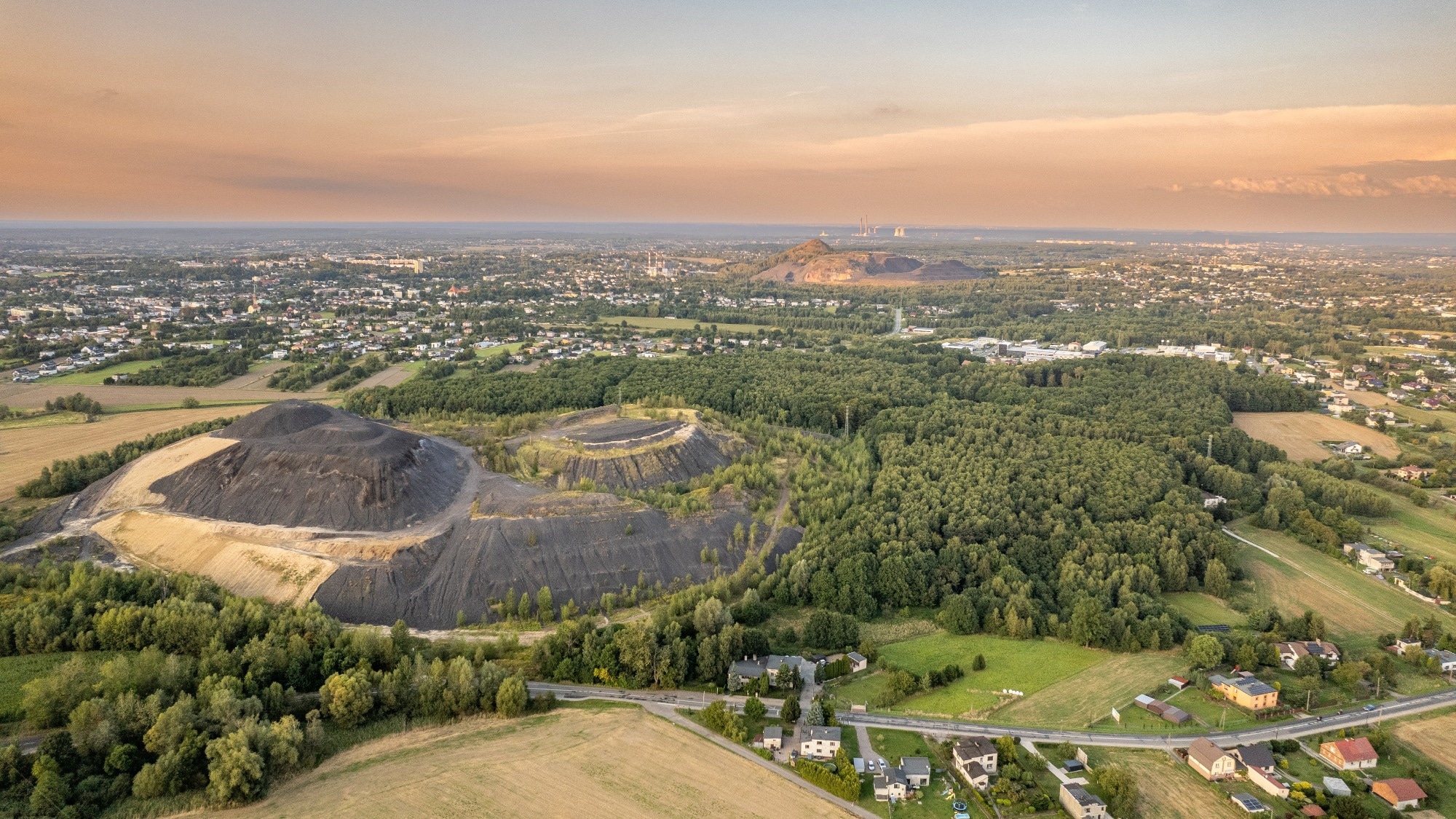
Image Credit: Marcin_Morawiec/Shutterstock.com
The Scale of Mining Waste
Mining operations generate enormous volumes of waste each year, totaling more than 100 billion tons globally. These materials include mine tailings, waste rock and overburden, bauxite residue, and various metallurgical slags. Historically, these by-products have been treated primarily as environmental liabilities requiring long-term containment and monitoring.
However, as global demand for minerals continues to rise and ore grades decline, the volume of mining waste is expected to increase further. This trend raises concerns about environmental contamination, safety risks, and competing land uses.
In response, researchers and industry leaders are beginning to rethink mining waste as a secondary resource rather than a disposal problem. This shift aligns closely with circular economy principles, which aim to reduce raw material extraction, limit landfill use, and lower greenhouse gas emissions.
One area attracting particular interest is pavement construction. Roads require vast quantities of materials for bases, subgrades, and asphalt mixtures, making them a promising pathway for incorporating mining waste at scale while reducing reliance on natural aggregates.
Click here to download a free PDF copy of this page
What the Research Shows: Mining Waste in Construction Applications
The review draws on findings from roughly 200 recent studies investigating how mining waste materials can be integrated into construction systems.
Mine Tailings: From Waste to High-Performance Fillers
Mine tailings are produced in extremely large quantities - tens of billions of tons annually - and have been widely studied as fine aggregates and mineral fillers in asphalt mixtures.
Research suggests that substitution rates of up to 50 % can improve key performance characteristics, including high-temperature stability and bending resistance. Tailings can also be used in stabilized base or subbase layers when combined with pozzolanic additives, which enhance both strength and durability.
Tailings from iron, molybdenum, graphite, and copper mining have all demonstrated promising results in various pavement layers when used at optimal replacement levels.
Waste Rock and Overburden: A Strong Candidate for Structural Layers
Waste rock and overburden account for some of the largest waste volumes in mining, approximately 50 billion tons annually. Their mechanical strength and durability make them particularly well-suited for large-scale construction uses.
Studies show that when properly processed and compacted, waste rock can perform comparably to natural aggregates in road base, subbase, and embankment construction. In some cases, it can even enhance compressive strength when incorporated into concrete as a partial cement replacement.
Despite these promising properties, research on their use in asphalt mixtures remains relatively limited, suggesting an opportunity for further investigation.
Metallurgical Slags: Performance Gains with Added Durability
Metallurgical slags generated from copper, nickel, and lithium extraction are produced in smaller quantities but offer highly consistent mineral compositions.
Their angular, microporous structure improves mechanical interlock in construction materials, enhancing strength and durability. For example, copper slag has been shown to improve asphalt mixture performance and extend pavement service life by 1.78, while also reducing costs by about 17 %.
These characteristics make slags attractive for applications where durability and load resistance are critical.
Bauxite Residue: A Chemically Active Construction Additive
Bauxite residue - commonly known as red mud - is produced at a rate of roughly 150 million tons annually. Thanks to its high specific surface area and chemical reactivity, it can act as a fine filler and pozzolanic material.
Studies show that bauxite residue can improve binding properties and mechanical strength in asphalt mixtures, concrete, bricks, and geopolymer materials.
However, several barriers must be addressed before widespread adoption is possible. These include high alkalinity (pH 11–13), elevated sodium content, and the presence of naturally occurring radioactive materials, all of which require pretreatment or controlled handling.
Comparing Mining Waste Materials: Opportunities and Trade-Offs
The review also offers a comparative analysis of different mining waste streams, evaluating their availability, material properties, and suitability for construction.
Waste rock and overburden stand out due to their massive volumes and strong geotechnical performance, making them well-suited for bulk applications such as subbases and embankments. That said, variability in material properties, the potential for acid mine drainage, and durability concerns under environmental exposure must be carefully managed.
Mine tailings provide fine particle sizes that are ideal for filler roles and partial cement replacement. Yet challenges remain related to chemical instability, potential heavy-metal leaching, and limited availability of long-term field data.
Bauxite residue offers valuable pozzolanic characteristics, but its high alkalinity and regulatory restrictions - particularly those related to toxic elements and natural radioactivity - require specialized treatment strategies.
Slags, meanwhile, offer relatively stable and uniform material properties that support strong mechanical performance and reliable binding behavior. Their main drawbacks are processing costs and environmental considerations linked to trace metals.
Key Challenges to Large-Scale Adoption
Across all waste streams, several common challenges continue to limit broader implementation.
First, comprehensive physicochemical characterization is essential to ensure materials meet safety and performance standards. Second, pretreatment technologies are often required to address environmental risks, such as heavy-metal leaching or chemical instability.
In addition, the sector still lacks standardized material classifications and construction guidelines, which can slow regulatory approval and industry adoption. Large-scale field trials are also needed to confirm that laboratory results translate reliably to real-world performance.
Despite these hurdles, the potential benefits are substantial. Studies report reductions in natural aggregate consumption, energy use, and overall project costs. In some cases - such as concrete incorporating bauxite residue - carbon emissions can fall by as much as 26 %.
From Mining Liability to Circular Construction Resource
Mining waste streams represent a vast and largely untapped resource for sustainable construction, particularly in pavement engineering. Their physical, chemical, and pozzolanic properties make it possible to partially or even fully replace conventional construction materials in certain applications.
Future progress will likely depend on combining life-cycle assessments with digital tools such as artificial intelligence to improve material classification and performance prediction. At the same time, regulatory frameworks, environmental safeguards, and public acceptance will play a critical role in determining how quickly these solutions move from research to large-scale practice.
If these challenges can be addressed, mining waste could shift from being a long-term environmental liability to becoming a valuable input for low-carbon, circular, and resilient infrastructure systems.
Journal Reference
Dassanayake C., Mashaan N. S., et al. (2026). Mining Waste as a Resource in Construction: Applications, Benefits, and Challenges. Sustainability. 2026; 18(3):1361. DOI: 10.3390/su18031361, https://www.mdpi.com/2071-1050/18/3/1361