Iron-rich slag captures up to 99.5% carbon dioxide through mineral carbonation, converting industrial waste into stable carbonates. This low-energy approach supports scalable carbon capture and sustainable mining waste management.
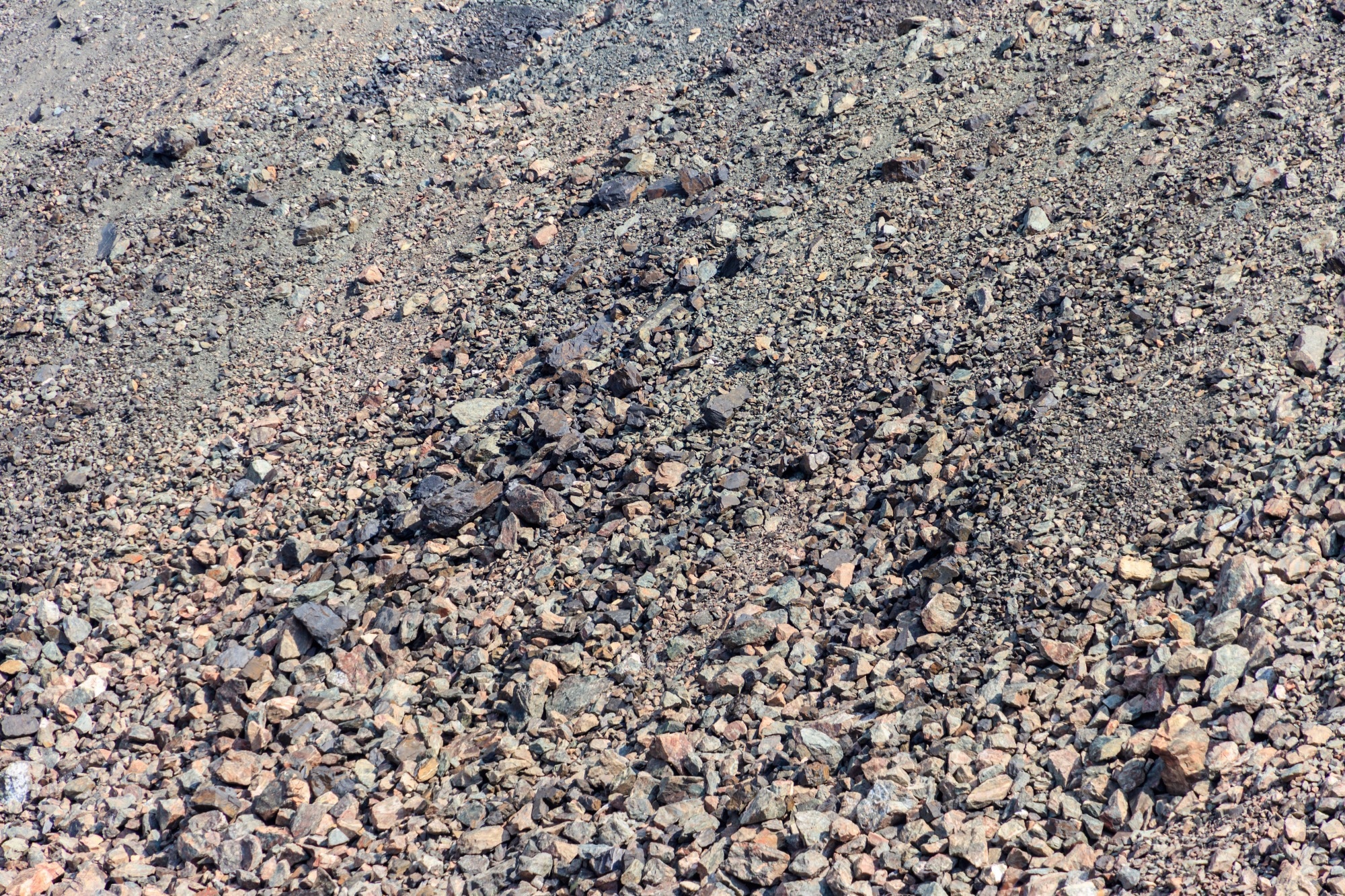 Study: Evaluation of carbon sequestration by iron-rich slag materials. Image Credit: Olha Solodenko/Shutterstock
The global metals and mining sector accounts for about 8% of global carbon emissions, driving the need for effective decarbonization strategies. A recent study published in the Chemical Engineering Journal evaluated iron-rich slag as a material for carbon capture.
Researchers found that these industrial byproducts can remove up to 99.5% of carbon dioxide (CO2) using alkaline metalliferous waste, enabling mineral and solubility trapping and turning waste into a carbon sequestration resource. This positions the mining industry to shift from a major emitter to an active participant in carbon capture and storage (CCS).
Potential of Alkaline Mining Residues
The sequestration of CO2 using mining waste mimics natural silicate weathering, a geological process in which minerals react with atmospheric CO2 to form stable carbonates. Alkaline residues, such as steel slags, mine tailings, and red mud, are well-suited for this process. They are often located near major emission sources, reducing transport needs.
Unlike indirect carbonation methods that require chemical processing and high energy input, direct mineral carbonation offers a simpler, low-energy alternative. In the presence of moisture, these materials capture CO2 through three mechanisms: mineral trapping, solubility trapping, and surface adsorption. This reduces emissions while converting industrial waste into stable, reusable resources, supporting circular economy goals.
Characterization of Metallurgical Byproducts
Researchers analyzed two iron-rich samples, S1 and S2, sourced from a smelter in Québec, Canada. This facility processes hemo-ilmenite ores using anthracite coal to produce titania-rich slag through hydrometallurgical leaching. The samples differed in structure: S1 consisted of fine silt and clay-sized particles, while S2 was coarser and sand-like.
To evaluate reactivity, the study used Atomic Force Microscopy (AFM) to assess surface texture, Powder X-ray Diffraction (PXRD) to determine mineral composition, and Scanning Electron Microscopy with Energy-Dispersive X-ray Spectroscopy (SEM-EDS) for microstructural analysis. In the experimental phase, slag samples were exposed to 10% CO2 in sealed 300 mL reactors.
Moisture conditions were varied using solid-to-liquid ratios of 1:0, 1:1, and 1:2, with saturation levels from 25% to 100%. The mixtures were agitated for 24 hours at 160 rpm to enhance gas-solid interaction. Gas composition was monitored by Gas Chromatography (GC), while liquid samples were analyzed by Inductively Coupled Plasma Mass Spectrometry (ICP-MS) to assess metal dissolution and carbonate formation.
Carbon Sequestration Efficiency
The outcomes showed strong carbon capture performance for both slag types, with clear differences in efficiency. S2 achieved up to 99.5% CO2 removal, while S1 reached 92.5%. On a mass basis, S1 and S2 could sequester about 1,000 g and 1,073 g of CO2 per tonne, respectively. This is driven by surface adsorption followed by carbonate precipitation.
Mineral analysis confirmed the formation of calcium carbonate (CaCO3) in S1. S2 produced multiple carbonates, including CaCO3, magnesite (MgCO3), and siderite (FeCO3), indicating broader reactivity. Moisture content played a key role. S1 performed best at full saturation, where water improved diffusion. In contrast, S2 reached peak performance at lower moisture levels (25%). The higher alkalinity of S2 (pH 10.04 vs. 8.27 for S1) further enhanced mineral formation, confirming that chemical properties strongly influence sequestration efficiency.
Download the PDF of this page here
Enhancing Sustainability in Mining Operations
By integrating slag-based carbonation into waste management protocols, companies can significantly reduce net emissions and create opportunities for carbon tax credits. The ability to achieve high sequestration rates under low-moisture conditions is particularly valuable, as it reduces the need for large-scale aqueous reactors and high-water consumption. This approach makes the process more economically viable for remote mining sites.
Furthermore, stabilizing these slags through carbonation can improve the environmental safety of waste stockpiles. The formation of carbonate minerals can help "lock in" certain metals, potentially reducing the risk of heavy metal leaching into the surrounding environment. This dual-purpose use, carbon capture and waste stabilization, positions iron-rich slag as a key material for sustainable mining and low-carbon infrastructure.
Directions for Industrial-Scale Sequestration
In summary, this study validates that iron-rich smelter slag can serve as an effective material for atmospheric CO2 removal. It indicates that chemical adsorption drives immediate carbon uptake, while mineral trapping ensures long-term stability. Together, these mechanisms support the design of low-energy, scalable carbon capture systems using byproducts.
Future work should focus on further assessing long-term stability trials under varying environmental conditions, including extreme temperature changes and acidic exposure. Exploring regeneration methods and comparisons with indirect carbonation approaches will also help improve efficiency and maximize crystalline output. Overall, this approach supports advancement toward net-zero targets (a global pledge) in the mining sector.
Journal Reference
Wilcox, S, M., & et al. (2026). Evaluation of carbon sequestration by iron-rich slag materials. Chemical Engineering Journal, 533(174903). DOI: 10.1016/j.cej.2026.174903, https://www.sciencedirect.com/science/article/pii/S1385894726023624
Disclaimer: The views expressed here are those of the author expressed in their private capacity and do not necessarily represent the views of AZoM.com Limited T/A AZoNetwork the owner and operator of this website. This disclaimer forms part of the Terms and conditions of use of this website.