Increased atmospheric CO2 enhances microbial activity in mine waste systems, accelerating acid generation and metal leaching. This finding links climate change directly to environmental risks in mining regions.
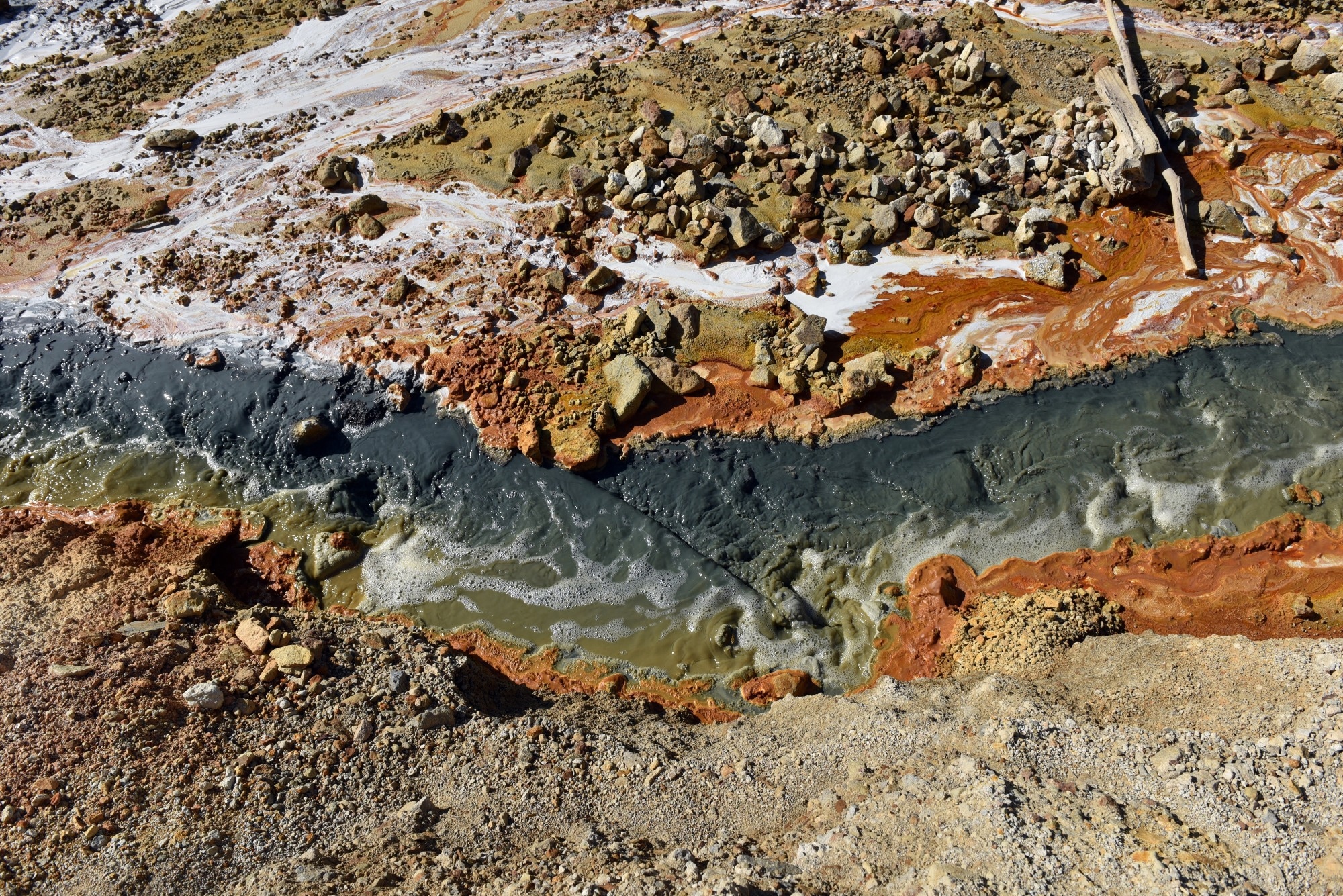 Study: Rising atmospheric carbon dioxide ignites metal mobilization in acid mine drainage. Image Credit: salajean/Shutterstock
A recent study published in Communications Earth & Environment investigates how rising atmospheric carbon dioxide (CO2) influences acid mine drainage (AMD) systems. The study combines global data analysis with laboratory experiments to show that increasing CO2 levels significantly enhances microbial activity, which leads to acid generation. The findings introduce CO2 as a critical factor in AMD risk assessment and long-term mine management strategies.
Understanding the Role of CO2 in AMD Systems
AMD forms when sulfide minerals react with water and oxygen, producing sulfuric acid and releasing heavy metals into the environment. Acidophilic microorganisms, particularly species from the Acidithiobacillus genus, actively control this process. These bacteria drive iron and sulfur oxidation, accelerating acid formation and promoting metal release.
Researchers have traditionally focused on factors such as pH, iron concentration, and oxygen availability as key controls. However, they have not clearly understood the role of atmospheric CO2. This study addresses that gap by examining how rising CO2 levels influence microbial processes in AMD systems.
The results of the study show that CO2 contributes significantly beyond the background atmospheric component. It functions as a major driver of microbial activity. Higher CO2 levels increase carbon availability, which stimulates microbial growth and allows acid-generating bacteria to thrive even under highly acidic conditions. This improved understanding of AMD dynamics directly links climate change to mining-related pollution.
Experimental and Analytical Approach
The researchers combined global-scale data with controlled laboratory experiments to investigate and understand the relationship between AMD and CO2. The global analysis covered 82 AMD-related sites across 24 countries, representing a wide range of climates and mineral types. Using machine learning techniques, the study identified CO2 as the strongest predictor of Acidithiobacillus abundance, exceeding the influence of traditional factors such as pH and iron concentration.
The researchers designed laboratory experiments to simulate different atmospheric conditions. They cultured Acidithiobacillus ferriphilus under CO2 levels representing pre-industrial (200 ppm), current (400 ppm), and future scenarios (1000 ppm), along with an enriched condition (5000 ppm). These experiments quantified bacterial growth, iron oxidation rates, pH variation, and metal release.
The researchers used arsenopyrite as the mineral substrate to replicate realistic mining conditions. This approach enabled them to track how microbial activity influences metal leaching under varying CO2 levels. They applied advanced molecular techniques, including transcriptomic analysis and enzyme assays, to examine microbial metabolic responses to CO2 variation. Statistical modeling further quantified the pathways linking CO2 to metal mobilization.
Enhanced Microbial Activity and Metal Release
The study demonstrates a strong and consistent influence of CO2 on microbial growth and AMD processes. As CO2 levels increase, bacterial growth rates rise significantly. This increase accelerates the oxidation of ferrous iron, a critical step in acid generation. Experimental results indicate that iron oxidation rates can increase up to threefold under elevated CO2 conditions.
The resulting acidification lowers pH and promotes the dissolution of sulfide minerals, leading to enhanced release of heavy metals. Statistical modeling identifies acidification as the most critical step in this sequence. It serves as the primary pathway through which microbial activity translates into increased metal release.
Among the metals examined, zinc and cadmium exhibit the greatest sensitivity to increasing CO2 levels. Their leaching rates increase substantially, whereas metals such as copper and lead show smaller but still measurable increases. Quantitative analysis further shows that for every 100 ppm rise in atmospheric CO2, metal leaching rates increase measurably. Cadmium and zinc exhibit the strongest response, with increases approaching 2% per 100 ppm increment.
Download the PDF of this page here
Control experiments conducted without microbial presence show minimal metal release, indicating that these effects arise mainly from biological processes rather than direct chemical reactions. At the molecular level, elevated CO2 stimulates key metabolic pathways. It upregulates genes involved in carbon fixation, energy production, and electron transport, thereby improving metabolic efficiency and supporting greater biomass production. Simultaneously, it activates genes associated with metal resistance, enabling microorganisms to adapt to increasingly toxic environmental conditions.
The results carry important implications for both mining operations and environmental management. First, the results show that AMD risk assessment models should include atmospheric CO2, as ignoring it may underestimate future impacts. Second, they highlight the need to improve mine waste management, since tailings and waste rock may become more reactive under higher CO2 levels.
Lastly, the findings indicate that controlling microbial activity could be an effective mitigation strategy. Limiting carbon availability or targeting specific microbial pathways may help reduce acid generation and metal release. Future climate projections indicate that these effects will intensify over time. By 2100, cadmium release from AMD systems could increase by up to 10.6% under high-emission scenarios. These results highlight the growing environmental risks associated with the interaction between climate change and mining activities.
Towards Climate-Responsive Mining Practices
This research establishes a direct connection between climate change and AMD behavior, showing that rising CO2 levels amplify microbial processes. It drives environmental degradation in mining areas. Its implications extend beyond mine sites, as increased metal mobilization can impact downstream ecosystems, agricultural soils, and water resources. Even small increases in metal concentrations may accumulate over time and pose long-term risks to human health.
Future research should include additional climate factors, such as temperature and rainfall, along with site-specific geological conditions. Integrating these variables will improve predictive models and support more effective management strategies. Overall, the study offers a new perspective on AMD systems, emphasizing the need for climate-aware mining practices and proactive environmental management in a changing environment.
Journal Reference
Wang, X., Ji, B., et al. (2026). Rising atmospheric carbon dioxide ignites metal mobilization in acid mine drainage. Communications Earth & Environment, 7(1), 377. DOI: 10.1038/s43247-026-03551-7, https://www.nature.com/articles/s43247-026-03551-7
Disclaimer: The views expressed here are those of the author expressed in their private capacity and do not necessarily represent the views of AZoM.com Limited T/A AZoNetwork the owner and operator of this website. This disclaimer forms part of the Terms and conditions of use of this website.