The Raw Materials Paradox
Beneficiation as Economic Strategy
Infrastructure and Capital Constraints
Policy Shifts Reshaping the Landscape
Regional Integration and the AfCFTA
The Energy Transition Window
Governance and Long-Term Sustainability
References and Further Reading
Africa is home to around 30% of the world's mineral reserves, including cobalt (Co), lithium (Li), copper (Cu), and platinum (Pt).1 Despite this abundance, the continent receives a disproportionately small share of the economic benefits from these resources.
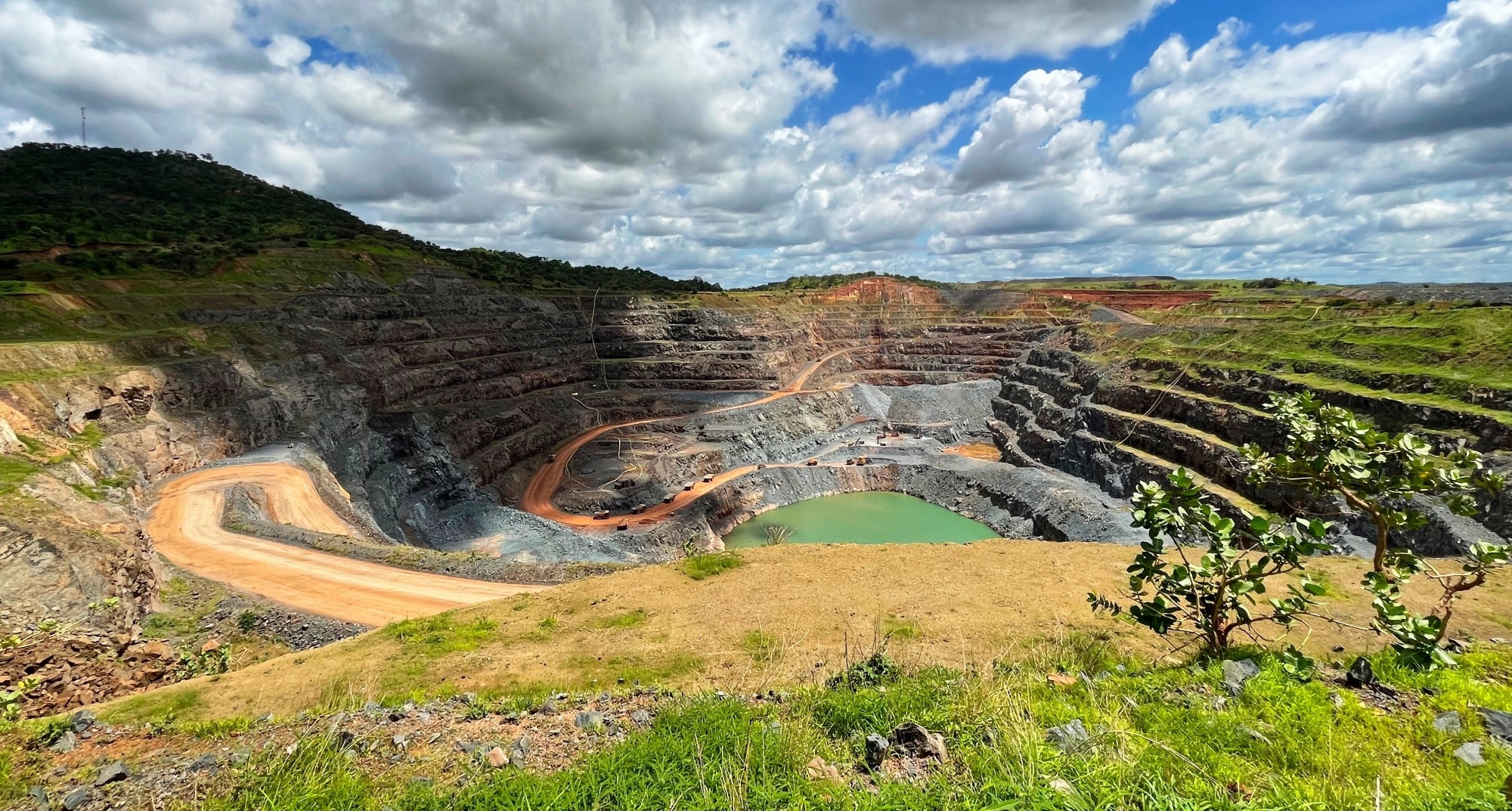
Image Credit: Senderistas/Shutterstock.com
As global demand rises, especially due to the clean energy shift, Africa has a unique opportunity to implement structural reforms that could translate its geological wealth into sustainable economic progress. The direction of those reforms will determine whether African nations become industrial producers or remain permanent commodity suppliers to wealthier economies.1,2
Saving this for later? Download a PDF of this article here.
The Raw Materials Paradox
Africa has rich mineral resources, but it has historically functioned at the lowest tier of the global value chain, shipping unprocessed ore to foreign refineries. For example, the DRC produces over 70% of the world's cobalt but processes only a fraction domestically, with China handling the majority of its refining.3
As a result, African countries receive far less revenue per ton than countries further along the supply chain.2,3
The numbers make the cost of inaction concrete. Cobalt extracted at the mine stage generates approximately $5.8 per kilogram; after refining and processing, that figure can reach $16.2 per kilogram or more.2
Moore Global estimates that if sub-Saharan Africa builds downstream capacity, the continent could capture 12% of global mineral revenues and grow GDP by 12%, generating $6.8 billion annually from lithium, nickel (Ni), and copper processing alone.2,4
Beneficiation as Economic Strategy
Beneficiation, the processing of raw materials closer to the point of extraction, transforms a commodity into a tradable industrial input with far greater margin potential. For example, lithium concentrate is converted to lithium hydroxide; cobalt ore is refined into battery-grade material; and graphite is purified into battery anode material.2,4
Each step up the processing ladder multiplies the revenue a country can claim from its own geology while creating skilled employment and deepening industrial capacity.2,4
The African Union's Green Minerals Strategy formally recognizes this logic, advocating for integrated value chains to boost job creation and economic growth. Many governments are taking action beyond just making policies, and are rather implementing export restrictions to encourage domestic processing investments.
For example, the DRC's temporary bans on cobalt exports in 2025 stabilized global prices and signaled that the government plans to use its supply leverage in negotiations.5,6
Infrastructure and Capital Constraints
Building processing capacity requires large-scale industrial financing at competitive rates over long periods. UNCTAD estimates that the Global South faces about $225 billion in investment gaps concentrated in mineral processing, with Africa bearing a larger burden.2 The most critical shortages occur during refining and chemical conversion, where value addition is greatest.
Energy availability compounds the financing challenge considerably. Processing plants require a lot of electricity, but many mineral-rich countries face persistent power shortages, which increase costs and discourage investment. Zambia is a key example of this, with power supply issues and currency fluctuations being the main barriers to growth in the copper and cobalt sectors.
McKinsey's analysis found that only manganese and graphite are currently profitable in Africa, while copper, iron, and lithium processing remain financially challenging.7,8
Policy Shifts Reshaping the Landscape
African governments are increasingly aligned on reforming mining policies to attract investment while requiring greater local participation. Kenya has maintained its position as a regional investment hub, supported by cross-border M&A activity tied to the energy transition's demand for critical minerals.7
Namibia is attracting European Union and Gulf State capital, with its government focused on consolidating investment momentum through a newly appointed Minister of Mines and Energy. South Africa's removal from the Financial Action Task Force grey list in late 2025 restored market confidence and accelerated deal flow, particularly in platinum group metals.7
Zambia introduced local content regulations effective January 1, 2026, requiring suppliers and contractors to meet domestic sourcing thresholds. Tanzania consolidated multiple investment authorities into a single facilitation center, reducing the administrative friction that historically discouraged large-scale processing investments.7
Regional Integration and the AfCFTA
No single African country has all the minerals required to build a large processing industry. This makes it essential for countries to trade with each other. The African Continental Free Trade Area (AfCFTA) helps connect raw material producers with nearby processors.1
An example of this is the DRC-Zambia MoU, which aims to integrate cobalt and copper resources to achieve shared processing goals across borders.9
The UN Economic Commission for Africa has argued that regional economic communities can serve as the structural backbone for minerals-based value chains, creating demand corridors that sustain investment in processing.
Special economic zones and industrial parks designed around mineral clusters reduce the per-unit infrastructure cost for processing facilities, improving capital economics that currently disfavor African locations relative to established processing hubs in Asia.1,9
The Energy Transition Window
Global demand for critical minerals is growing rapidly, driven by electric vehicle adoption, battery storage deployment, and renewable energy infrastructure build-out. Lithium demand, for example, is projected to grow at a 16% compound annual growth rate through 2035, with copper and graphite also on strong upward trajectories.3,6
Africa holds competitive cost advantages in several of these minerals, with lithium production costs ranging from $250 to $650 per ton of spodumene concentrate, compared with a global benchmark near $800 per ton in Australia.6
At present, Zimbabwe is advancing a $450 million lithium refinery at the Mapinga Industrial Park, while Morocco already hosts viable battery-grade chemical refining capacity.3,6
These developments indicate that the investment case for African processing is moving from theoretical to operational. Countries that establish refining capacity during this demand acceleration window gain a durable structural position in supply chains that will remain strategically important for decades.3,6
Governance and Long-Term Sustainability
Capturing mining value at scale demands governance systems that protect investor rights, enforce contracts, and distribute revenues equitably. Tanzania's October 2025 elections produced temporary political unrest, illustrating how governance fragility can interrupt investment momentum even in economically sound environments. Mineral wealth and institutional quality need to develop in parallel for sustained value capture to occur across the continent.7,10
ESG compliance has become a genuine market requirement as buyers in Europe and North America demand supply chain transparency and ethical sourcing certification. Zambia's push to broaden community engagement and South Africa's focus on localization both reflect this commercial reality.7,11
Governments that build credible governance frameworks alongside processing capacity will position their mining sectors for premium market access, rather than competing purely on commodity price.7,11
References and Further Reading
- Africa’s critical mineral resources, a boon for intra-African trade and regional integration. [Online] ECA. https://www.uneca.org/stories/africa%E2%80%99s-critical-mineral-resources,-a-boon-for-intra-african-trade-and-regional-integration
- Africa Has $29.5 Trillion in Mineral Wealth. It Captures Almost None of What Those Minerals Are Worth. [Online] Energy Transition Africa. https://www.energytransitionafrica.com/insights/article/africa-mineral-wealth-value-chain-mechanism-explained
- Growth Gateway: Investing in critical minerals processing in Africa. [Online] Department for Business & Trade, UK Gov. https://www.gov.uk/government/publications/growth-gateway-investing-in-critical-minerals-processing-in-africa/growth-gateway-investing-in-critical-minerals-processing-in-africa-summary
- AFRICAN SPECIAL MINING REPORT 2025. [Online] Moore Global. https://www.moore-global.com/wp-content/uploads/2025/09/Special-Mining-Report.pdf
- African Union’s Mineral Resources Strategy For The Just Transition And Decarbonising Future. [Online] African Mineral Development Centre, African Union. https://au.int/sites/default/files/documents/44539-doc-AGMS_Final_doc.pdf
- Africa’s Critical Minerals and the Future of the Global Energy Transition. [Online] African Energy Chamber. https://energychamber.org/africas-critical-minerals-and-the-future-of-the-global-energy-transition/
- African mining in 2026 – policy shifts and increasing investment. [Online] African Mining. https://www.africanmining.co.za/2026/02/23/african-mining-in-2026-policy-shifts-and-increasing-investment/
- From potential to production. [Online] McKinsey & Company. https://api.globalperspectives.org/wp-content/uploads/2025/12/Global-Perspectives_The-Africa-Roundtable-9_McKinsey_White-Paper.pdf
- Vandome, C. (2024). How can African states benefit from the EU Critical Raw Material Act and the UK Critical Minerals Strategy? Africa Policy Research Institute. https://afripoli.org/uploads/files/file_66e14b63717863-83423578.pdf
- Mutemeri, N. (2024). Mineral Resource Governance in Africa: A Comparative Study. International Institute for Democracy and Electoral Assistance. https://www.idea.int/publications/catalogue/html/mineral-resource-governance-africa-comparative-study
- Cervantes Barron, K. et al. (2024). Value addition for who? Challenges to local participation in downstream critical mineral ventures in Zambia. The Extractive Industries and Society, 20. https://www.sciencedirect.com/science/article/pii/S2214790X24001503
Disclaimer: The views expressed here are those of the author expressed in their private capacity and do not necessarily represent the views of AZoM.com Limited T/A AZoNetwork the owner and operator of this website. This disclaimer forms part of the Terms and conditions of use of this website.