Market Overview and Pricing
Demand Drivers
Supply Challenges and Ore Grade Decline
Technology and Digital Transformation
Recycling and the Circular Economy
Regional Adoption and Industry Investment
References and Further Reading
In 2026, the copper (Cu) mining industry is facing a decline in supply, while demand for copper is rising due to the energy transition. This landscape is rapidly evolving, with a strong focus on digitalization and sustainable practices.
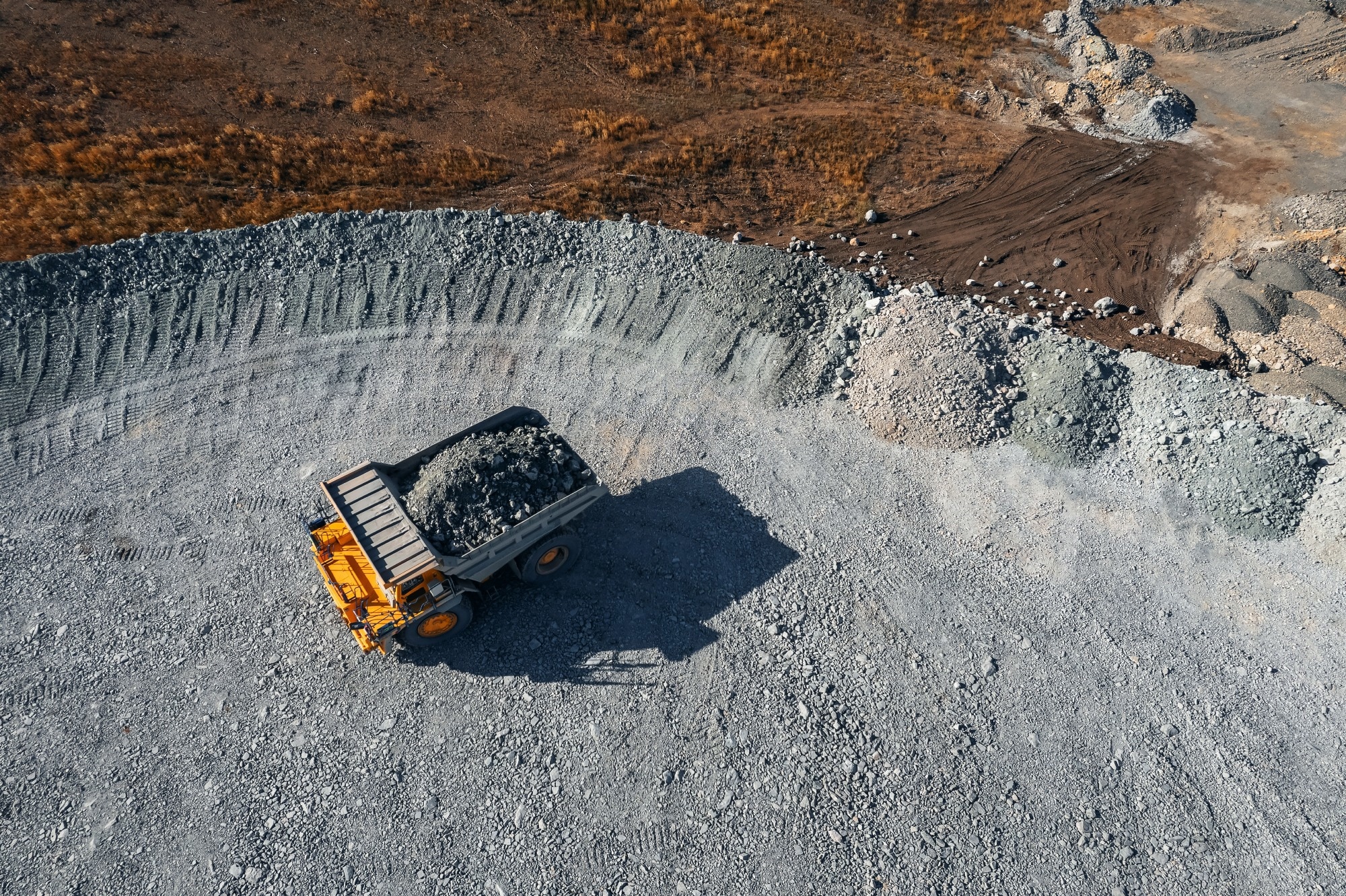
Image credit: Parilov/Shutterstock.com
The market, valued at $195 billion in 2025, is projected to reach $229.8 billion by 2033, growing at a steady rate of 2.3%.1 Meanwhile, the London Metal Exchange predicted that copper prices are likely to average around $12,100 per ton in 2026, reflecting real market tightness.2
Copper Market Overview and Pricing
The global copper market entered 2026 in a state of mounting structural tension. The International Copper Study Group (ICSG) projects a refined copper deficit of 150,000 metric tons, a significant shift from the previously expected surplus of 209,000 tons.3 This change is due to the limited availability of copper concentrate, which is reducing smelter output despite a modest increase in mine production.
In 2026, global copper mine production is expected to rise by about 2.3%, mainly from expansions in Chile, Peru, Zambia, and a rebound in Indonesia.3 However, refined copper production growth is set to decelerate to 0.9% in 2026 compared to 3.4% the previous year due to the limited concentrate supply.3,4
Global copper inventories exceeded 1.3 million tons in March 2026, adding short-term pressure on prices. Despite this, Goldman Sachs projects that the LME copper price will remain between $10,000 and $11,000 per ton throughout 2026, with a long-term goal of $15,000 per ton by 2035.5
Demand Drivers
The copper mining market draws its long-term strength from a broad base of high-growth end-use sectors. Electricity infrastructure, electric vehicles (EVs), and artificial intelligence (AI) data centers are driving demand. A battery electric vehicle uses about 83 kg of copper, while traditional gas vehicles use only around 23 kg.6
Renewable energy sources like wind and solar power are also adding to demand pressure. The International Energy Forum estimates that transitioning to 100% renewable energy by 2050 would require a 460% increase in copper production, which is equivalent to bringing 194 major new mines online beyond baseline projections.7
Moreover, AI infrastructure is emerging as an unexpected but significant demand vector. The race to build AI data centers is accelerating electricity consumption, which in turn amplifies copper demand for grid expansion and power delivery systems. The rising demand from transportation, energy, and computing industries suggests that current copper mining operations may struggle to meet future needs.8
Supply Challenges and Ore Grade Decline
One of the most persistent structural challenges facing copper mining in 2026 is the steady decline in ore grades at operating mines. From 2001 to 2012, the average copper grade dropped by nearly 30%, and this trend continues.9 Lower grades mean miners need to process more rock to get the same amount of copper, leading to higher energy use and costs.
A cumulative copper concentrate deficit of approximately three million tons is projected by 2036.2 Most new supplies come from the expansion of existing mines, which limits the system's capacity to respond quickly to demand or supply issues.
Greenfield project pipelines remain thin, partly because permitting timelines, community negotiations, and capital intensity deter investment in new mine development.
A study published in the Journal of Cleaner Production found that declining ore grades drive higher energy demand and extraction costs across the global mining sector. Mining companies must now move and process 44% more ore by the early 2030s just to keep up with demand.9,10
Digital technologies are transforming copper mining operations at a meaningful pace. Autonomous trucks operate continuously in open-pit mines, increasing productivity by up to 20%.11 Digital twins create real-time virtual models of operations, helping with decision-making without stopping production.
In addition, AI-driven analytics platforms are being deployed to optimize drilling, blasting, and ore sorting workflows. Private 5G networks and dense IoT systems provide the connectivity needed for large-scale autonomous mining, especially in remote locations.11
A report published in the International Journal of Mining and Mineral Engineering identifies five priority research areas for the sector: optimizing energy use in comminution and flotation; integrating renewable energy into mining operations; improving desalination technologies; recovering residual energy; and developing sustainable mineral processing methods.12
These priorities signal where the mining industry is focusing on innovation as regulatory and cost pressures intensify.
Want to save for later? Click here.
Recycling and the Circular Economy
Copper recycling is becoming important as a supply supplement. A McKinsey report estimates that better recycling could close a 3.6 million metric ton copper shortfall by 2035, provided that collection infrastructure, smelting capacity, and regulatory frameworks are strengthened.13 Currently, 40% of scrap copper is not recycled, which would waste around 7.8 million metric tons by 2035.13
A study in Resources, Conservation and Recycling shows that even with optimistic recycling efforts, recycled copper might only meet 49.6% of total demand by 2050.14 This means primary copper extraction is expected to increase significantly until at least 2040.
To address this, strategies like improving demand efficiency, designing products for easier disassembly, and adopting zero-waste mining practices are needed. Additionally, the market for copper slag-derived products reached $800 million in 2024, with only 15% being currently reused.15
Regional Adoption and Industry Investment
Chile, Peru, and the Democratic Republic of Congo collectively produce about 51% of global copper output.1,2 However, they have renewable-heavy electricity grids and produce only 3.5% of the sector's total Scope 1 and 2 emissions.2 Despite a 15% increase in production, emissions from copper mining are expected to drop by 19% by 2030 due to cleaner energy use.2
Industry stakeholders are investing in research and development, partnerships with universities, and collaborations with startups to improve ore sensing and low-carbon processing.
Governments in Chile, Peru, and Zambia are backing modernization efforts to boost capital for existing projects while addressing community and environmental needs.1 These efforts reflect a shared understanding that increasing copper supply requires advancements in technology, policy, and financing.9
References and Further Reading
- Copper Mining Market (2026 - 2033). (2026). Grand View Research. https://www.grandviewresearch.com/industry-analysis/copper-mining-market
- Copper and Gold Market Outlook 2026: Prices, Supply and Mining Costs. (2026). S&P Global. https://www.spglobal.com/market-intelligence/en/news-insights/research/2026/04/copper-gold-market-outlook-2026-prices-supply-mining-costs
- Slower production growth will push copper market to deficit in 2026, says ICSG. (2025). Reuters. https://www.reuters.com/business/slower-production-growth-will-push-copper-market-deficit-2026-says-icsg-2025-10-08/
- Charles, R. (2025). From Surplus to Scarcity: How Slower Production Growth Is Driving a Structural Copper Deficit by 2026. Crux Investor. https://www.cruxinvestor.com/posts/from-surplus-to-scarcity-how-slower-production-growth-is-driving-a-structural-copper-deficit-by-2026
- Copper Prices Are Forecast to Decline Somewhat from Record Highs in 2026. (2025). Goldman Sachs. https://www.goldmansachs.com/insights/articles/copper-prices-forecast-to-decline-from-record-highs-in-2026
- Desai, P. (2020). Copper demand from electric vehicle segment accelerating. Auto Economics. https://auto.economictimes.indiatimes.com/news/auto-components/copper-demand-from-electric-vehicle-segment-accelerating/79491721
- Singh, A. (2024). Copper Shortfall Threatens Green Energy Transition, Warns Report. MERCOM. https://www.mercomindia.com/copper-threatens-green-energy-transition
- 'Substantial Shortfall' in Copper Supply Widens as the Race for AI and Growing Defense Spending Add to Accelerating Demand, New S&P Global Study Finds. (2026). PR News Wire. https://www.prnewswire.com/news-releases/substantial-shortfall-in-copper-supply-widens-as-the-race-for-ai-and-growing-defense-spending-add-to-accelerating-demand-new-sp-global-study-finds-302656062.html
- Owen, W. (2024). Copper, carbon, and costs: The triple challenge for mining. Global Mining Review. https://www.globalminingreview.com/mining/26112024/copper-carbon-and-costs-the-triple-challenge-for-mining/
- Magdalena, R., Torrubia, J., & Valero, A. (2025). Assessing the role of renewable energy in mitigating the impacts of declining ore grades in mining. Journal of Cleaner Production, 519. https://www.sciencedirect.com/science/article/pii/S0959652625013289
- Automated Mining in 2025: Trends, AI, and Innovations. (2025). wundertrading.com. https://wundertrading.com/journal/en/learn/article/automated-mining
- Cotrina, M. et al. (2026). Electricity and sustainable innovation in copper mining and processing. International Journal of Mining and Mineral Engineering, 17 (1). https://www.inderscienceonline.com/doi/abs/10.1504/IJMME.2026.152398
- Watts, J. (2025). New McKinsey report finds circular copper recovery could bridge critical supply gap. Global Mining Review. https://www.globalminingreview.com/mining/05062025/new-mckinsey-report-finds-circular-copper-recovery-could-bridge-critical-supply-gap/
- Born, K., & Ciftci, M. M. (2023). The limitations of end-of-life copper recycling and its implications for the circular economy of metals. Resources, Conservation and Recycling, 200. https://www.sciencedirect.com/science/article/pii/S0921344923004524
- Mitrašinovic, A. et al. (2025). Toward Zero Waste Mining: Circular Economy of Copper Slags. Global Challenges, 9(12). https://onlinelibrary.wiley.com/doi/10.1002/gch2.202500392
Disclaimer: The views expressed here are those of the author expressed in their private capacity and do not necessarily represent the views of AZoM.com Limited T/A AZoNetwork the owner and operator of this website. This disclaimer forms part of the Terms and conditions of use of this website.