Mining as a Strategic Imperative
More Collaboration and Engagement
The Rise of Smarter Operations
Conclusion and Future Outlook
References and Further Reading
In 2026, the mining industry continues to undergo a profound transformation. Geopolitical volatility, an accelerating energy transition, and the ongoing data revolution have combined to redefine the state of the sector.
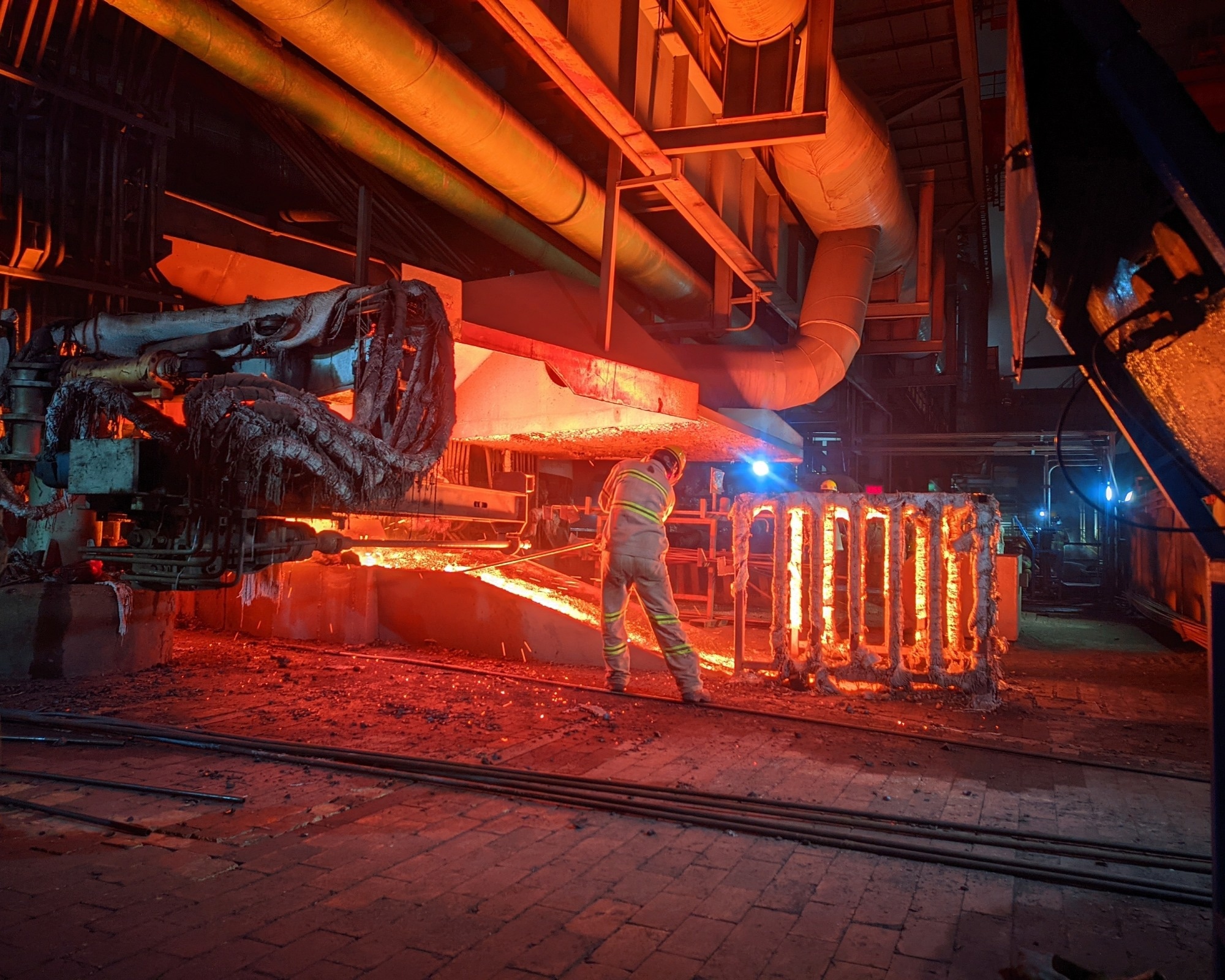
Image Credit: Rezki alhidayat/Shutterstock.com
At present, the mining industry is increasingly a cornerstone of national security and a primary enabler of technological progress. To navigate this new normal, the industry is coalescing around three dominant themes: the growing influence of national security interests, the rise of interconnected ecosystems, and the ongoing implementation of smart operations.
A stark economic reality underscores this transformation: net profit margins of leading mining companies have declined over the last two decades. As easily accessible deposits evaporate and ore grades decline, the industry is forced to move significantly more remote materials just to maintain steady output levels.
To survive, operators are moving toward ecosystem-based models and data-driven operations that use AI agents that can help bridge critical global skills gaps.
Download this page to read later.
Mining as a Strategic Imperative
The most significant trend in the 2026 mining landscape is the increasing importance of critical minerals as strategic assets. Amid geopolitical volatility, this increase is driven by modern defense capabilities that increasingly depend on digital technology, such as the increased use of weaponized drones, and by the importance of tech industries in various nations.
Trade tensions and regional conflicts have highlighted the rise of minerals as strategic assets. For example, China’s dominance in refining critical minerals such as cobalt (Co), graphite, and rare-earth elements (REEs) gives the country significant leverage in addressing trademark infringements.1
For example, the United States is completely dependent on China and other foreign suppliers for 12 of the 50 minerals that drive its economy, such as manganese (Mn) and gallium (Ga).1 When the Trump administration imposed an initial round of 10% tariffs on Chinese goods in February 2025, China responded by limiting exports of five vital minerals to the United States. This move, and others like it, are prompting federal legislation and investments aimed at building pipelines for essential minerals in the United States.
Security-driven demand has created a unique, albeit narrow, investment window for the private sector. Governments, particularly in the United States and Australia, are increasingly willing to offer front-loaded measures such as low-interest loans, grants, and guaranteed offtake agreements.
For example, in August 2025, the US government announced $60 million in funding for technology programs aimed at securing domestic supply chains for critical minerals and strengthening magnet manufacturing, reducing dependence on foreign imports.2
For some mining companies, this presents an opportunity to extract additional value from byproducts such as germanium (Ge) in zinc (Zn) tailings or rare earths in historic mine waste. In Sweden, state-owned LKAB is receiving $86 million in funding to develop an industrial park that will extract rare earth elements and phosphorus from iron ore tailings.2
Efforts like these can strengthen supply chains while exploration pipelines for new mines mature. While these secondary volumes may be relatively small, the capital provided acts as a buffer against market volatility. Government investments are also pushing companies to align their portfolios with national defense priorities.
In this environment, mining companies are increasingly acting as strategic collaborators with national governments. These partnerships allow them to guarantee access to capital in exchange for prioritizing vital supply chains.
More Collaboration and Engagement
In addition to handling minerals as strategic assets, the mining industry is also facing pressure to support the transition to a clean energy future. Add ongoing supply chain disruptions, financial pressures, and the importance of corporate stewardship, and the industry has become increasingly open to collaborations.
The demand for minerals to power the transition to clean energy is estimated to increase sixfold by 2040 to meet net-zero goals for 2050.2 This drive is expected to cause or exacerbate massive deficits in the supply chain. For example, refined copper is expected to have a deficit beginning in 2027 that widens significantly through 2032 and beyond.3
Collaborative ecosystems are springing up to meet demand and offset projected deficits. In Indonesia, for example, the 2019 ban on the export of raw nickel (Ni) and the investment in domestic smelting and refining capacity have positioned the country as a global hub for battery materials, attracting billions of dollars in foreign investment.2
Indonesian policy has also supported another growing trend: shared operational infrastructure. The country’s Morowali Industrial Park and Weda Bay Industrial Park have different geographic locations but have co-financed industrial utilities and logistics. This enables economies of scale and faster onboarding for suppliers.2
Furthermore, mining companies are embracing a deeper purpose, with corporate strategy considering the objectives of local communities. In addition to being socially responsible by delivering benefits such as clean water to indigenous communities, this stewardship approach also gives operators greater social and political license. A key example of this is the Quellaveco copper (Cu) project in Peru.2
Discover more about copper mining in 2026.
The Rise of Smarter Operations
Mineral exploration and extraction have always been difficult. According to a recent report from Deloitte, it is projected to become more challenging due to shrinking numbers of easily accessible deposits and rising costs.
The net profit margin of the world's leading mining companies has fallen from 24% in 2011 to 10% in 2025,2 making operational efficiency critical for survival. The mining industry has been increasingly turning to Big Data, automation, and artificial intelligence (AI) to offset rising costs.
When it comes to data, the Internet of Things (IoT) has allowed the mining industry to capture more than ever before. Connected devices allow for both real-time monitoring and long-term analysis. Mining operators are increasingly using IoT-collected data to make decisions and improve operations. Data is also being used to improve safety on the job site.
Increasing volumes of data are also driving the adoption of mining automation. The global mining automation market was worth $5.7 billion in 2024 and is projected to be nearly $8.7 billion by 2030.2
At the Dahaize Coal Mine in Shaanxi Province, China, an integrated data network enables both underground and surface connectivity, creating a backbone for digital applications. This network facilitates everything from autonomous mining equipment to analytics to inspection robotics. This automation has reduced production costs by approximately $1.68 per ton and annual labor costs by approximately $2.8 million. On top of that, improvements in maintenance and operational oversight have increased equipment efficiency and availability.2
Beyond simple automation, AI is increasingly used to realize all kinds of benefits. Autonomous systems can now be found in exploration, drilling, haulage, and laboratory analysis, an example of which is Rio Tinto’s Gudai-Darri site in Western Australia.4 These systems have been proven to increase both efficiency and safety.
In 2026, a major trend is the rise of AI agents helping to capture and redistribute technical skills across an organization. The Deloitte report noted that a network of AI agents could work together to fill skills gaps in remote geographies and other areas where essential talent is missing.2
With this approach, monitoring, scheduling, and other highly repetitive tasks can be handled automatically by AI agents coordinating their efforts. For example, a remote mining operation could leverage AI agents to manage maintenance schedules, inventory tracking, basic logistics, and more.
Companies are also using AI to extract more insights from the data they already possess.
Oil and gas company Petrobras has worked with Deloitte Brazil to train large language models (LLMs) on 30 years of operational data. This has allowed Petrobras to provide real-time recommendations to maintenance crews, resulting in significant performance gains and cost reductions. Petrobras is projected to save $3.7 million with AI-enhanced maintenance efficiency by 2029.2
Conclusion and Future Outlook
The mining sector in 2026 has marked a definitive shift. By elevating critical minerals to the status of national security assets, the industry has moved from the periphery of global trade to the very center of geopolitical strategy.
This shift has fundamentally altered the relationship between miners and the state, replacing traditional hands-off oversight with deeply integrated strategic partnerships. As declining ore grades have forced companies to move more material just to maintain steady output, the industry’s success is no longer measured solely by tons extracted, but by the reliability and security of the supply chains they anchor.
To survive this high-stakes environment, the industry is increasingly defined by its connectivity. The rise of collaborative ecosystems, from Indonesia’s downstream industrial parks to shared infrastructure consortia, demonstrates that the massive capital requirements and supply deficits of the energy transition are too great for any single entity to tackle alone.
These networks are building the social and political resilience necessary to operate in an increasingly scrutinized world. By embedding "deep purpose" into their core strategies, mining companies are proving that long-term profitability is inseparable from the prosperity of the communities and environments in which they operate.
Looking ahead, the smart operations pioneered at sites like Dahaize and through AI-driven insights at Petrobras represent the new baseline for global competitiveness. The integration of Agentic AI and real-time data networks is providing a solution for the industry's looming talent crisis and providing a roadmap for sustainable, low-impact extraction.
As the mining industry continues to evolve, the winners in this sector will be those who view these trends not as disparate challenges to be managed, but as a unified opportunity to redefine mining as a high-tech, high-purpose, and high-security engine for the modern world.
References and Further Reading
- Roy, D. (2025) The U.S. Critical Minerals Dilemma: What to Know. Council on Foreign Relations. https://www.cfr.org/articles/us-critical-minerals-dilemma-what-know
- Longstaff, R. et al. Tracking the trends 2026. Deloitte. https://www.deloitte.com/content/dam/assets-shared/docs/industries/energy-resources-industrials/2026/tracking-the-trends-2026.pdf
- DeCoff, S. (2024) Major Copper Discoveries. S&P Global. https://www.spglobal.com/market-intelligence/en/news-insights/research/major-copper-discoveries
- Thorne, J. (2025) A peek at AI revolution in mining: promise meets peril. S&P Global. https://www.spglobal.com/market-intelligence/en/news-insights/research/a-peek-at-ai-revolution-in-mining-promise-meets-peril
- Holden, J. et al. (2026) Mine cost outlook 2026: Inflation, new supply reshape global mining landscape. S&P Global Market Intelligence. https://www.spglobal.com/market-intelligence/en/news-insights/research/major-copper-discoveries
Disclaimer: The views expressed here are those of the author expressed in their private capacity and do not necessarily represent the views of AZoM.com Limited T/A AZoNetwork the owner and operator of this website. This disclaimer forms part of the Terms and conditions of use of this website.