The Materials Hidden in Everyday Life
The Green-Technology Paradox
The Environmental Price of Extraction
The Human Cost of Mineral Demand
Can Recycling Replace New Mines?
Mining Yesterday's Waste
Using Less Before Mining More
What Responsible Mining Would Require
Reducing Dependence on New Mining
References and Further Reading
The majority of the world’s house frames, subway rails, and hospital scanners trace back to a mine somewhere on the planet. While construction materials such as sand, gravel, and crushed stone represent the largest share of global mineral demand, they seldom feature in public discussions about mining. Policy discourse instead focuses on critical minerals while overlooking the extensive scale of everyday extraction that props up cities, roads, and hospitals.1
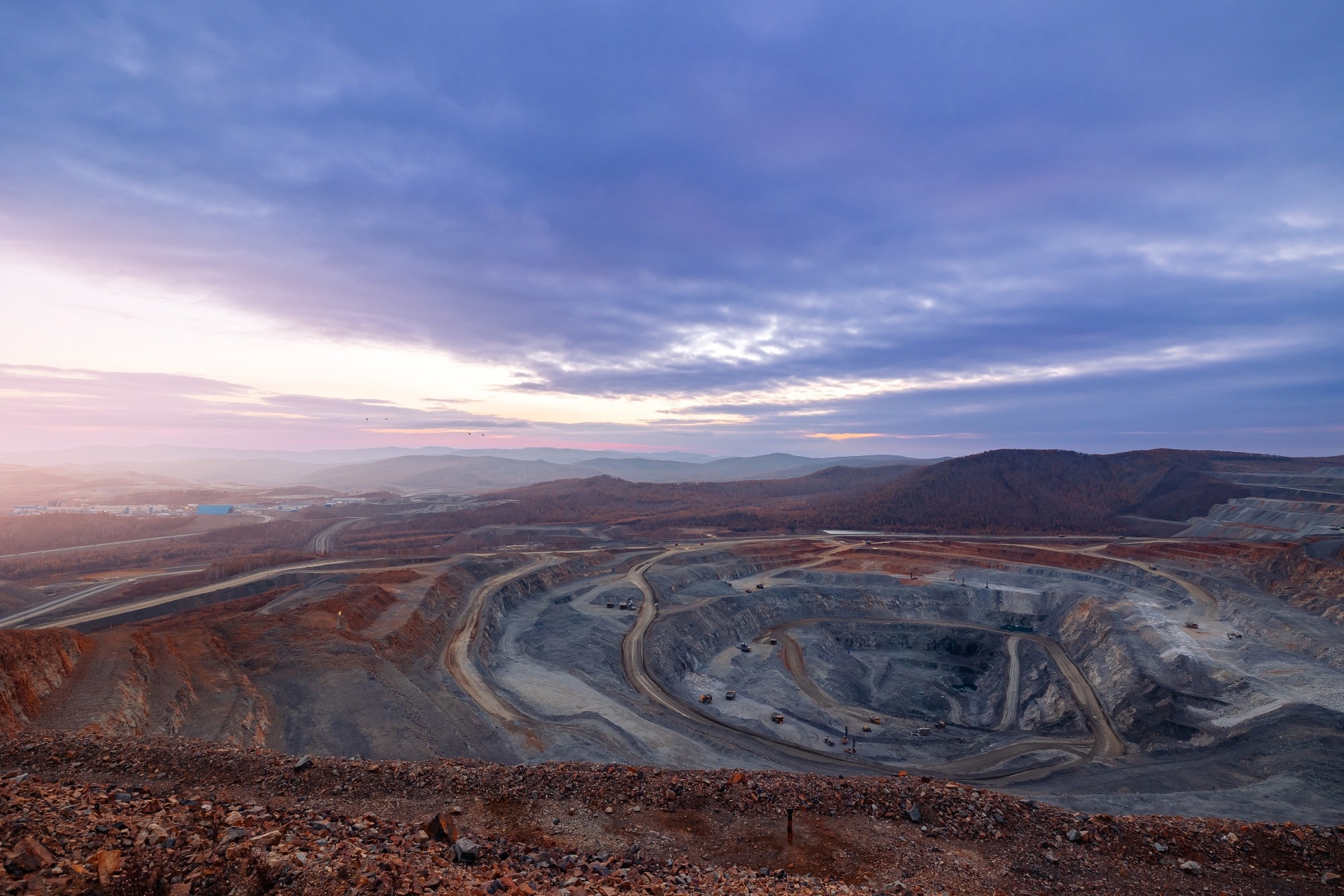
Image Credit: Parilov/Shutterstock.com
The Materials Hidden in Everyday Life
Iron (Fe) and copper (Cu) form the skeleton of modern infrastructure, from power lines to plumbing. Aluminum (Al) lightens vehicles and packaging, and phosphate keeps farmland productive. Nickel (Ni) adds corrosion resistance to stainless steel and alloys, and about 15% of global nickel output already feeds clean-energy applications such as batteries, wind turbines, and solar systems.2
Similarly, lithium (Li), cobalt (Co), and rare-earth elements are used in phones, wind turbines, and electric motors, often in quantities too small to notice but too essential to ignore. Their extraction footprint, though smaller by volume than construction aggregates, carries outsized ecological and geopolitical weight.1
No time now? Download a PDF and finish this article later.
The Green-Technology Paradox
Clean energy runs on mined materials in growing volumes. Global nickel demand is projected to double by 2050, and the World Bank estimates lithium and graphite mining will need to expand by nearly 500% to support low-carbon infrastructure. Nickel demand from clean technology alone is expected to climb from 0.48 million tons in 2023 to 3.4 million tons by 2040.2
Electric vehicles (EVs) intensify this pressure directly. A single EV requires roughly six times the critical minerals of a conventional gasoline car, and total demand for critical metals and graphite from the energy sector could rise by up to six times by 2040 as battery production scales worldwide.3
Clearing land for nickel mines can result in more substantial biomass carbon losses than industry reports typically capture. A study of 481 nickel mines, published in Nature Communications, found land disturbance is up to 500 times greater than earlier estimates, meaning battery supply chains have understated their true climate cost. Mining already generates about 10% of global energy-related carbon emissions each year.2
Water tells a similar story. Processing a ton of iron ore consumes 1.6 cubic meters of water, and seven of the world's 10 leading mining countries sit in regions of high or extreme water stress. The industry now produces more than 10 billion tons of tailings annually, a volume expected to double by 2035.4
Global resource extraction has nearly tripled since 1970 and is projected to double again by 2060. Mining and related sectors contribute close to 45% of global carbon emissions, and tailings dam failures, such as the Samarco collapse in Brazil, have destroyed villages and poisoned rivers hundreds of kilometers downstream.5
The Human Cost of Mineral Demand
Mining changes lives long before it changes landscapes. Communities near extraction sites face displacement, contaminated water, and disputes over land rights, and researchers tracking the Global Atlas of Environmental Justice document recurring conflict patterns tied to renewable energy minerals worldwide.1
The benefits and burdens of mining rarely land on the same people. The Democratic Republic of the Congo produces more than 70% of the world's cobalt, while China supplies nearly 80% of graphite, concentrating both wealth and risk in a handful of regions far from where the minerals are ultimately used.3
Though worker safety has improved, it remains fragile. Community consent, or a social license to operate, has ranked as the mining industry's top risk for three consecutive years, and public opposition has halted operations in places like South Africa's Rustenburg region when local trust broke down.5
Can Recycling Replace New Mines?
Battery recycling technology has matured quickly. Depending on the process, plants can now recover between 50–95% of materials from spent lithium-ion batteries, and the European Union has set recovery targets of 90% for cobalt, copper, and nickel by 2027.3
Even so, recycled supply cannot keep pace with demand growth. A material flow analysis of the European Union's vehicle fleet found that meeting recycled-content targets depends almost entirely on production scrap rather than end-of-life batteries, and the share of material recycled more than once stays below 5% at any given time.6
Battery lifetimes of eight to 12 years limit how quickly usable scrap returns to the system. Even raising end-of-life nickel recycling to 100% by 2050 would only push recycled content to 58%, leaving the rest to primary mining.2
Mining Yesterday's Waste
Old tailings piles also hold real value, containing recoverable zinc (Zn), manganese (Mn), copper, nickel, gold (Au), and silver (Ag).
Between 2020 and 2050, mining copper, lithium, manganese, and nickel is projected, collectively, to generate an estimated two trillion tons of tailings worldwide.5
Dewatering technologies now let companies pull water from tailings before they ever reach a storage pond, supporting dry stacking and in-pit disposal methods that reduce both tailings water content and reliance on conventional slurry dams.4
Discarded electronics offer another rich seam. One ton of lithium can come from roughly 28 tons of spent batteries, compared with 250 tons of spodumene ore or 750 tons of mineral-rich brine, making urban mining a genuine supplement to primary extraction.3
Using Less Before Mining More
Reducing demand starts with how products get designed and used. Circular economy frameworks built around redesign, refusal, and restorative practices push manufacturers toward material efficiency long before waste ever forms.5
Many retired EV batteries that fall below 80% capacity still suit stationary energy storage, extending their useful life well past a vehicle's road years. Shared mobility models compound this effect, since a single shared vehicle can replace roughly 10 individually owned cars, cutting the raw material needed per person.3
What Responsible Mining Would Require
Responsible mining requires comprehensive biodiversity and social risk data before projects break ground, particularly for construction materials that current research largely overlooks, despite their volume.1
Stronger safeguards already exist as models. The Global Industry Standard on Tailings Management pushes companies toward safer storage and environmental performance, while genuine community consent and a durable social license remain prerequisites for keeping any mine operating without conflict.4
Traceability and planned mine closure round out the picture, in the hope that land and water eventually return to productive use rather than becoming permanent liabilities for nearby communities.5
Reducing Dependence on New Mining
Eliminating mining outright remains unrealistic given the projected demand for nickel, lithium, copper, and graphite over the coming decades. Recycling, however advanced, cannot yet close that gap on its own.6
Reformed mining offers a workable path forward for governments, companies, and communities alike. Circular design, tailings recovery, stricter environmental standards, and genuine community consent can shrink mining's footprint even as global material needs continue to grow in the decades ahead.5
References and Further Reading
- Aska, B. et al. (2025). Mining, biodiversity and social conflict in the renewable energy transition. Nature Reviews Biodiversity, 1(9). DOI:10.1038/s44358-025-00076-3. https://www.nature.com/articles/s44358-025-00076-3.
- Mervine, E. M. et al. (2025). Biomass carbon emissions from nickel mining have significant implications for climate action. Nature Communications, 16(1). DOI:10.1038/s41467-024-55703-y. https://www.nature.com/articles/s41467-024-55703-y.
- Zhao, Y., & Kaur, G. (2025). The future of recycling for critical metals: The example of EV batteries. Geosystems and Geoenvironment, 4(2). DOI:10.1016/j.geogeo.2025.100376. https://www.sciencedirect.com/science/article/pii/S2772883825000263.
- Hamraoui, L. et al. (2024). Towards a Circular Economy in the Mining Industry: Possible Solutions for Water Recovery through Advanced Mineral Tailings Dewatering. Minerals, 14(3). DOI:10.3390/min14030319. https://www.mdpi.com/2075-163X/14/3/319.
- Jose, S. A. et al. (2024). Promoting a Circular Economy in Mining Practices. Sustainability, 16(24). DOI:10.3390/su162411016. https://www.mdpi.com/2071-1050/16/24/11016.
- Husmann, J. et al. (2025). Determining the key drivers of the potential secondary battery raw materials supply from the urban mine in the European Union. Resources, Conservation and Recycling, 218. DOI:10.1016/j.resconrec.2025.108246. https://www.sciencedirect.com/science/article/pii/S0921344925001259.
Disclaimer: The views expressed here are those of the author expressed in their private capacity and do not necessarily represent the views of AZoM.com Limited T/A AZoNetwork the owner and operator of this website. This disclaimer forms part of the Terms and conditions of use of this website.