Controlling the severe impacts of climate change will require carbon dioxide (CO2) removal strategies that extract the gas from the atmosphere and store it for tens to thousands of years. Many promising removal methods rely on alkaline rock that reacts with CO2, and mining extracts, crushes, and stores such rock in large volumes.
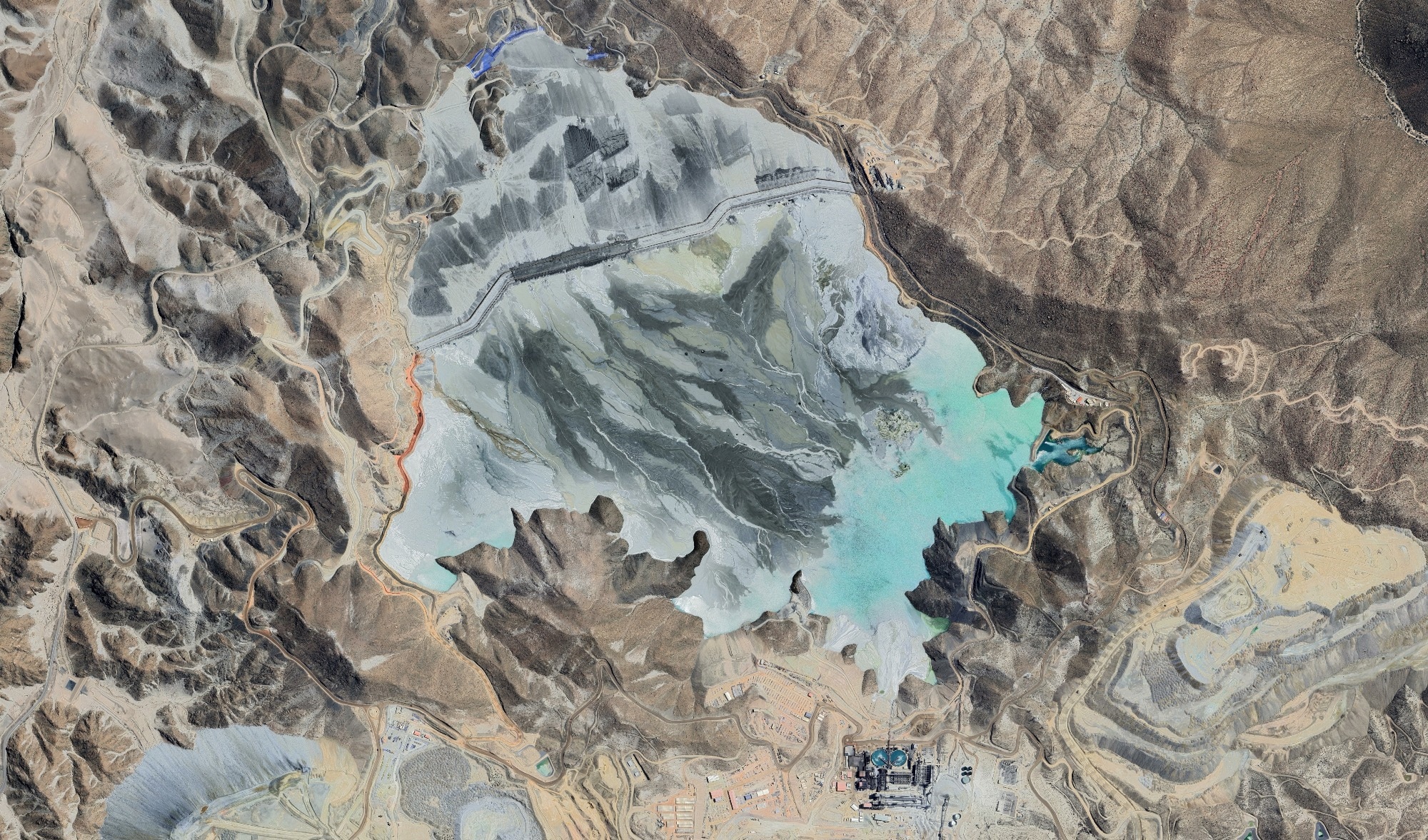
Image Credit: Aerial Viewer/Shutterstock.com
The sector is rapidly expanding, with 28% of companies intending to more than double their output by 2030. However, this growth raises concerns about increased waste production and persistent emissions. This overlap shows that mine sites can become working carbon sinks, provided removal is measured honestly, delivered safely, and paid for.
This article explores the carbon removal potential of mining by considering its chemistry, storage capacity, site benefits, environmental risks, and economics.1
Why Mines Suit Carbon Removal
A modern mine moves large amounts of rock, crushes it, pumps water through it, and stores the waste in designed facilities. These steps are the most expensive parts of many geochemical removal methods, but a mine’s existing crushers, haul trucks, and skilled engineers already handle these tasks. Removal projects can take place at any stage of a mine’s life, from planning and production to closure.1
The type of material is just as important as the equipment. Global mining produces about 13 billion tons of tailings, the fine waste left after extracting metals, mostly from copper, iron, and gold mines, each year. Additionally, around 420 million tons of alkaline tailings are produced each year from diamond, nickel, cobalt, and similar mines. These residues are best for carbon capture.2
Mine sites also have resources that can store carbon after extraction ends. Underground spaces can hold buried biomass, flooded pits can take in alkaline material, and cleared land can be replanted.
Additionally, some mines are situated on ultramafic rock formations rich in magnesium and iron. These rocks react readily with CO2 and can store captured gas underground while also producing valuable metals during injection.1
The Chemistry of Rock Weathering
The underlying science draws on a process Earth has run for billions of years. Rain absorbs CO2, becomes slightly acidic, and slowly dissolves silicate minerals.
This process releases calcium and magnesium ions and produces dissolved bicarbonate, which can be transported into rivers and oceans. Under suitable conditions, dissolved carbon can also form solid carbonate minerals, providing another pathway for longer-term carbon storage. Natural weathering removes about 1.2 to 3 billion tons of CO2 each year.2
Mining accelerates this reaction because grinding rocks exposes more surface area to air and water. A large grain of olivine, about 400 μm wide, may take 1000 to 10,000 years to dissolve naturally, while smaller particles react faster. Minerals differ in reactivity, and brucite, a magnesium hydroxide found in some nickel ores, ranks among the most reactive toward CO2.3
When the reaction products harden into carbonate minerals inside a tailings pile, the carbon becomes part of the rock and can remain stable over geological time. Scientists call this pathway surficial mineralization.
A similar method, known as enhanced rock weathering, spreads crushed alkaline rock on soils. This process allows bicarbonate to form and wash into rivers and seas. Mines can implement the first method using their own waste piles.1
How Much Tailings Can Store
Open-pit nickel mine. Image Credit: MaryTraveller/Shutterstock.com
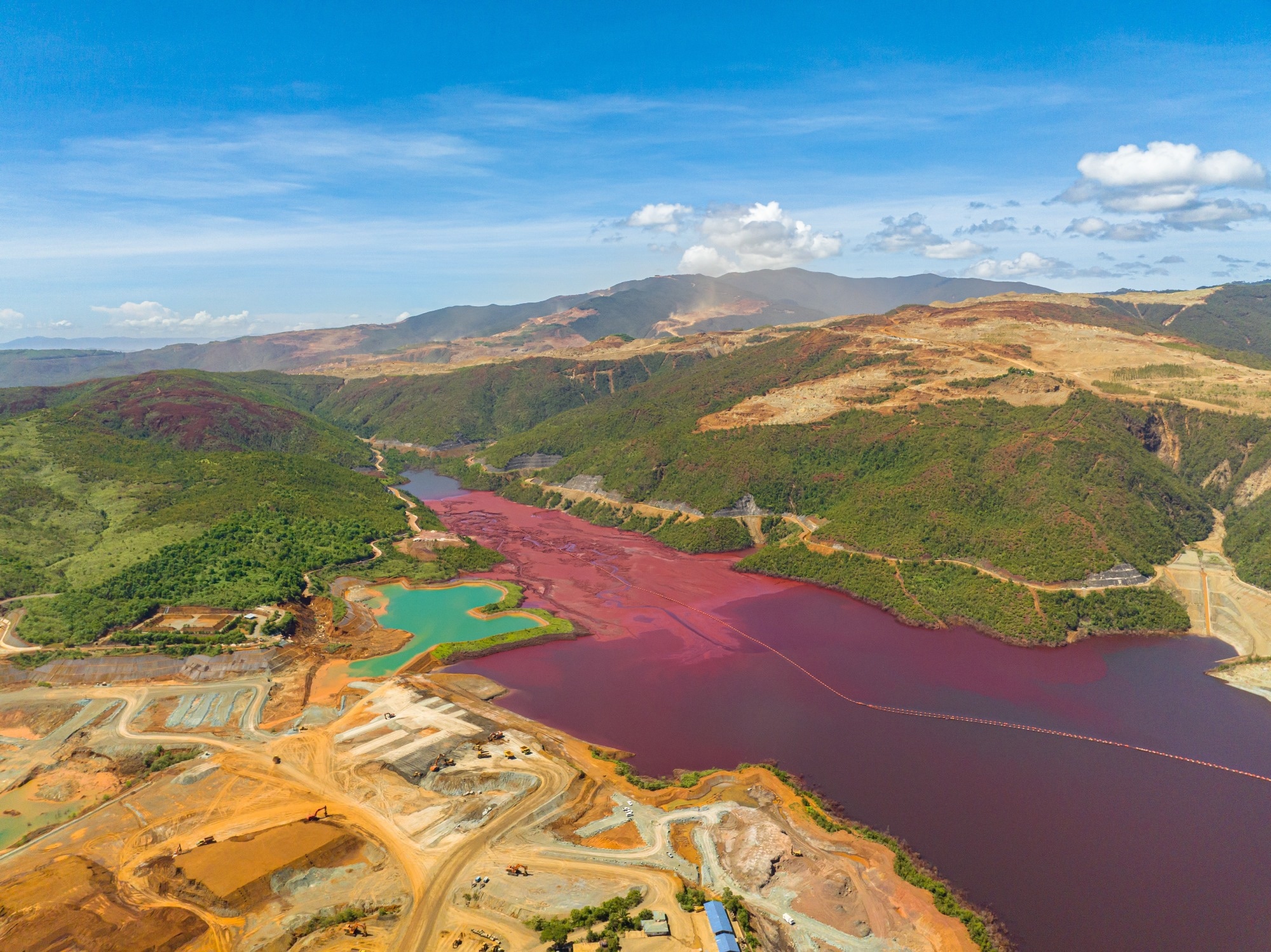
Field data shows that mine waste already captures carbon without intervention. At the Diavik diamond mine in Canada, researchers found that mine waste removes between 3.7 and 4.2 tons of CO2 per hectare each year. Similarly, at the Venetia diamond mine in South Africa, this amount ranges from three to seven tons. The Mount Keith nickel mine in Western Australia managed to capture 24 tons per hectare.3
Scaling those observations up gives a sense of the global opportunity. Analysts estimate that tailings generated each year at mafic and ultramafic mines could theoretically support 100 to 170 million tons of removal annually. Including older, stockpiled tailings raises the range to roughly 520–820 million tons. In ideal conditions, one ton of feedstock can lock away 0.2 to 0.75 tons of CO2.1
However, these numbers represent the highest potential, and any real projects will likely achieve less. Factors such as the amount of material that can be handled, the cost of low-carbon energy, regulatory limits, and varying weathering conditions all reduce the capacity for carbon capture.
Broader estimates that include intermediate tailings reach one to five billion tons per year, which shows how strongly the answer depends on assumptions about which wastes qualify and how completely they react.1,2
Download a free copy of this page here!
Speeding Up Slow Reactions
When left alone, mineral dissolution rates decrease over time, limiting the amount of carbon a waste pile can capture. Operators can speed up the process by spreading tailings in thinner layers, managing moisture, or adding concentrated CO2. Since 2023, a company working with BHP at Mount Keith has been using microwave radiation to break down mineral structures more quickly and completely.1
Biology offers another set of tools. Microbes accelerate weathering by attaching to mineral surfaces, producing acids, and releasing compounds that dissolve metals in rock.
Cyanobacteria, ureolytic bacteria, and sulfate-reducing bacteria then help precipitate carbonate minerals. In a trial using diamond mine waste, researchers estimated that even modest site-wide cyanobacterial carbonation could offset 34% of the mine's annual greenhouse gas emissions.2
Microbial methods also connect carbon removal to metal recovery. Bioleaching, a common mining practice, can extract low concentrations of valuable nickel and cobalt from old tailings that were once deemed unprofitable to process.
Researchers are calling for trials involving thousands of tons across various ores and climates, led by experts in geomicrobiology, geochemistry, metallurgy, and mining engineering, and funded by industry, credit buyers, and governments.2
Reactors and Off-Site Feedstock
Reactor-based mineralization brings the chemistry into controlled industrial vessels on site. To achieve this, electrochemical or thermal processes produce an acid and a base that can capture CO2 as carbonate minerals while recovering metals from the same input.
A project at Baie Verte in Newfoundland applies this approach to legacy chrysotile asbestos tailings, and carbonated outputs from such systems can serve as construction materials.1
Another reactor design injects supercritical CO2 into ore before crushing it, then rapidly releases the pressure, causing the expanding gas to fracture the rock. This method aims to cut grinding energy while forming stable carbonates. Mines can also sell benign rock powders, including some kimberlite wastes, to off-site projects that spread them on farmland or use them to raise the alkalinity of seawater.1
Biomass Burial and Land Restoration
Some practical options at closed mines combine biology with the empty underground space. Biomass burial places dry plant waste such as wood residue or crop stalks into sealed, oxygen-free voids, where it resists decay and keeps its carbon out of the air. A project in Tkibuli, Georgia, began testing this in 2025, and mine burial could reach 100 to 500 million tons yearly by 2040.1
Replanting forests on former mine land can also store carbon while reducing erosion, limiting contaminant leaching, and improving local air quality; certain plant species can absorb and help remediate toxic chemicals in damaged soils. For restoration to count as carbon removal, developers must prove that the regrowth would not have happened anyway and that it removes more carbon than it emits over its lifetime.1
On the other hand, legacy sites present a new opportunity. The United States Geological Survey lists 142 abandoned asbestos mines in the country, and their serpentine-rich waste reacts readily with CO2.
A hub in Thetford Mines, Quebec, Canada, is exploring whether mineralizing these tailings can both store carbon and reduce toxicity. Coal regions offer similar openings, since fly ash and closed workings can serve as feedstock or storage space.1
Safety Gains for Mine Operators
Tailings storage facilities are one of the largest long-term liabilities of mining, and their stability depends on how well loose, fine particles hold together. Carbon mineralization may help by cementing those particles.
In laboratory tests on brucite-bearing ultramafic tailings, carbonation consumed 64–84% of the brucite and produced material strong enough to stabilize tailings in most of the scenarios researchers studied.1
At Mount Keith in 2025, engineers exposed nickel tailings to CO2 dissolved in water and recorded higher peak shear strength within weeks. However, questions remain regarding the duration of these gains, the brittleness and permeability of the carbonated material, and its behavior in mixed tailings scenarios.
Consequently, investment committees will likely seek site-specific geotechnical evidence before approving projects.1
Water quality offers a further benefit. Sulfide-bearing wastes can generate acid drainage that carries metals into streams. Introducing alkaline material to acidic pit lakes can raise pH, draw down atmospheric CO2, and settle solid carbonates on the lake floor.
Mineralization can also effectively immobilize metals in stable phases. These benefits highlight the utility of carbon removal as a valuable tool for closure planning and long-term site stewardship.1
Measuring What Is Removed
A carbon credit holds value only when buyers trust that each ton was removed and will stay stored. Monitoring, reporting, and verification are required to build this trust. It tests whether removal is additional to what would have happened anyway, accounts for emissions from grinding, hauling, and energy use, estimates storage durability, and assesses the risk that stored carbon could escape again.1
Mine waste complicates this accounting in specific ways. Freshly ground rock dissolves quickly at first, as its most reactive surfaces and phases are consumed, and then slows sharply. Experiments found that serpentine dissolved about 10 times faster and olivine about three times faster during this early stage than at steady state. Short trials can therefore overstate long-term removal, especially when operators add material yearly.3
Small amounts of carbonate already present in the feedstock add another trap, because they dissolve easily and can be mistaken for silicate weathering. Acids from sulfide oxidation or fertilizers can release cations without capturing carbon.
Researchers recommend screening for carbonates, measuring carbon content directly, and adopting conservative removal rates. Mines must also measure how fast untouched waste weathers to set honest baselines.1,3
Environmental and Social Safeguards
Handling more rock carries risks that mine operators are already familiar with. For example, the weathering of certain feedstocks can release heavy metals into soil and groundwater, while the crushing and dispersal of fine powders may increase dust levels and compromise local air quality.
Furthermore, the underground injection of CO2 demands careful regulation of injection rates to mitigate seismic activity and prevent potential leakage into aquifers. Each pathway carries a distinct risk profile.1
Practical safeguards include ground-based and remote air monitoring, careful feedstock selection, and early and sustained engagement with nearby communities. Existing environmental standards were rarely written with carbon removal in mind, so regulators may need to update rules governing the reclassification of waste and the disturbance of capped facilities.
Projects that appear promising on paper can also stall when geotechnical stability, drainage, or contamination concerns emerge at legacy sites.1
The Economics of Mining Carbon Removal
Cost estimates for removal at mine sites range from $80 to $300 per ton of CO2, which compares favorably with many other durable methods. The buyer coalition Frontier expects surficial mineralization costs to fall below $80 per ton.
Operators can earn revenue by selling carbon credits, embedding carbon value in low-carbon products such as construction aggregates, or applying removals to meet internal climate targets and regulatory requirements.1
Demand is growing from a narrow base. Buyers purchased more than 30 million tons of durable removals in 2025, more than double the combined volume of all previous years. Large technology companies dominate, with Microsoft alone accounting for about 79% of contracted durable tons in 2024. More than 100 new buyers entered the market in 2025, though their individual purchases remain modest.1
Governments are also shaping the market. The European Union proposed in July 2026 to buy up to 250 million tons of permanent removal between 2031 and 2040 using emissions trading revenue, and Canada's Advanced Carbon Removal Coalition aims to mobilize 100 million Canadian dollars in demand and investment by 2030.
Clear accounting rules will decide how quickly mines can turn waste liabilities into verified climate assets.1
Conclusion
Mining offers a rare combination of reactive minerals, heavy equipment, land, and permits, positioning it well to support large-scale carbon removal. Nickel and diamond tailings already absorb CO2, and activation and microbial methods can increase the rate of this chemistry.
Moreover, closed mines provide space for the burial of biomass and the establishment of forests, while carbonation may strengthen tailings and improve water quality.1,2
The theoretical potential for carbon removal far exceeds current project outcomes. The realization of this potential will depend on rigorous measurements, environmental safeguards, and stable policies.
If operators, regulators, and researchers build that evidence together, carbon removal in mining can convert some of the industry's most persistent waste problems into durable, verified climate benefits measured in hundreds of millions of tons.1,3
References and Further Reading
- Maesano, C. et al. (2026). Mining and Carbon Dioxide Removal. RMI. https://rmi.org/resources/mining-and-carbon-dioxide-removal/.
- McCutcheon, J. et al. (2023) Microbially mediated carbon dioxide removal for sustainable mining. PLoS Biol, 21(3). DOI:10.1371/journal.pbio.3002026. https://journals.plos.org/plosbiology/article?id=10.1371/journal.pbio.3002026.
- Power, I. M. et al. (2025). Are enhanced rock weathering rates overestimated? A few geochemical and mineralogical pitfalls. Frontiers in Climate, 6. DOI:10.3389/fclim.2024.1510747. https://www.frontiersin.org/journals/climate/articles/10.3389/fclim.2024.1510747/full.
Disclaimer: The views expressed here are those of the author expressed in their private capacity and do not necessarily represent the views of AZoM.com Limited T/A AZoNetwork the owner and operator of this website. This disclaimer forms part of the Terms and conditions of use of this website.