*Important notice: This news reports on a paper which has been accepted and is awaiting peer review. Scientific Reports sometimes publishes preliminary scientific reports that are not peer-reviewed and, therefore, should not be regarded as conclusive or treated as established information.
Researchers say directional fracturing can reduce thick-hard roof hazards in extra-thick coal seams.
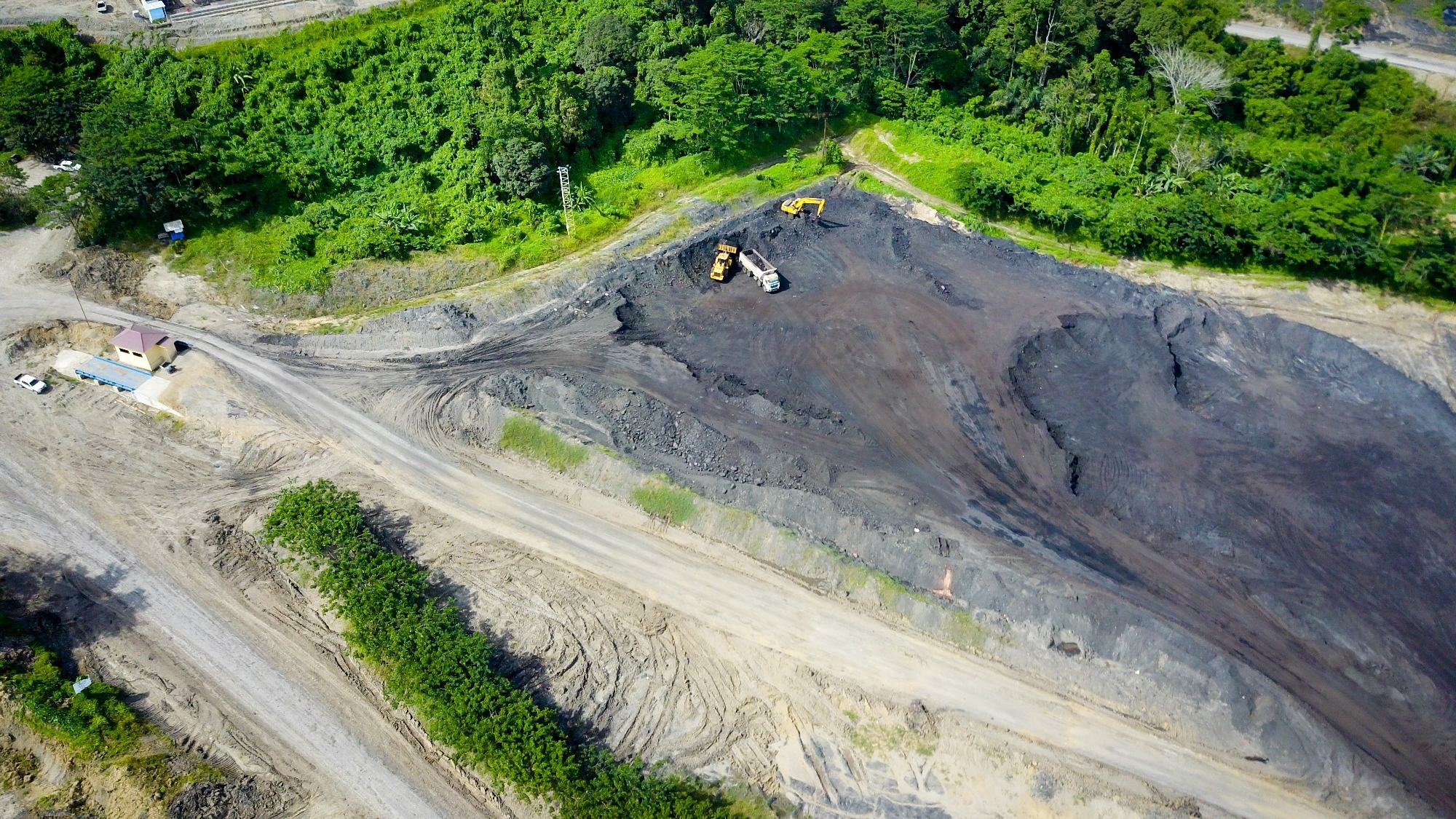 Study: Ground control strategies for longwall top-coal caving panel in extra-thick coal seams with thick-hard roof. Image Credit: arikbintang/Shutterstock.com
A mechanical model combined with directional hydraulic fracturing could help reduce dangerous energy release during thick-hard roof failure in longwall top-coal caving of extra-thick coal seams.
In field tests at the 15311 south working face of the 1890 Coal Mine in Xinjiang, China, the approach reduced pressure-step distances, eased roof deformation, and improved control of a high-risk mining environment.
Saving this report for later? Download a PDF here.
Thick-hard roof strata are a persistent ground-control challenge in longwall mining because they resist breaking, store large amounts of elastic strain energy, and can fail violently. Roof layers with uniaxial compressive strengths above 60 MPa are especially prone to forming long suspended or cantilevered sections, which can generate substantial bending moments and release significant energy when they fracture.
That risk is especially important in longwall top-coal caving of extra-thick seams, where roof behavior directly affects mining stability. Although softer immediate roofs can sometimes act as a buffer by collapsing earlier, their thickness and breaking behavior become critical under thick-hard roof conditions.
Earlier control methods, including blasting and hydraulic fracturing, have aimed to weaken the roof and spread out energy release, but selecting effective parameters for site-specific conditions remains difficult.
How The Study Solved the Thick-hard Roofing Problem
To better understand and control this behavior, the researchers developed a mechanical model for energy accumulation and release during roof fracture. They treated the roof differently in two stages: before the first break, it was modeled as a solidly supported beam; during later breaks, it was modeled as a cantilever beam.
That structure allowed the team to estimate bending moments, fracture step distances, and strain-energy release during both initial and cyclic failure.
The analysis drew on laboratory test results, geological conditions at the working face, and field measurements. Key inputs included hard-roof thickness, immediate-roof thickness, tensile strength, elastic modulus, mining thickness, overburden load, and immediate-roof breaking characteristics. A single-variable sensitivity analysis was then used to examine how each factor changed the total strain energy released during fracture.
The modeling results were used to guide a field control strategy based on the authors' description of “energy mitigation–structural weakening–stress regulation.” Using fixed-length directional drill holes, the team carried out single-point hydraulic fracturing at controlled pressures and intervals to weaken the thick-hard roof and encourage more distributed fracturing.
Results of the Thick-Hard Study
The model showed that total energy release increased with hard-roof thickness, roof tensile strength, and mining thickness, and decreased as immediate-roof thickness increased. It also found that the first main-roof break released more than twice as much energy as later cyclic breaks, underscoring why initial roof failure can be especially hazardous.
In the field, the researchers set the single-point water injection volume at 20 m³ and fracturing-point spacing at 15 m. According to the study, those settings weakened the roof enough to support more controlled collapse and energy dissipation.
Monitoring data showed lower loading intervals and more manageable deformation after fracturing. Maximum recorded movement reached 287 mm in roof-floor convergence, while side displacement measured 236 mm on the coal-pillar side and 135 mm on the solid-coal side. The initial pressure step in hydraulic supports dropped from 45 m to 18 m, and cyclic pressure steps fell by about 35% compared with the unfractured face.
The authors said the method reduced the suspended-roof effect by allowing energy to be released more gradually. They also interpreted the fracturing treatment as helping improve collapse filling through softening of the immediate roof, which may have contributed to lower impact hazard.
Importance of the Study
The study offers a mine-tested strategy for managing thick-hard roof behavior in extra-thick coal seam mining, a setting where sudden roof failure can create serious dynamic hazards. At the same time, the findings come from a specific working face in one Xinjiang mine, so performance elsewhere will likely depend on local geology, roof structure, and operating conditions.
Journal Reference
Wang R., et al. (2026). Ground control strategies for longwall top-coal caving panel in extra-thick coal seams with thick-hard roof. Scientific Reports. DOI: 10.1038/s41598-026-44269-y