A Poland case study suggests that pairing directional drilling with geo-mechanical and ventilation modeling can sharpen methane drainage planning in deep coal mines and help explain why performance changes as mining advances.
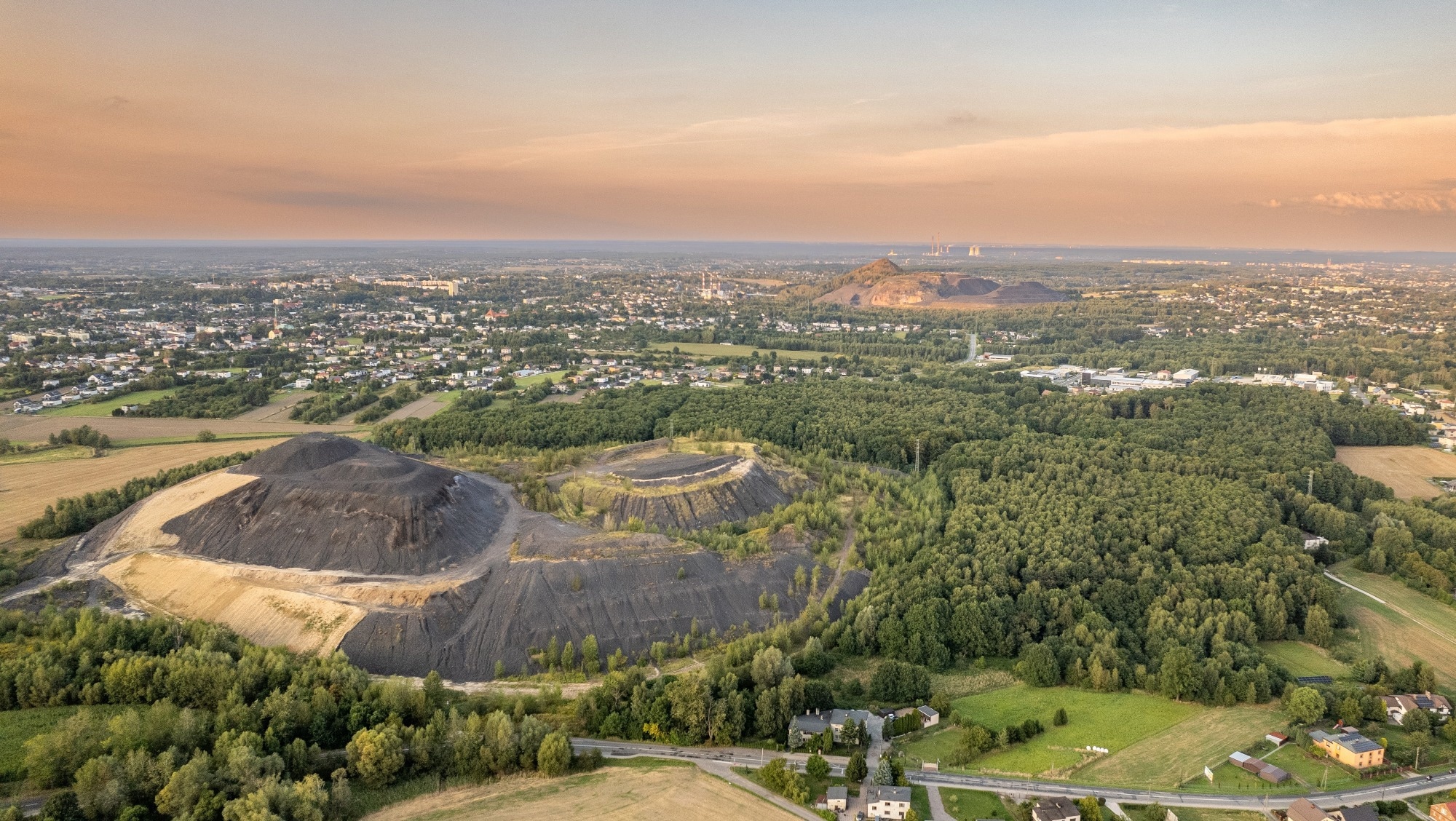 Study: Integrating Modelling and Directional Drilling for Methane Mitigation in Deep Coal Mines: A Case Study of the Staszic–Wujek Coal Mine (Poland). Image Credit: Marcin_MorawiecShutterstock.com
Methane drainage methods generally fall into three categories: surface-to-in-seam, underground-to-in-seam, and cross-measure boreholes.
Directional drilling adds flexibility by allowing longer, more precise borehole paths into methane-bearing zones that are difficult to reach with conventional drilling.
These long directional boreholes, often drilled horizontally or along complex trajectories, are used in the United States, Australia, China, and, more recently, Poland to reduce methane hazards before and during mining.
Saving this for later? Download a PDF here.
One of the main technical challenges here is that methane migration is shaped by changing geo-mechanical conditions in the rock mass. Coal seam roofs consist of layers with varying stiffness and strength.
Mining alters the local stress field, creating fractures and crack networks that can either enhance or impede methane flow toward drainage boreholes. This means the timing and placement of boreholes are just as important as their design.
How The Study Was Done
In the Applied Sciences paper, the researchers examined coal seam 501 at the Staszic–Wujek Coal Mine in the Upper Silesian Coal Basin in Poland.
The study combined field measurements, laboratory testing, and numerical modeling. Geological data were used to characterize the layered rock mass above coal seam 501, particularly the sandstone, siltstone, and shale/claystone intervals.
The team also analyzed methane content and sorption kinetics in coal samples to better understand how methane is stored and released.
To assess drainage performance during mining, the researchers compared methane capture from conventional boreholes and long directional boreholes in coal panel II/C.
They also used finite element modeling to examine mining-induced stress redistribution and identify fracture zones likely to influence methane migration. Regional tectonic stress and overburden load were included in the analysis.
The paper also notes, however, that detailed geomechanical simulations were conducted for panel I/C and then used to interpret drainage behavior in the adjacent panel II/C.
Ventilation airflow and pressure distribution in the workings and goafs were also analyzed to track how pressure gradients shaped methane movement.
The authors present the study as an integrated decision-support framework rather than a static borehole-placement exercise.
Directional Boreholes Worked Better Earlier
The clearest finding was that directional boreholes were most effective in the early stage of mining, when stress-relieved fracture zones were well developed and still favorably connected to the drainage system.
At first, directional boreholes accounted for approximately 70 % to 100 % of methane drainage in the studied panel. But as mining progressed and the goafs of adjacent panels became connected, their contribution fell sharply, eventually dropping to about 30 %.
The study links that decline to changes in airflow and pressure conditions after the goaf connection, which redirected methane away from active drainage points.
The authors note more broadly that, in the DD-MET study and under the conditions examined, combining conventional cross-measure boreholes with long-reach directional boreholes can capture roughly 50 % to 60 % of the methane released from an active longwall panel during mining.
Geology And Ventilation Shaped Results
Geo-mechanical analysis identified sandstone and siltstone layers as the most favorable zones for methane drainage, as mining-induced tensile and shear stresses can generate fractures that serve as migration pathways.
More specifically, the most promising horizons were sandstone and siltstone layers between seams 501 and 416/2. Some higher sandy shale intervals also showed fracture development.
Claystone, by contrast, was considered less suitable for borehole placement because compaction limits fracture growth.
The modeling also suggested that connected fracture zones between adjacent goafs can divert methane toward previously mined areas, cutting the efficiency of active drainage boreholes. That finding demonstrates the need to account for neighboring panels and goaf overlap when designing drainage systems.
Ventilation analysis reinforced the point. Changes in airflow and pressure distribution had a strong effect on methane migration, and directional boreholes were more sensitive to those shifts than conventional fan-assisted systems.
The paper also reports that directional boreholes showed stronger and faster responses to short-term pressure fluctuations than reference boreholes, pointing to tighter coupling with the mine’s aerodynamic conditions.
Coal Properties Had an Impact
Laboratory sorption kinetics tests showed that coal seam 501 had relatively uniform methane storage capacity, but methane desorption rates varied across samples.
That means the overall amount of methane available for release was fairly consistent, while the rate at which methane moved out of the coal could still vary locally. According to the authors, those differences may help explain short-term fluctuations in methane emissions and drainage efficiency during mining.
Contribution to Mining Science
The main contribution of the study is not simply that directional drilling can improve methane capture. It is that methane drainage performance in deep coal mines depends on the interaction of stress redistribution, fracture development, ventilation-driven pressure fields, and coal-specific desorption behavior.
By combining field data, modeling, and laboratory measurements, the authors argue that methane drainage can be evaluated more accurately and managed more adaptively as mine conditions change.
The paper is based on a single mine, seam, and panel setting, so the findings should be read as a well-supported case study rather than a universal rule for all deep coal operations. However, the framework may be useful for other mines facing similar geo-mechanical and ventilation conditions.
Journal Reference
Jura B., et al. (2026). Integrating Modeling and Directional Drilling for Methane Mitigation in Deep Coal Mines: A Case Study of the Staszic–Wujek Coal Mine (Poland). Applied Sciences 16, 3113. DOI: 10.3390/app16073113, https://www.mdpi.com/2076-3417/16/7/3113