Treating mine water is hardest when solids surge without warning. A new review explores why stable, integrated systems are more important than peak efficiency alone.
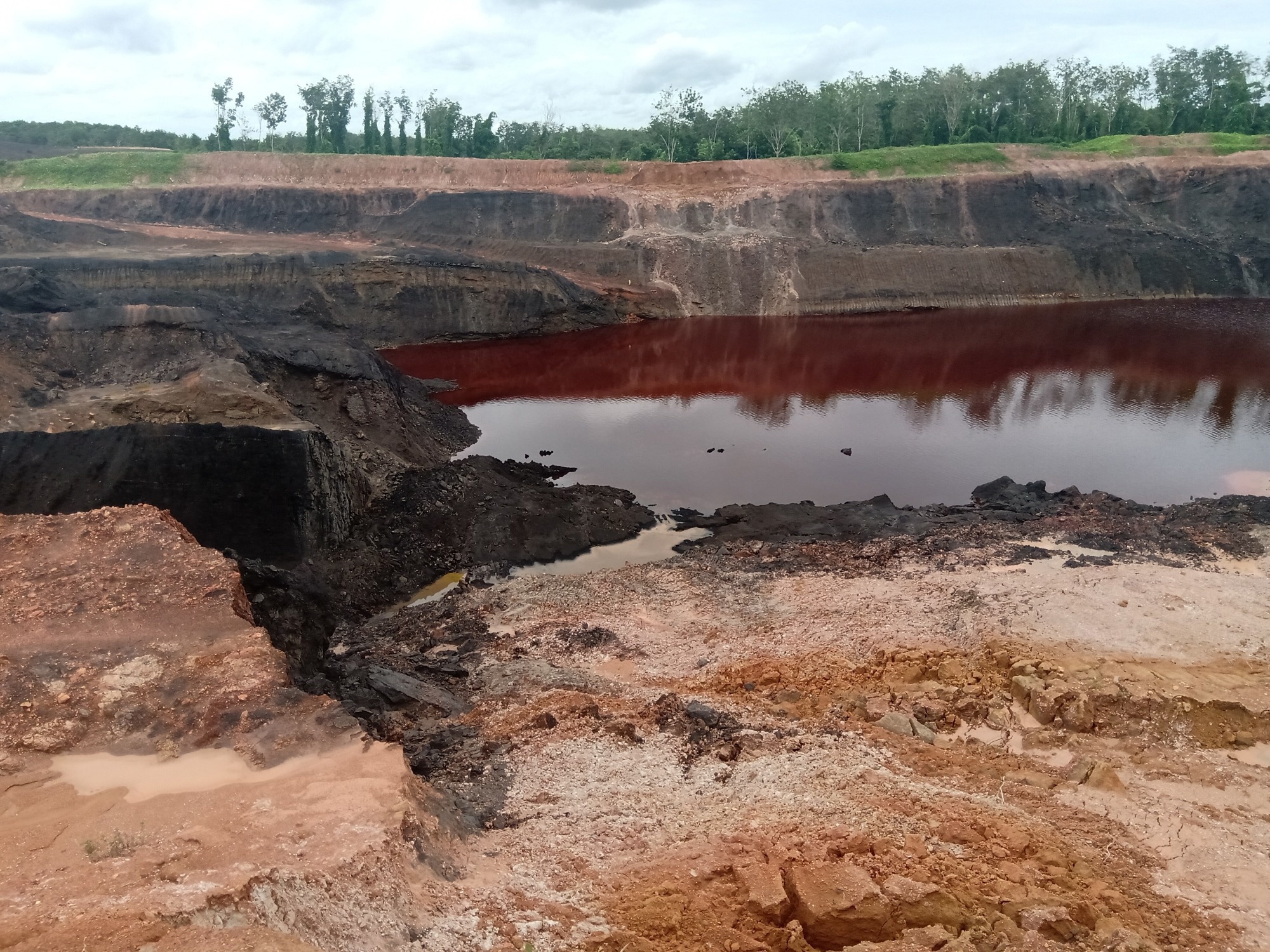 Study: A Review of Research Progress on Intelligent Cyclone–Filtration-Integrated Equipment for High-Suspended-Solids Mine Water Treatment. Image Credit: Aghnia's Father/Shutterstock.com
Saving this for later? Download a PDF here.
Challenges In Treating High Suspended Solids In Mine Water
Treating mine water with high suspended solids (HSS) remains a major challenge for the mining industry, especially during peak inflow events when concentrations can reach 1-100 g/L. Under these conditions, conventional treatment systems often struggle to maintain both efficiency and stable operation.
A recent review in Separations examines progress in the development of intelligent cyclone-filtration-integrated equipment for high-suspended-solids mine water treatment.
The review's central argument is that the key issue is system stability, maintainability, and operability under fluctuating influent conditions. The authors say hydrocyclone-filtration integration is promising because it combines rapid pre-separation with downstream polishing. However, its success depends on how well the overall system handles dynamic loading, not just on the nominal performance of individual units.
How Hydrocyclones and Filtration Work Together
Hydrocyclones are widely used for solid-liquid separation in mine water treatment, particularly under high-solids conditions. They generate centrifugal forces that drive denser particles toward the outer wall, while lighter particles move inward and leave through the overflow. Because they are compact and can handle high flow rates, they are well-suited to removing coarse particles and reducing the load on downstream treatment.
Filtration then serves as the final barrier, capturing finer particles so that treated water meets discharge requirements. On its own, however, filtration can struggle when influent conditions shift rapidly, leading to clogging, increased maintenance demands, and instability.
The review argues that combining hydrocyclones with filtration is useful precisely because it links pre-separation with final polishing, improving the system’s ability to cope with complex mine water streams.
Reviewing the Last 20 Years of Hydrocyclone-Filtration
The authors conducted a systematic review of literature published from 2006 to 2026 using Web of Science, Scopus, and Google Scholar. They focused on research into hydrocyclone-filtration systems for high-suspended-solids mine water, paying particular attention to separation mechanisms, structural configurations, operating behavior, and performance under variable conditions.
Key parameters included inlet velocity, pressure drop, and particle size distribution. The paper also examined how hydrocyclone behavior affects downstream filtration, stressing that unstable cyclone performance or sudden spikes in solids concentration can overload filters and accelerate clogging.
The authors propose a minimum closed-loop control framework to address this, which connects essential monitoring variables to essential control actions.
Dynamic Conditions are Key to Mine-Water Treatment
One of the review’s main points is that high-suspended-solids mine water behaves as a concentrated multiphase flow. In practice, that means particle interactions, changing flow conditions, and fluctuating solids loads all influence separation performance in ways that steady-state models often fail to capture.
The paper reports hydrocyclone separation efficiencies typically in the 85 % to 95 % range, with operating pressure drops commonly between 50 and 200 kPa. But those figures do not tell the whole story. Performance can shift quickly as influent conditions change, leading to wear, clogging, flow redistribution, and reduced classification accuracy.
For that reason, the authors argue that the main engineering objective should not solely be peak separation efficiency.
Instead, the goal should be to maintain a stable operating window in which pressure drop, solids loading, and filtration resistance remain controllable despite changing field conditions. The review, therefore, supports dynamic control strategies based on real-time monitoring of variables such as pressure drop and turbidity.
What This Means For Mining Operations
In mining operations, especially those handling high-solids loads in coal and mineral processing, hydrocyclones can reduce the burden on downstream filters and improve overall treatment performance. This is particularly relevant in underground or space-constrained settings, where systems must operate continuously and reliably in tight footprints.
The review suggests that better load management and more stable operation may reduce maintenance burdens and support water reuse. At the same time, it does not claim that integrated systems consistently cut energy use, chemical demand, or sludge-handling costs across all mine sites. Instead, it claims, the benefits depend heavily on engineering design and operational control.
That includes details such as internal flow zoning, bypass and sludge-discharge pathways, wear-resistant and anti-clogging structures, and the coordination of hydrocyclone operation with downstream filtration.
The paper also notes that compact designs and aggressive front-end separation can involve trade-offs, since higher hydraulic intensity may increase energy demand, wear, and sensitivity to load fluctuations if the system is not carefully designed and controlled.
Integrating Hydrocyclone-Filtration is the Next Step
The review presents hydrocyclone-filtration integration as an important development direction for treating high-suspended-solids mine water. But it also makes clear that progress depends on moving beyond individual-unit optimization toward system-level performance under real operating conditions.
Future work, according to the authors, should focus on advanced monitoring and control, real-time sensing, improved modeling of system interactions, multi-stage pre-separation, advanced filtration designs, and better coordination of self-cleaning and backwash processes.
The paper also highlights unresolved engineering challenges, including localized overload, limited long-term operational data, and the lack of unified evaluation criteria across projects, all of which make comparison and large-scale validation more difficult.
Journal Reference
Xiao, S., & Li, L. (2026). A Review of Research Progress on Intelligent Cyclone-Filtration-Integrated Equipment for High-Suspended-Solids Mine Water Treatment. Separations, 13(4), 107. DOI: 10.3390/separations13040107, https://www.mdpi.com/2297-8739/13/4/107
Disclaimer: The views expressed here are those of the author expressed in their private capacity and do not necessarily represent the views of AZoM.com Limited T/A AZoNetwork the owner and operator of this website. This disclaimer forms part of the Terms and conditions of use of this website.