The need for improved safety and efficiency in mining has led to the development of advanced technologies such as Roof Cutting and Retaining by Mining (RCRM). These methods use caved gangue for automatic filling, thereby forming stable roadways, enhancing resource recovery, and reducing stress in the surrounding rock.
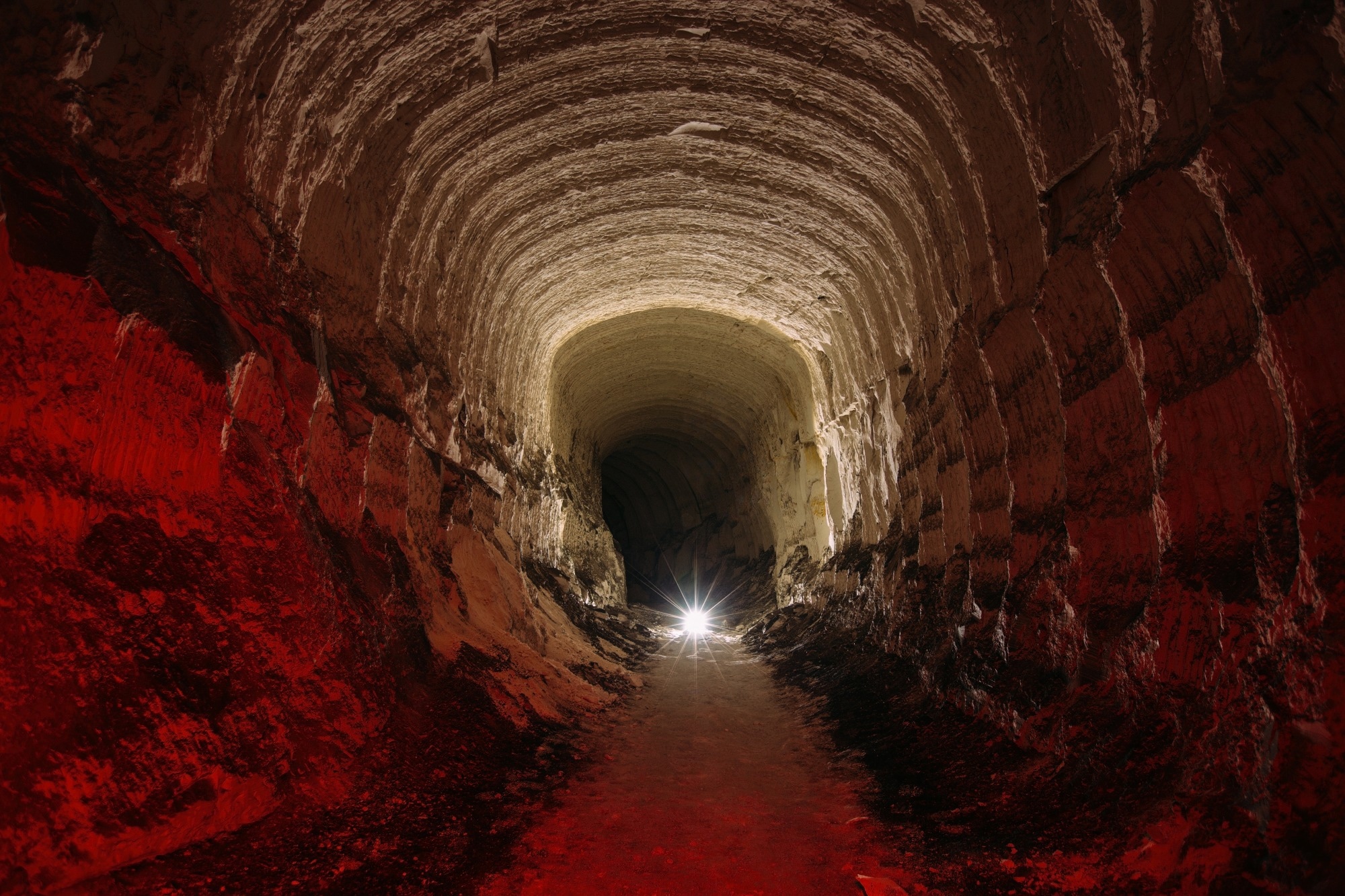 Study: Rock layer deformation analysis and mitigation at fault-crossing mining sites in RCRM operations. Image Credit: Vladimir Mulder/Shutterstock
Researchers investigated the application of RCRM in fault-crossing mining sites, where geological discontinuities create significant operational challenges. Their study, published in the journal Scientific Reports, analyzed rock layer deformation and mitigation mechanisms to evaluate how RCRM improves roadway stability and safety in fault-affected environments.
Mechanisms of RCRM Technology in Deep Mining
RCRM is designed for deep mining operations, where traditional methods face challenges due to complex geological conditions. It uses caved gangue as a natural filling material to form and support roadways during extraction. This process helps distribute loads, reduce stress in surrounding rock, and maintain roadway stability.
However, geological faults create weak zones that concentrate stress, leading to uneven deformation and increased displacement of rock layers. Understanding the interaction between RCRM operations and fault-induced stress conditions is essential for developing effective control strategies.
Methodology: Integrative Approach to Rock Layer Analysis
Researchers examined rock layer deformation during fault-crossing mining using RCRM technology. They employed theoretical analysis, numerical simulations with FLAC3D, and field experiments to understand how surrounding rock support pressure and displacement evolve as the working face passes through fault zones. A three-stage model was established to describe stress evolution and deformation behavior in relation to fault structures.
Numerical simulations replicated the geological conditions of the Qipanjing Coal Mine (11,101 working face) and evaluated the effects of factors such as fault dip angle, slot height, and gangue bulking coefficient on stress distribution and roadway stability. The Double-Yield model was used to simulate the compaction behavior of caved gangue and its load-bearing capacity under varying stress.
A field monitoring system captured real-time displacement data, allowing authors to validate simulation results. This integrated approach provided a clear understanding of rock behavior during fault-crossing operations and facilitated the development of effective control strategies for maintaining stability and safety.
Key Findings: RCRM Effectiveness
The study demonstrated that RCRM technology significantly improves stability in fault-crossing mining by effectively controlling stress distribution and rock deformation. As the working face approaches fault zones, stress concentrations increase, increasing the potential for deformation.
Three stages of deformation behavior were identified: above the fault, at the fault plane, and beneath the fault. Advance stress drops after mining the hanging wall and gradually returns to normal as the working face moves away from the fault.
Numerical results showed that slot height plays a critical role in controlling deformation. Increasing the slot height from 8 m to 10 m reduced fault displacement from 0.182 m to 0.143 m, lowering compressive stress and distortion energy in the surrounding rock.
The optimal slot height of 10 m improved load-bearing capacity and overall stability. Additionally, optimizing blasting parameters reduced the gangue bulking coefficient from 1.39 to 1.33, thereby enhancing compaction and support performance.
The study confirmed the role of gangue support and stress redistribution in minimizing deformation and preventing failures such as rock bursts. A combined control strategy of increased slot height and loose blasting effectively reduced stress concentration and maintained roadway integrity.
Practical Implementation in Mining Operations
The proposed scheme, which combines a 10 m slot height with loose blasting, offers an effective approach to managing stress and rock deformation near faults. By improving gangue compaction and load-bearing capacity, it reduces instability risks and enhances roadway safety, supporting higher resource recovery while maintaining structural stability.
From an operational perspective, improved control of deformation minimizes downtime, reduces maintenance requirements, and lowers overall costs, thereby contributing to more efficient mining processes. The integration of numerical modeling with field monitoring provides a robust framework for analyzing and managing fault-related challenges, applicable to other mining scenarios.
Overall, the findings support safer, more efficient, and sustainable mining practices while laying a foundation for future advancements in mining technology.
Conclusion and Future Directions
In summary, this study provides a clear understanding of rock deformation during fault-crossing mining and confirms the effectiveness of RCRM in improving stability and safety under complex geological conditions. It highlights the importance of targeted control strategies and continuous monitoring to manage fault-induced risks and ensure stable mining operations.
As mining advances into deeper and more challenging environments, future work should focus on refining control technologies and improving predictive models. Overall, this research supports the development of safer, more efficient, and sustainable mining through the integration of advanced techniques and system-level approaches.
Journal Reference
Dongshan, Y., & et al. (2026). Rock layer deformation analysis and mitigation at fault-crossing mining sites in RCRM operations. Sci Rep 16, 11723. DOI: 10.1038/s41598-026-45552-8, https://www.nature.com/articles/s41598-026-45552-8
Disclaimer: The views expressed here are those of the author expressed in their private capacity and do not necessarily represent the views of AZoM.com Limited T/A AZoNetwork the owner and operator of this website. This disclaimer forms part of the Terms and conditions of use of this website.