*Important notice: This news reports on an unedited version of the paper which has been accepted. and is awaiting final editing. Scientific Reports sometimes publishes preliminary scientific reports that are not fully edited and, therefore, should not be regarded as conclusive or treated as established information.
Dense drilling mining technique relieves roof stress and enhances roadway stability by promoting controlled collapse. Optimized drilling parameters reduce deformation and improve safety in complex underground coal mining environments.
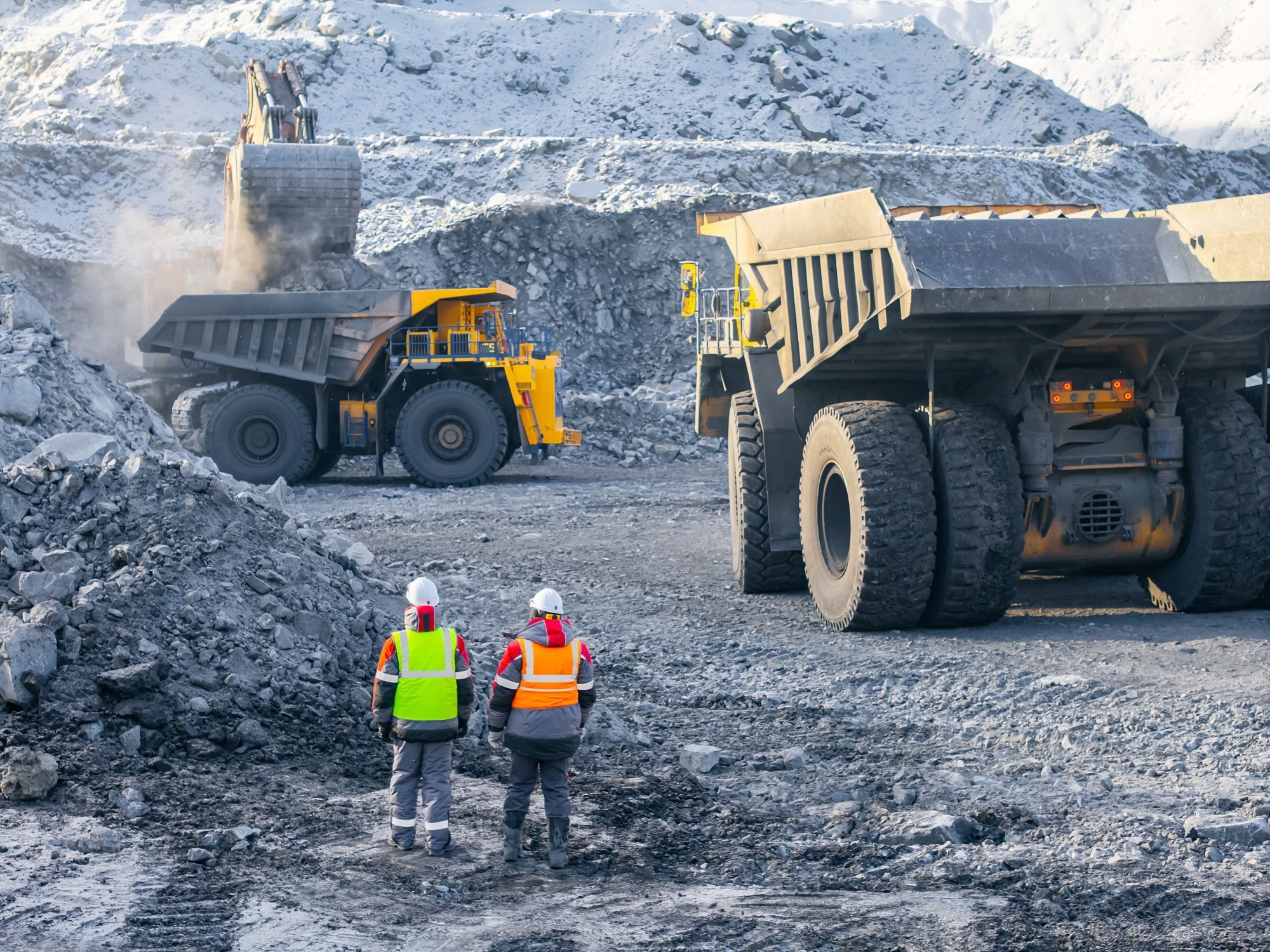 Study: Design and application study of the key technical parameters of dense drilling for pressure relief in coal mine roofs: a case study. Image Credit: Parilov/Shutterstock
In a recent article published in the journal Scientific Reports, researchers investigated the use of dense drilling technology as a pre-emptive roof-cutting and pressure-relief method to control these stresses and enhance roadway stability during mining operations.
Roof Pressure Relief Technologies Overview
In coal mining, the integrity and stress distribution of the surrounding rock directly influence roadway stability. As the mining workface advances, the stresses redistribute, often forming complex structures such as the lateral cantilever beam composed of the hard roof strata.
Traditional support methods alone struggle to maintain roadway stability under these conditions. Various pressure relief technologies, including directional blasting and hydraulic fracturing, have been developed but carry drawbacks such as coal-rock dynamic hazards and complex management.
Dense drilling, a process involving closely spaced boreholes drilled into the roof to create a pre-weakened zone, has emerged as a safer, more adaptable alternative. This technique relies on the principle of large-small structures of the surrounding rock to manipulate stress fields and promote the collapse of targeted roof sections, thereby relieving pressure. The study area, the 31315 workface of the Chahasu Coal Mine, features complex geological conditions and overlapping mining influences, making it an ideal site for implementing and evaluating this approach.
Dense Drilling Design and Simulation
The research integrates theoretical stress analysis, numerical simulations, and field experiments to optimize dense drilling parameters. Mechanical modeling analyzes stress concentrations and plastic zone evolution around circular holes of varying diameters, providing insight into the effect of borehole size on rock weakening.
Numerical simulation using the Universal Distinct Element Code (UDEC) evaluates how different roof-cutting heights and angles influence lateral roof beam collapse and the distribution of mining-induced stresses in roadways and coal pillars. In parallel, the study designs an industrial-scale field test on the 31315 workface, where large-diameter drill holes (133 mm diameter, 15 m depth) are arranged with varying spacing and angles.
Over a 750-meter roadway section, dense drilling spacings range from 1000 mm to 350 mm to examine how spacing affects stress relief and roadway deformation. Data such as roof and floor displacement and roadway stability indicators are systematically recorded during coal face advancement.
Field Application and Performance Analysis
The results highlight the relationship between drilling parameters and the efficacy of mining pressure relief. Numerical simulations reveal that increasing the roof-cutting height and angle generally promotes timely roof collapse, facilitating effective goaf filling and reducing roadway stress. However, excessively large cutting angles (e.g., greater than 15°) lead to excessive increases in the length of lateral cantilever beams, which can undermine roadway stability.
The optimum parameters for the 31315 working face are a cutting height below 15 meters and a cutting angle below 15°, ensuring optimal fracture patterns and stress distribution. Field test data confirm that decreasing drilling spacing yields greater pressure relief and improved roadway stability, as evidenced by reductions in floor heave, roof displacement, and overall deformation rates.
For example, with dense drilling at 350 mm spacing, floor subsidence is reduced to 135 mm compared to 505 mm at 1000 mm spacing. This corresponds to more effective roof weakening, earlier rock collapse, and enhanced load transfer to the goaf, reducing coal pillar stress. The study emphasizes that dense drilling disrupts the large structure (hard roof) to facilitate the formation of stable articulated block structures that bear loads directly, preventing excessive stress transfer to smaller surrounding rock structures near the roadway.
The dense drilling technique avoids some common issues of alternative methods, such as blasting and hydraulic fracturing, including dynamic hazards and complex stress perturbations, making it safer and more adaptable. It involves pre-weakening the roof beyond the immediate influence zone of mining-induced support pressure, thus limiting violent rock deformation and ensuring operational safety.
However, dense drilling is labor-intensive and entails higher upfront costs compared to some traditional methods. The research team's proposed technical framework, including borehole diameter, spacing, angle, and cutting height, is grounded in integrated theoretical, numerical, and field observations. Although specific to the Chahasu Mine conditions, these parameter designs offer valuable references for similar geological and mining scenarios elsewhere.
Download the PDF of this page here
Optimized Parameters and Engineering Insights
This study demonstrates that dense drilling roof cutting significantly improves roadway stability in coal mines by effectively relieving mining-induced pressure in the surrounding rock. Roof cutting parameters critically influence mining pressure relief: moderate cutting heights (<15 m) and angles (<15°) optimize the roof collapse and goaf filling processes, minimizing stress effects on roadways. Field tests validating the industrial application of dense drilling show clear reductions in roadway deformation and stress concentrations as drill-hole spacing decreases.
The approach provides a simpler, safer alternative to blasting and hydraulic fracturing, adjusting the large-small structure rock interactions to promote timely roof collapse and stable load-bearing formations. Ultimately, the research contributes to safer and more efficient coal mining by optimizing roadway protection against mining pressures through advanced rock engineering techniques.
Journal Reference
Ma J., Wang H., et al. (2026). Design and application study of the key technical parameters of dense drilling for pressure relief in coal mine roofs: a case study. Scientific Reports. DOI: 10.1038/s41598-026-49581-1, https://www.nature.com/articles/s41598-026-49581-1