*Important notice: This news reports on an unedited version of the paper which has been accepted. and is awaiting final editing. Scientific Reports sometimes publishes preliminary scientific reports that are not fully edited and, therefore, should not be regarded as conclusive or treated as established information.
A modified membrane combining photocatalysis and biological treatment removes over 96% pollutants from mining wastewater. The system enables water reuse for backfilling, reducing freshwater demand and supporting sustainable mining operations.
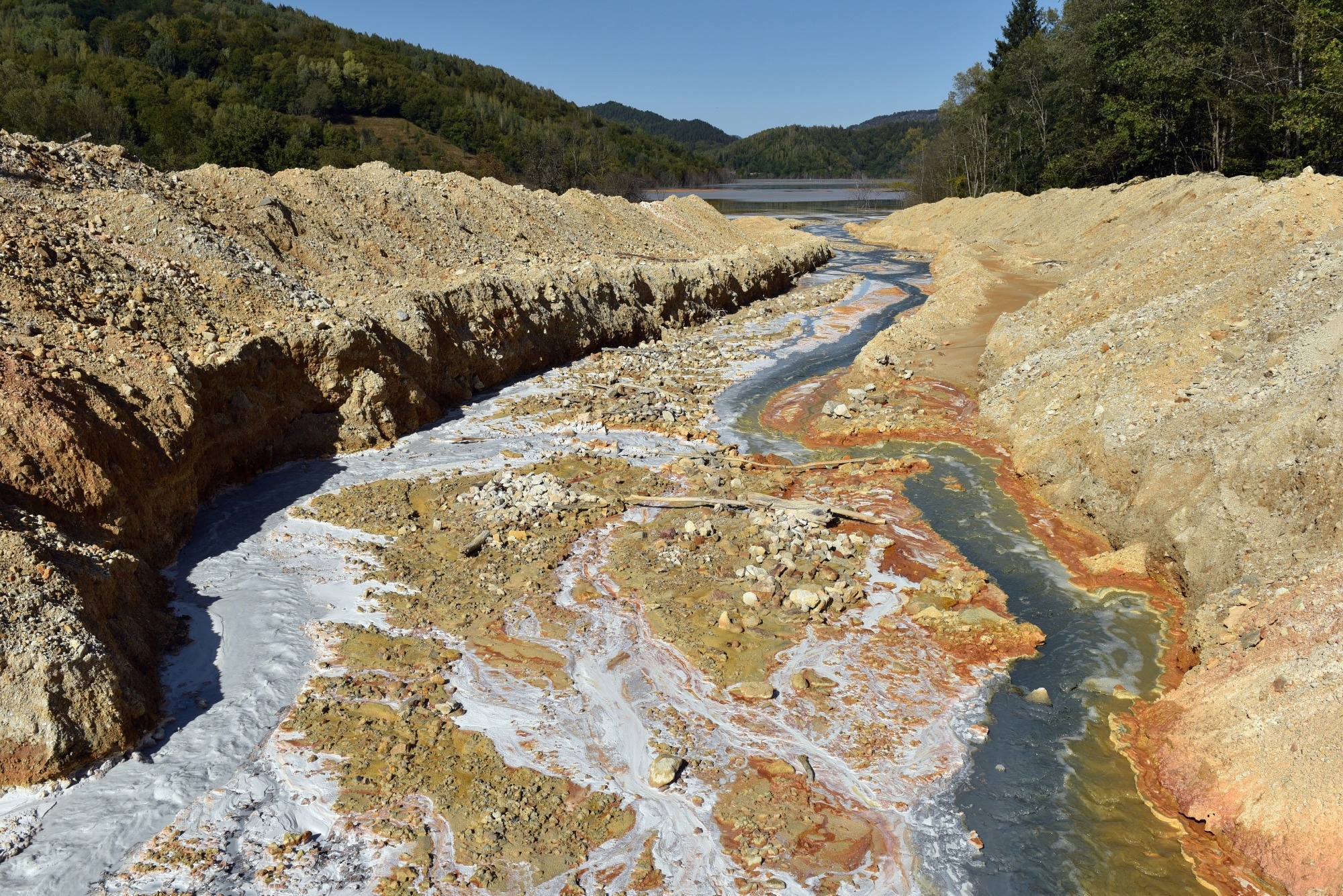 Study: Developing a PVDF/nTiO2-(n-1)Fe(OH)3 modified membrane for domestic wastewater treatment in mining areas as an alternative water source for mine backfilling. Image Credit: salajean/Shutterstock
Researchers have developed a high-efficiency water recycling method for sustainable mineral extraction. In a study published in the journal Scientific Reports, they designed a specialized filtration system that removed 96.66% of organic pollutants from domestic mining wastewater, effectively converting sewage into a usable supply for underground backfilling.
The system combines photocatalytic and biological treatment to improve water quality and reduce environmental impact. This approach offers a practical solution for mining operations, thereby helping manage water scarcity while lowering the cost of sourcing fresh water.
Enhancing Water Efficiency in Mineral Extraction
The process of backfilling is essential for maintaining mine stability and structural safety, as well as for managing waste materials like gangue. However, it needs large volumes of water.
In many mining regions, mainly those in dry climates, sourcing enough fresh water is both difficult and costly for daily mining operations. Historically, wastewater from mine facilities, such as bathhouses and canteens, has been treated for simple tasks like dust control or watering plants. Still, its potential for industrial reuse has remained largely untapped.
Conventional filtration systems also face limitations. High organic loads can cause blockages and increase maintenance, highlighting the need for durable, self-cleaning technologies.
Advanced Self-Cleaning Filtration Systems
To address these challenges, researchers developed a modified membrane using a layer-by-layer self-assembly technique. They started with a polyvinylidene fluoride (PVDF) base and treated it with sulfuric acid to create a charged surface for better coating adhesion.
Titanium dioxide (TiO2) and iron hydroxide (Fe(OH)3) were then deposited onto the membrane surface to form a layered structure. TiO2 acts as a photocatalyst under ultraviolet light to break down organic dirt, while Fe(OH)3 helps agglomerate smaller particles so they are easier to filter out. This design approach creates a surface that naturally attracts water affinity and resists/pushes fouling from oils and organic compounds.
Experimental Validation in a Bioreactor
The system was then tested in a Moving Bed-Ultraviolet Photocatalytic Membrane Bioreactor. A 12-liter reactor used microbial carriers to degrade waste before filtration through the modified membrane. The experiment utilized synthetic wastewater designed to mimic the high concentrations of starch, glucose, and nitrogen found in actual mining camps.
To ensure the results were accurate, the study used advanced microscopy to examine the membrane at a microscopic level and monitored how well the water flowed through the material over 26 days. It also evaluated the system’s original ability to recover performance after simple cleaning, compared to conventional filtration systems.
Download the PDF of this page here
Performance Enhancements Achieved
The outcomes demonstrated that the modification significantly improved the membrane’s performance. A standard PVDF membrane is hydrophobic, with a contact angle of 94.9°, while the modified version reduced this to 26°, making it highly water-attractive.
This allowed for a maximum water flow of 551.65 L·m-2·h-1, which is a major improvement for high-volume mining applications. In terms of cleaning the water, the system achieved 96.66% total organic carbon removal and 94.13% chemical oxygen demand reduction. Ammonium nitrogen removal exceeded 99%, meeting strict environmental standards.
Durability and Fouling Resistance
The modified membrane also showed strong resistance to fouling, meaning it stayed clean for longer periods. Photocatalytic TiO2 layers degraded organic buildup under ultraviolet light, extending cleaning cycles by 2.74 times compared to conventional systems.
Operating pressure remained lower for longer periods, which reduces the energy needed for the pumps. Even when the membrane did eventually get dirty, the membrane recovered over 70% of its flux with simple cleaning, demonstrating durability for mining conditions.
Strategic Advantages for Mining Operations
The practical implications of this technology align with the “waste-free mine” concept, where all byproducts are reused. By treating domestic wastewater to such a high standard, mines can use this reclaimed water to create the slurry needed for backfilling underground voids, thereby reducing reliance on fresh water. The study estimates this could replace 20% to 30% of the fresh water currently sourced from municipal systems or deep aquifers. This leads to direct cost savings and simplifies the logistics of transporting water to remote sites. With reuse rates exceeding 95%, the system also supports compliance with “near-zero discharges” regulations, thereby lowering environmental risk and avoiding penalties.
Conclusion and Future Directions
In summary, this study demonstrates an effective method for converting wastewater into a usable resource for mining operations. By combining biological treatment with photocatalytic degradation, the system enhances filtration performance while reducing maintenance needs. This technology supports lower operating costs and aligns with circular economy practices.
Future work should focus on scaling this technology from a laboratory setting to full-scale mining operations. This will support near-zero discharge goals and more sustainable production. Since the system can convert domestic wastewater into a reliable source for backfilling, the next step is large-scale implementation to reduce costs and dependence on fresh water. Additionally, addressing fluctuating water volumes in remote mining sites will be essential for ensuring stable and efficient long-term performance.
Journal Reference
Zhang, H., Guo, P. & Luo, J. (2026). Developing a PVDF/nTiO2-(n-1)Fe(OH)3 modified membrane for domestic wastewater treatment in mining areas as an alternative water source for mine backfilling. Sci Rep. DOI: 10.1038/s41598-026-48127-9, https://www.nature.com/articles/s41598-026-48127-9
Disclaimer: The views expressed here are those of the author expressed in their private capacity and do not necessarily represent the views of AZoM.com Limited T/A AZoNetwork the owner and operator of this website. This disclaimer forms part of the Terms and conditions of use of this website.