Terahertz sensing combined with machine learning achieves 96% accuracy in coal-rock identification. The method improves real-time mining decisions, enhances safety, and reduces equipment wear in automated systems.
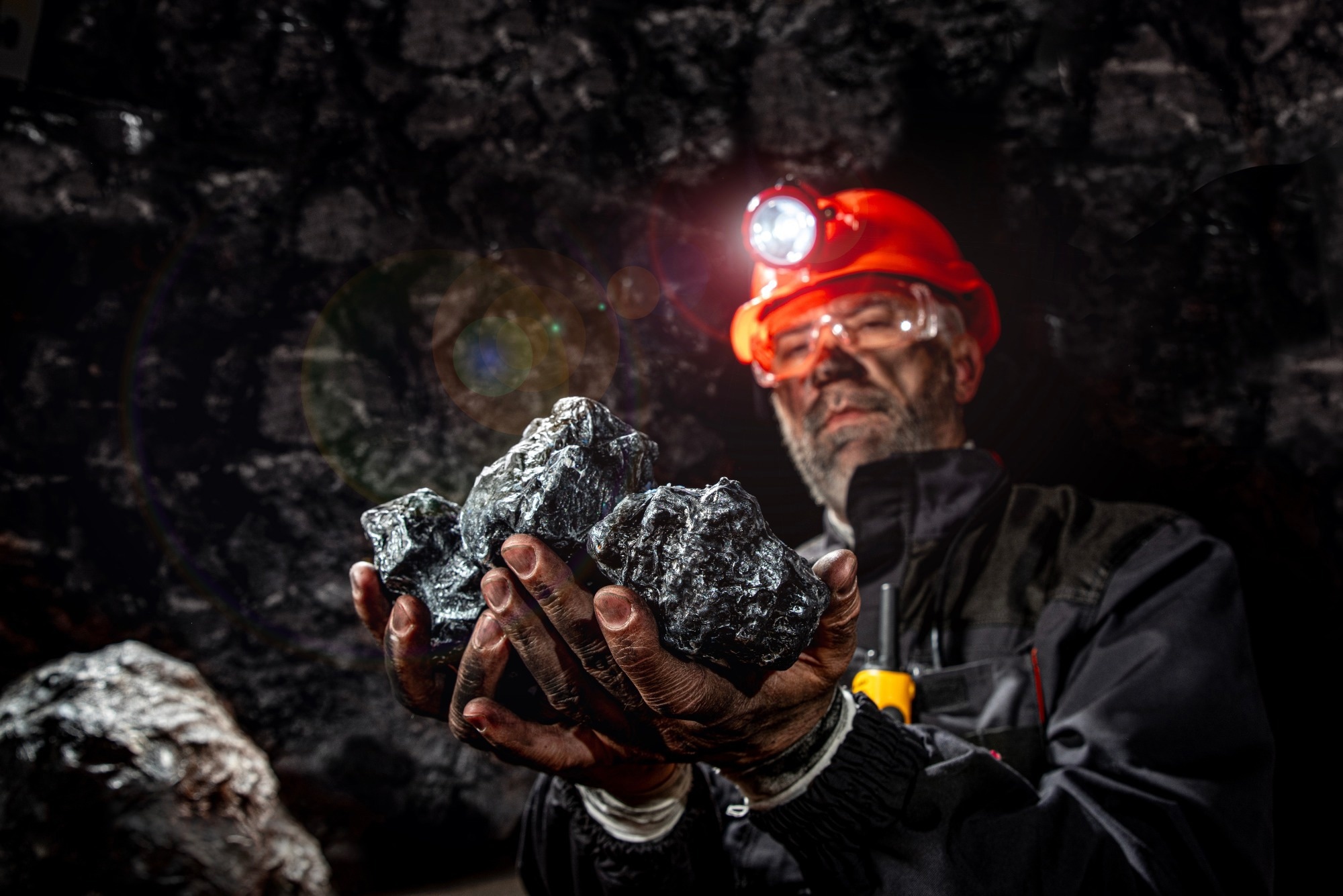 Study: Research on Coal and Rock Identification by Integrating Terahertz Time-Domain Spectroscopy and Multiple Machine Learning Algorithms. Image Credit: TSViPhoto/Shutterstock
Researchers have demonstrated a high-accuracy method for coal-rock identification in autonomous mining. In a recent study published in Photonics (2026), they combined Terahertz Time-Domain Spectroscopy (THz-TDS) with machine learning (ML) models.
The system achieved 96% accuracy in real-time interface detection, thereby addressing a key challenge in automated extraction. It can improve mining efficiency, reduce equipment wear, and enhance safety by minimizing errors in identifying geological boundaries.
Subsurface Sensing in Mineral Extraction
Coal remains a major energy source, accounting for approximately 55% of primary consumption in industrial economies such as China. As the industry shifts toward “intelligent mining”, accurate detection of the coal-rock interface has become a key challenge.
Traditional methods, including acoustic emission, gamma-ray detection, and machine vision, often fail in underground conditions with dense coal dust, high humidity, and extreme vibration. THz technology, operating between 0.1 and 10 THz, offers a strong alternative. It combines the penetration of microwaves with the sensitivity of infrared radiation. This makes it well-suited for distinguishing organic coal structures from surrounding mineral-rich rock.
Framework: Harnessing THz Spectral Data
To evaluate the performance of THz-TDS, researchers used the TAS7500SP detection system (ADVANTEST Company, Tokyo). The system operates at speeds under 8 ms with a signal-to-noise ratio above 57 dB. They prepared 55 samples across 11 coal-rock mixing ratios, ranging from 0% to 100% coal. Each sample combined coal powder, quartz sand (to simulate rock), and polyethylene as a neutral binder that does not affect THz signals.
The mixtures were compressed into 10 mm-diameter pellets at 15 MPa to ensure consistency. A transmission-mode THz-TDS setup was employed to measure amplitude attenuation and phase shift. To process the complex resulting spectral data, Principal Component Analysis (PCA) was used to reduce dimensionality and extract important features, including the refractive index and absorption coefficients. These features were then used to train four machine learning models, including Support Vector Machine (SVM), Least Squares SVM (LS-SVM), Artificial Neural Networks (ANN), and Random Forest (RF).
Findings and Spectral Sensitivities
The results showed that terahertz signals are most sensitive to coal-rock media in the 0.7-1.3 THz frequency range. In samples with 0% to 30% coal content, both refractive index and absorption increased with coal concentration. This trend is linked to the resonant behavior of carbon-hydrogen (C-H) and carbon-carbon (C-C) bonds in coal.
Additionally, PCA proved highly effective. The first two components captured 99.83% of the variance in refractive index data. Among the models, RF performed best, achieving 96% accuracy. ANN followed with 94.8%, while SVM reached 64%. At coal content above 30%, signal attenuation increased significantly, limiting transmission-mode performance. This indicates the method is most effective for rock-dominated interfaces or early mixing stages.
Applications for Modern Mining
This research has significant implications for next-generation “smart” mining systems. By integrating THz-TDS sensors into the cutting arms of robotic shearers, mining companies can achieve adaptive cutting. This allows the machinery to instantly detect coal-rock boundaries in real time, reducing tool wear and preventing damage from cutting hard rock.
The technology also improves mineral separation processes. Real-time coal content analysis on conveyor systems can reduce energy use and improve the purity of the extracted resource. From a safety perspective, accurate mapping of the seam roof and floor helps prevent roof collapses, minimize inefficient extraction, and improve resource recovery.
Sensitivity within the 0.7-1.3 THz range also enables real-time mineral grading and detection of coal oxidation. This supports early identification of spontaneous combustion risks and improves fire prevention. As a non-ionizing alternative to gamma-ray systems, THz-TDS improves operational safety and simplifies regulatory needs. It also enables precise control of the shearer arms' height. The data can further support digital twin systems, enabling real-time updates of the mining face and optimizing operations from extraction to processing.
Download the PDF of this page here
Future Directions in Geophysical Perception
In summary, this study establishes a framework for applying high-frequency electromagnetic sensing in mining. Transmission-mode THz-TDS achieves high accuracy for low- to moderate-coal concentrations. Future development should focus on reflection-mode THz-TDS to detect high-concentration seams where transmission signals are limited.
Advancements in fiber-coupled terahertz probes will enable in situ deployment in deep-earth and offshore mining environments. By scaling the dataset and incorporating multi-sensor fusion, combining THz data with near-infrared or acoustic signals, the industry can develop a truly "all-seeing" perception system. Overall, this approach provides a reliable, non-contact, and non-destructive solution for improving efficiency and sustainability in mineral extraction.
Journal Reference
Ye, D.; & et al. (2026). Research on Coal and Rock Identification by Integrating Terahertz Time-Domain Spectroscopy and Multiple Machine Learning Algorithms. Photonics, 13, 409. DOI: 10.3390/photonics13050409, https://www.mdpi.com/2304-6732/13/5/409
Disclaimer: The views expressed here are those of the author expressed in their private capacity and do not necessarily represent the views of AZoM.com Limited T/A AZoNetwork the owner and operator of this website. This disclaimer forms part of the Terms and conditions of use of this website.