*Important notice: This news reports on an unedited version of an accepted paper and is awaiting final editing. Therefore, the paper should not be regarded as conclusive or treated as established information.
Researchers have developed a gangue backfilling approach that integrates compacted waste rock with cement-based paste to improve underground support in deep coal mining. Their findings, published in Scientific Reports, suggest that coordinated backfilling approaches can help recover coal reserves beneath infrastructure while limiting mining-related ground deformation.
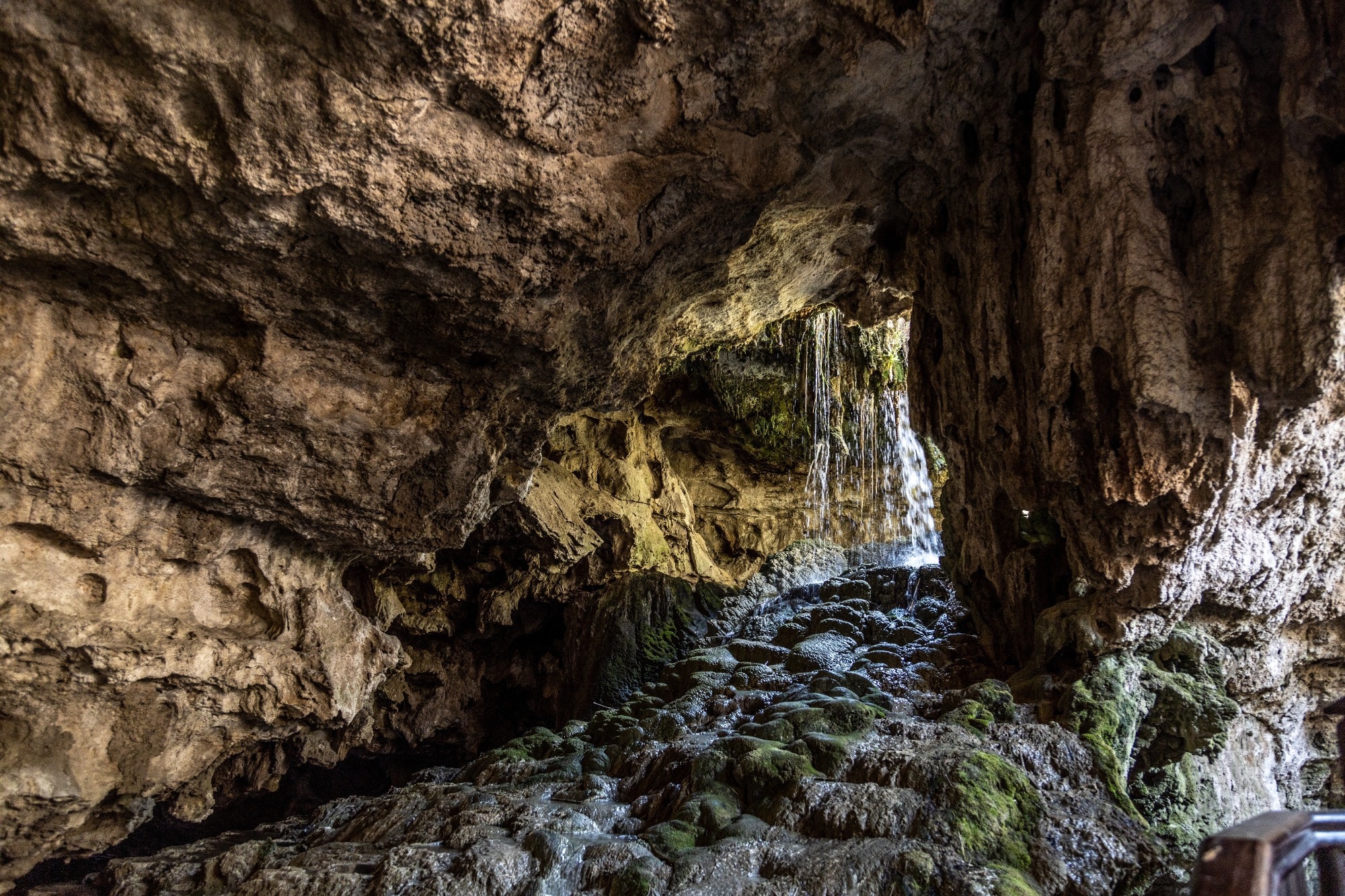 Study: Mechanisms of aquifer protection and surface subsidence control induced by gangue-paste collaborative backfilling in deep coal mining. Image Credit: Vlad Rakin/Shutterstock.com
The Challenge of Mining Coal Beneath Critical Infrastructure
Deep coal mining can deform overlying rock layers and cause surface subsidence. As the roof and surrounding rock deform, fractures can develop and create pathways for groundwater movement.
Download a free copy of this page here!
These changes can compromise aquifer integrity, damage surface infrastructure, and prevent access to coal reserves beneath protected areas. Conventional caving methods may therefore prove unsuitable where mining operations must meet strict subsidence limits.
The researchers investigated the Ji16–17 coal seam in the Ji-4 mining area of Pingmei No. 11 Mine, China. Conventional caving posed significant ground-stability risks to the Zhengyao Expressway, leaving 4.65 million tons of underlying coal unrecovered.
To address this challenge, the study examines a collaborative backfilling approach that combines gangue and paste to support the overlying rock while enabling resource recovery.
Gangue backfilling uses waste rock generated during mining, whereas paste backfilling fills mined-out spaces with a mixture of gangue, fly ash, cement, water, and additives. Both methods offer distinct advantages, but their effectiveness depends on how well the materials fill underground voids and transfer loads.
The researchers developed a combined approach to improve compaction, minimize gaps beneath the roof, and distribute loads more effectively among the backfill, surrounding rock, and coal pillars.
Turning Mining Waste Into Underground Support
The researchers designed a fully mechanized system that places compacted gangue and paste in alternating layers behind the mining supports. Conveyors transport gangue into the goaf, where a
built-in tamping mechanism on the hydraulic supports compacts the material. A pumping and pipeline system delivers the paste, which forms the final layer to improve roof contact and minimize unsupported spaces.
The paste delivery system accommodates a maximum transport distance of 7480 m and a vertical drop of 990 m. Two-stage relay pumping enables delivery over this extended distance. By combining compacted gangue's load-bearing capacity with paste's ability to fill gaps, the system aims to strengthen underground support and improve contact between the backfill and surrounding rock.
Laboratory tests examined how gangue particle grading, volumetric strain, and confining pressure affect backfill behavior. The researchers developed a coupled model linking volumetric strain to the grading index and confining pressure. They also established a collaborative bearing model to analyze load transfer among the backfill, surrounding rock, and coal pillars.
The team then used FLAC3D to conduct three-dimensional numerical simulations comparing collaborative and non-collaborative backfilling approaches. Finally, they monitored surface subsidence and building damage over 12 months to assess the method under actual mining conditions.
Backfilling Cuts Simulated Roof Displacement by 72%
Laboratory results showed that gangue particle-size distribution significantly influences backfill deformation. Continuously graded gangue with a grading index of 0.5 reduced volumetric strain by 38% compared with randomly graded gangue. This finding suggests that optimizing particle-size distribution improves packing and helps the backfill resist compression.
The numerical simulations revealed significant improvements in ground stability. Collaborative backfilling reduced maximum roof displacement to 139.5 mm, compared with 503.0 mm under conventional non-collaborative caving.
It also expanded the stress plateau zone by 25% and reduced maximum roof tensile stress by 63%. These results indicate that the combined system provides more effective roof support and redistributes stress within the surrounding rock.
The researchers attributed these improvements to three main mechanisms: mechanical compaction of gangue, closer roof contact through the paste layer, and coordinated load transfer among the backfill and surrounding structures. Their analysis also revealed a positive relationship between the backfill ratio and the contact area between the filling material and surrounding rock.
Field monitoring reinforced the numerical findings. Over 12 months, the researchers recorded maximum surface subsidence of approximately 20 mm, while building crack widths remained within 1–2 mm.
Together, these findings suggest the potential of recovering up to 4.65 million tons of coal beneath the expressway while limiting surface deformation.
Could Gangue–Paste Backfilling Make Deep Coal Mining Safer?
In this study, collaborative gangue–paste backfilling was found to improve modeled underground stability while enabling the recovery of inaccessible coal reserves. By combining compacted waste rock with a paste layer that improves roof contact, the approach addresses two key challenges: supporting the overlying rock and limiting uncontrolled deformation.
The substantial reductions in simulated roof displacement and tensile stress demonstrate the approach's potential to improve ground control in deep coal mines. The 98% backfill ratio also highlights opportunities to reuse mining waste and reduce the structural impacts associated with conventional caving.
Further research should examine long-term creep behavior, responses to seismic events and rock bursts, and the potential leaching of heavy metals from backfill materials.
Researchers should also evaluate the paste layer's durability and sealing performance in mines where groundwater protection is a priority. Testing the method across different geological settings and mining conditions would help establish its broader applicability.
Overall, the research demonstrates how coordinated backfill design, material optimization, numerical modeling, and field monitoring can improve ground stability and support more responsible coal extraction. The approach offers a practical pathway toward balancing resource recovery, although researchers must still validate its long-term effectiveness in protecting aquifers.
Journal Reference
Zhang, J., Wu, G., et al. (2026). Mechanisms of aquifer protection and surface subsidence control induced by gangue-paste collaborative backfilling in deep coal mining. Scientific Reports. DOI: 10.1038/s41598-026-71912-5. https://www.nature.com/articles/s41598-026-71912-5.
Disclaimer: The views expressed here are those of the author expressed in their private capacity and do not necessarily represent the views of AZoM.com Limited T/A AZoNetwork the owner and operator of this website. This disclaimer forms part of the Terms and conditions of use of this website.