Researchers have developed a forecasting network that combines multiscale dilated causal convolution, temporal convolutional networks, and an attention mechanism to predict drill-string sticking behavior in mining drilling systems. These findings, published in Sensors, offer a potential foundation for more reliable monitoring and risk assessment in underground mining operations.
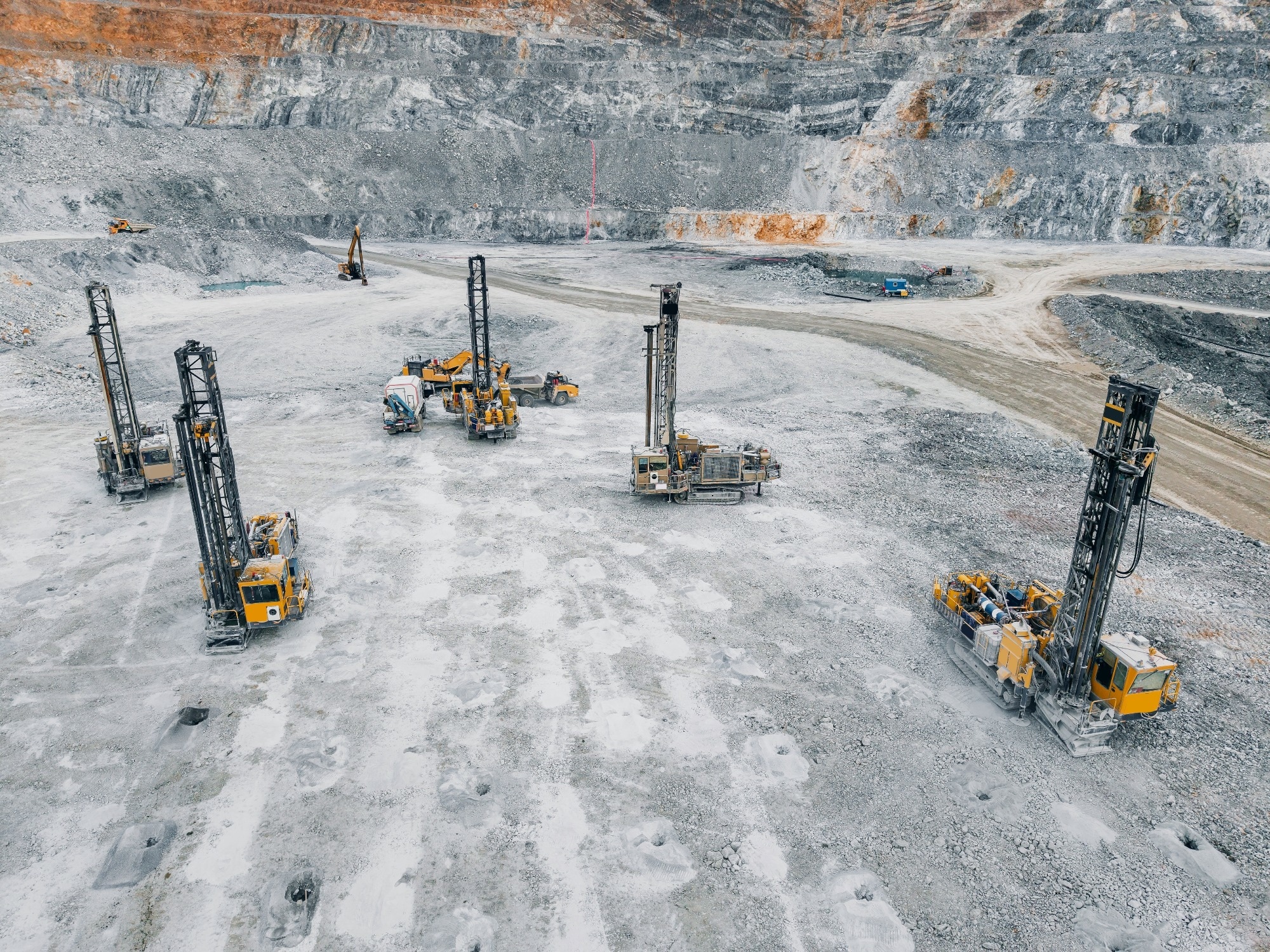 Study: A Study on the Prediction of Operating Conditions in Mining Drilling Systems Using a Deep Temporal Forecasting Network. Image Credit: Parilov/Shutterstock.com
Why Drill-String Sticking Remains Difficult to Predict
Mining drilling systems operate under complex and changing geological conditions, as variations in coal and rock formations affect drilling resistance, vibration, torque, and feed pressure.
As drilling progresses, cuttings accumulate around the drill string, and their removal becomes difficult. This accumulation increases pressure on the drill pipe and raises the risk of sticking, which prevents the drilling tool from moving or rotating freely.
Predicting changes in operating conditions is essential to support drilling efficiency and minimize equipment-related risks. However, conventional monitoring methods primarily detect existing abnormalities rather than predict future changes. Existing prediction models also struggle to capture the complex temporal relationships that characterize drilling operations.
Earlier studies have investigated vibration monitoring, sticking detection, drilling rate prediction, and machine-learning-based condition assessment. However, many of these studies relied on laboratory simulations, individual drilling records, or datasets from other industrial equipment, limiting their ability to prove forecasting performance under changing drilling conditions.
Although some drilling-specific approaches have identified sticking conditions, they have not adequately addressed future sticking-factor prediction across defined forecasting horizons.
To address these difficulties, the researchers behind this study developed a deep temporal forecasting network that combines multiscale feature extraction, long-range temporal modeling, and channel-wise attention. The model predicts the sticking factor, a statistical indicator derived from drilling measurements.
Deep Learning Network Targets Drill-String Sticking Risk
The researchers developed a model (MsTCN-SE) that integrates multiscale dilated causal convolution (MDCC), a temporal convolutional network (TCN), and squeeze-and-excitation (SE) attention to
analyze complex drilling signals. They evaluated the model using an instrumented drilling platform that simulated coal-rock drilling conditions.
Four sensors recorded feed pressure, torque, drilling depth, and vibration along three directions. The researchers used the sticking factor as the prediction target, derived from a global T2 monitoring statistic that combines sensor-based drilling features via hierarchical fusion.
The forecasting network first applies preprocessing layers, including max pooling to reduce computational requirements and causal convolution to extract signal features. Three cascaded MDCC blocks then process the data through parallel convolution branches with dilation factors of one, two, and three, capturing patterns across different temporal scales.
The TCN then models temporal dependencies, while causal and dilated convolutions capture past information and long-range relationships without introducing future-data leakage. The researchers also incorporated SE attention, which uses global average pooling and fully connected layers to assign adaptive weights to individual feature channels.
Finally, a joint loss function combines mean squared prediction error with a temporal trend-correlation term, allowing the model to account for both prediction accuracy and overall temporal trends.
MsTCN-SE Achieves 0.9915 R2 in Sticking-Factor Prediction
The experimental results show that the proposed MsTCN-SE architecture significantly improves sticking-factor prediction compared with the selected benchmark models.
The researchers assessed its performance using five regression metrics: the coefficient of determination (R2), mean absolute error (MAE), mean squared error (MSE), mean absolute percentage error (MAPE), and root mean squared error (RMSE).
MsTCN-SE achieved an R2 value of 0.9915, showing a close agreement between predicted and measured sticking-factor values in the test dataset. It also recorded an MAE of 0.2256, an MSE of 0.1804, and an RMSE of 0.4247, with a MAPE of 11.4928%. By comparison, the MsTCN model achieved an R2 of 0.7349 and an RMSE of 2.3719.
The LSTM model recorded an R2 of just 0.0015, while the conventional TCN and hybrid TCN-LSTM produced negative R2 values. These results highlight the proposed architecture's ability to reproduce complex variations in drilling behavior more accurately than the alternatives.
Download a free copy of this page here!
The improvement reflects the model's ability to capture temporal features across different scales, though further experiments are required to establish each component’s contribution. Drilling signals show rapid fluctuations and gradual changes as the drill string meets different geological formations, increasing depths, and mechanical disturbances.
The parallel dilated convolution branches extract features across different temporal ranges, while the TCN captures longer-range dependencies. SE attention further refines these representations by assigning greater weights to informative feature channels and suppressing less relevant signals.
The researchers also evaluated computational efficiency. MsTCN-SE generated a prediction in 0.41 seconds, compared with 0.292 seconds for MsTCN, 0.061 seconds for TCN, and 0.059 seconds for LSTM. Although the proposed architecture requires more computation, its prediction speed still shows potential for near-real-time monitoring.
The model processes 100 input samples collected at 0.01-second intervals to predict the subsequent 100 samples, indicating a one-second forecasting horizon. However, this shows short-term sticking-factor prediction rather than a verified warning period before sticking occurs.
Future studies should compare smaller pooling strides and overlapping pooling strategies to decide whether these changes improve the detection of early warning features. Controlled ablation experiments should also prove the individual contributions of SE attention and the temporal trend constraint.
One-Second Forecasting Offers Potential for Mining Equipment Monitoring
The study shows how multiscale temporal feature extraction and adaptive attention can improve the prediction of complex drilling-system behavior. The proposed MsTCN-SE model outperformed the selected LSTM, TCN, TCN-LSTM, and MsTCN alternatives across all five evaluation metrics.
These results highlight the potential of deep temporal learning to analyze multidimensional sensor data and forecast changes in drill-string operating conditions.
The approach could support intelligent monitoring systems for underground mining equipment. Accurate sticking-factor predictions may help operators assess changing drilling conditions and inform automated decision-making. However, the study shows forecasting accuracy on an experimental dataset rather than a validated early-warning capability.
Further research should evaluate the model using added drilling records with multiple sticking events. Researchers must also assess precursor detection accuracy, warning lead time, and performance across different geological formations, drilling depths, and equipment configurations. Overall, the research offers a promising approach to predicting drill-string sticking under complex operating conditions.
Journal Reference
Xia, S., et al. (2026). A Study on the Prediction of Operating Conditions in Mining Drilling Systems Using a Deep Temporal Forecasting Network. Sensors, 26(21). DOI: 10.3390/S26216753. https://www.mdpi.com/1424-8220/26/21/6753.
Disclaimer: The views expressed here are those of the author expressed in their private capacity and do not necessarily represent the views of AZoM.com Limited T/A AZoNetwork the owner and operator of this website. This disclaimer forms part of the Terms and conditions of use of this website.