Antimony (Sb) entered 2026 as one of the most closely watched minor metals in global trade. The metal serves as a flame retardant synergist, a hardening agent in lead alloys, and a clarifying additive in solar panel glass, placing it at the intersection of construction safety, munitions supply, and renewable energy manufacturing.1
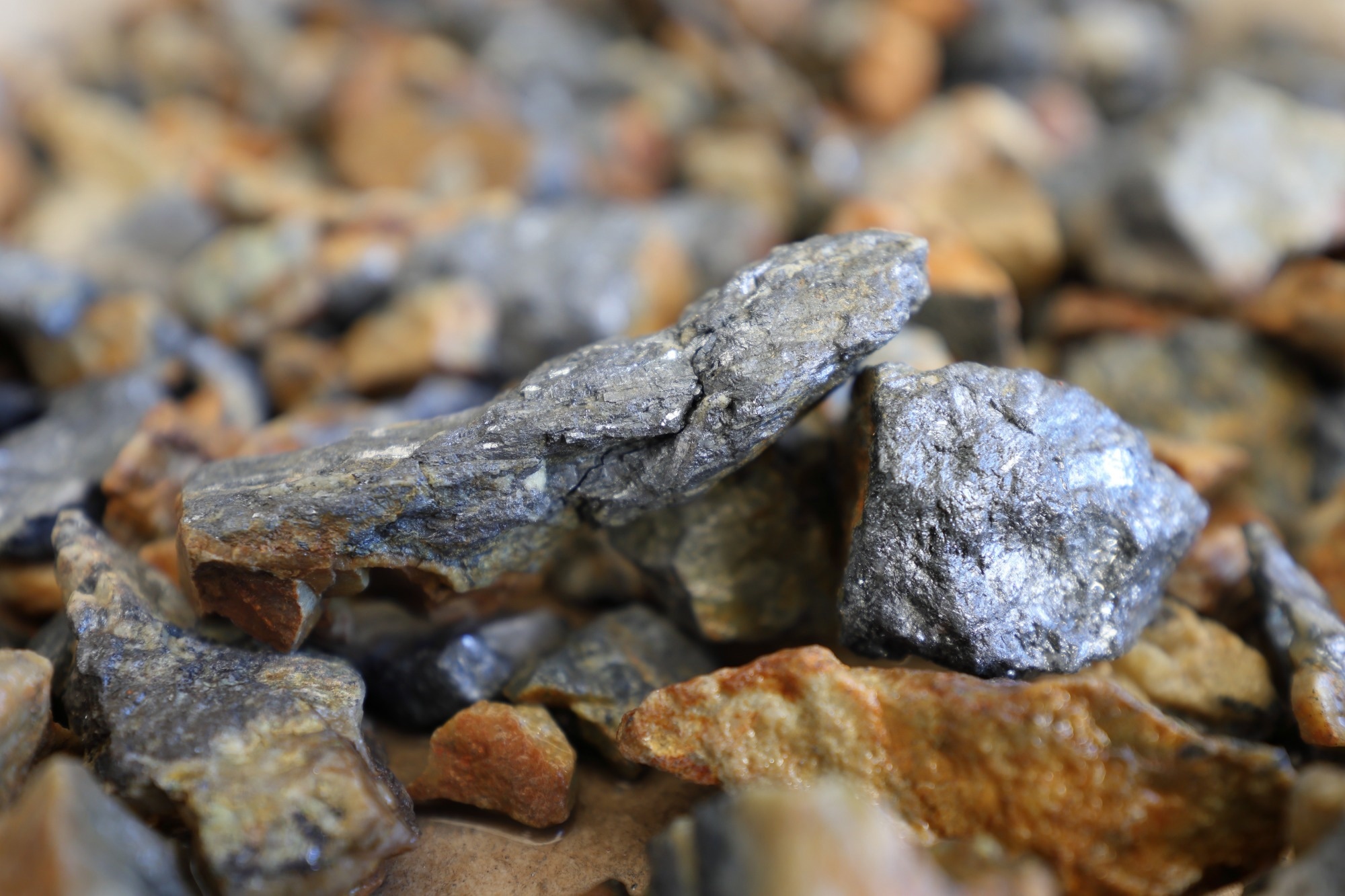
Image Credit: BJP7images/Shutterstock.com
World mine production reduced to about 110,000 metric tons in 2025, down from 153,000 tons five years earlier. Meanwhile, the average metal price reached $25 per pound, more than double the 2024 figure of $10.24. This combination of shrinking output and rising value explains why the antimony market attracts attention from defense planners, glass manufacturers, and commodity traders.1
Download a free PDF copy of this article here!
Why Supply Concentration Drives the Market
Three countries produced the overwhelming majority of mined antimony in 2025. China accounted for about 40,000 tons, Russia for 32,000 tons, and Tajikistan for 22,000 tons. Bolivia, Burma, and Turkey followed at far smaller volumes. Together, these three top suppliers controlled more than 85% of reported world output.1
Concentration extends beyond the mine gate. An assessment of the antimony industry chain, using Herfindahl-Hirschman calculations and governance indicators, found elevated supply risk for importing economies, including Canada, France, Germany, India, Japan, Thailand, and the United Kingdom.
The same analysis identified China, the United States, and Germany as network hubs whose trade decisions propagate through the midstream and downstream segments.2
Refining capacity compounds the problem. Smelting antimony sulfide ore into metal and then into trioxide requires specialized furnaces and pollution controls that few jurisdictions maintain. Buyers in Europe and North America therefore depend on Chinese converters even when the underlying ore originates in Central Asia or South America, which turns a mining statistic into a processing bottleneck.2
Policy Shocks and the Two-Tier Price
Chinese authorities announced export restrictions on antimony in August 2024 and imposed an outright ban on shipments to the United States that December. Prices responded quickly, climbing from $9.80 per pound in August 2024 before peaking near $27.50 in June 2025 and easing to $20.30 in November.1
Those measures formed part of a wider pattern. Export controls on critical minerals multiplied after 2023, with gallium (Ga), germanium (Ge), tungsten (W), bismuth (Bi), indium (In), and heavy rare-earth elements all drawn into trade policy. Antimony became a visible test case for how quickly a small market reprices when a dominant supplier shifts commercial transactions into a licensing issue.3
Analysts recorded a 36% decline from the high in June 2025, when prices were 6.65 times the average from 2020. This decline was largely driven by reduced demand from flame retardant customers and cautious restocking practices. Additionally, regional disparities persisted, as Chinese domestic prices remained significantly lower than Rotterdam assessments throughout the adjustment period.4
Key Players Building New Capacity
Western governments have moved from statements to spending. The United States Department of Defense contracted for $245 million in
antimony offtake with United States Antimony Corporation. It also awarded $80 million to Perpetua Resources, whose Idaho project broke ground in October 2025 and mining began at the Stibnite Hill property in Montana in November 2025.5
Reserve figures suggest these projects could have room to grow. China holds about 830,000 tons of antimony reserves, Russia holds 350,000, and Bolivia has 310,000.
Established Chinese operators retain scale advantages that newcomers cannot match within a single investment cycle. The Xikuangshan deposit in Hunan province anchors domestic output, and Chinese processors handle the bulk of concentrate traded internationally.2
Any assessment of key players in the antimony market must weigh announced Western tonnage against decades of accumulated Chinese metallurgical practice and permitted smelter capacity.
Demand Patterns Across End Uses
American consumption demonstrates the mixed reasons behind antimony demand. Flame retardants absorbed 49% of United States antimony use. Similarly, metal products such as antimonial lead and ammunition represented 40%, and nonmetal applications such as ceramics, glass, and rubber accounted for the remaining 11%. Apparent consumption jumped to 45,000 tons in 2025 as buyers rebuilt inventory.1
Photovoltaic glass has emerged as the fastest-growing source of increased demand. Antimony trioxide enhances the transmittance of solar glass, so growing demand for panel manufacturing may increase antimony demand each year.
Furthermore, advancements in energy storage and clean energy technologies are expanding this demand, linking antimony consumption to installation rates in markets that traditionally had little exposure to the metal.2
Defense procurement creates a steady demand. Antimony is used to harden lead in armor-piercing rounds, primers, and tracer compositions, which keeps military buyers engaged in the market at nearly any price.
However, flame retardant customers behave differently and substitute or thrift when values rise sharply, producing the elasticity that helped cool the rally of mid 2025.4
Future Trends to Watch
Market participants expect sufficient supply throughout 2026, supported by increasing production in Southeast Asia and consistent demand from established end users. Price differentials between Chinese and international markets are expected to narrow if export restrictions relax and global prices continue to decrease.
However, political oversight of critical mineral trade is likely to remain a permanent consideration in commercial planning.6
Recycling deserves closer attention as a structural trend. In 2025, secondary antimony recovered from spent lead-acid batteries accounted for 12% of the apparent consumption in the United States, with an estimated value of $190 million. Expanding collection and recovery of antimonial lead offers importers a domestic stream that requires no new mine permits.1
Policy coordination will shape outcomes as much as geology. Strategic stockpiles, overseas investment, industrial policy guidance, and infrastructure development all appear in scholarly recommendations for reducing supply risk in the antimony chain. Governments that combine several of those levers stand a better chance of insulating manufacturers from the next licensing decision.2
For buyers, the practical lesson of 2026 concerns contract design. Net import reliance in the United States reached 91% of apparent consumption, so procurement teams gain more from diversified origin clauses and longer tenors than from spot timing. That discipline will matter whenever the next supply interruption arrives.1
References and Further Reading
- Klochko, K. (2026). ANTIMONY. USGS Mineral Commodity Summaries 2026. https://pubs.usgs.gov/periodicals/mcs2026/mcs2026-antimony.pdf
- Li, J. et al. (2022). Global antimony supply risk assessment through the industry chain. Frontiers in Energy Research, 10, 1007260. DOI:10.3389/fenrg.2022.1007260. https://www.frontiersin.org/journals/energy-research/articles/10.3389/fenrg.2022.1007260/full
- IEA Global Critical Minerals Outlook. (2025). [Online] IEA. Available at: https://www.iea.org/reports/global-critical-minerals-outlook-2025/executive-summary.
- Goel, P., et al. Antimony market prices fall despite strong outlook. (2026). [Online] CRU Group. Available at: https://www.crugroup.com/en/communities/thought-leadership/2026/antimony-market-prices-fall-despite-strong-outlook/
- Cane, I., Strayer, R. (2025) From rare earths to antimony: A strategic approach to critical mineral supply. [Online] World Economic Forum. Available at: https://www.weforum.org/stories/supply-chains-and-transportation/rare-earth-antimony-critical-mineral-supply/.
- Du, X., Zhang, N. (2026). Antimony 2026: Ample supply, strategic demand to guide geopolitical oversight. [Online] Fastmarkets. Available at: https://www.fastmarkets.com/insights/antimony-2026-ample-supply-strategic-demand-to-guide-geopolitical-oversight/.
Disclaimer: The views expressed here are those of the author expressed in their private capacity and do not necessarily represent the views of AZoM.com Limited T/A AZoNetwork the owner and operator of this website. This disclaimer forms part of the Terms and conditions of use of this website.