*Important notice: This news reports on an unedited version of an accepted paper and is awaiting final editing. Therefore, the paper should not be regarded as conclusive or treated as established information.
A novel, rapid method has been developed to predict mine-fire conditions across full ventilation networks. Researchers used the Fire Dynamics Simulator (FDS) to generate fire scenarios for a 14-branch ventilation network and trained a backpropagation (BP) neural network using the simulation data.
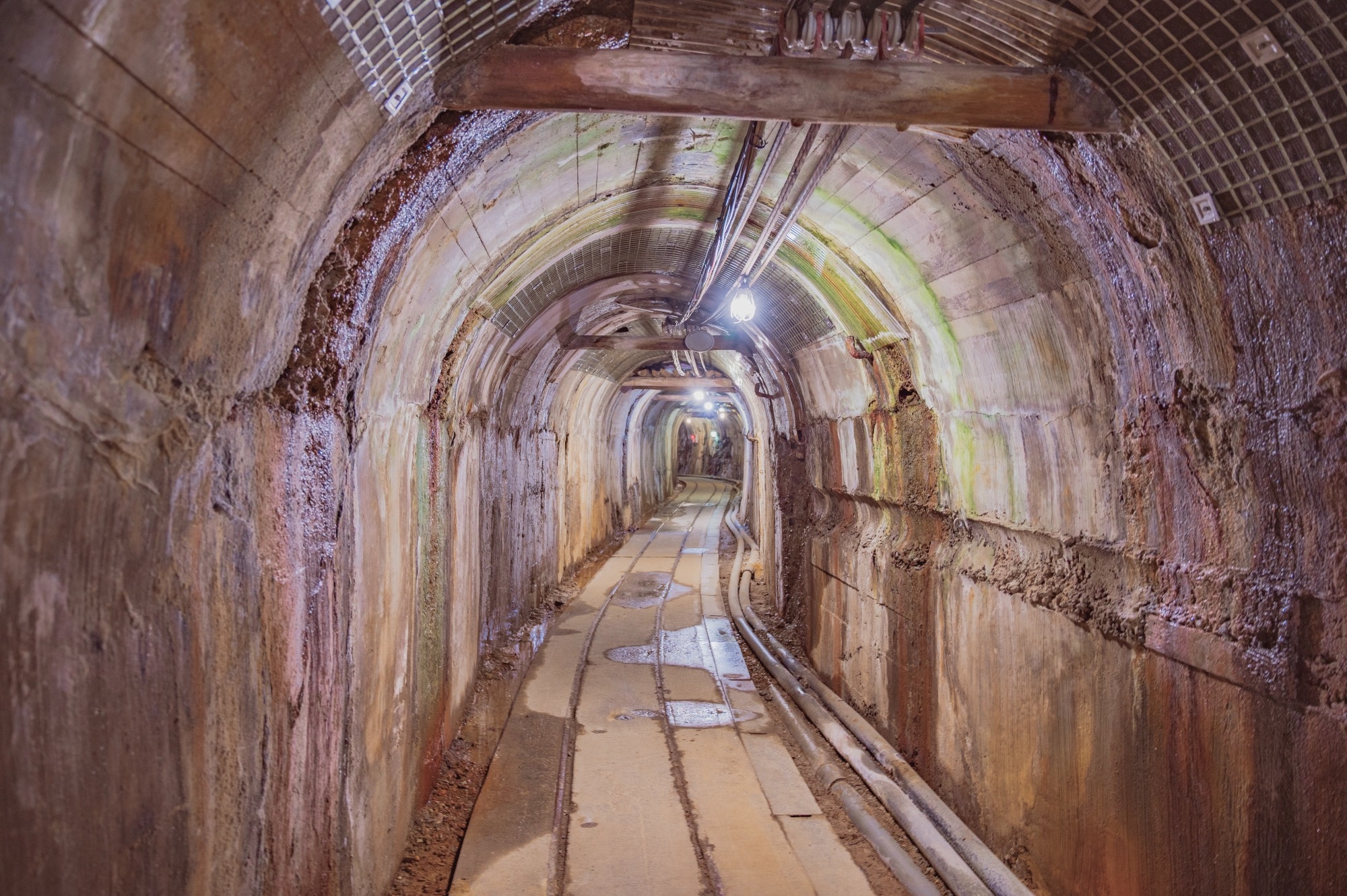 Study: Research on rapid prediction of mine fire in full ventilation network based on BP neural network. Image Credit: koichi.T/Shutterstock.com
Their results, published in Scientific Reports, showed high predictive accuracy for temperature, visibility, and wind speed, demonstrating the approach's potential for rapid mine-fire assessment and emergency decision-making.
Addressing the Need for Rapid Full-Network Fire Prediction
Mine fires create complex safety challenges because heat, smoke, and combustion products can travel through interconnected ventilation pathways. Emergency teams therefore need to understand fire behavior across the wider ventilation network rather than within an isolated roadway.
Though traditional computational fluid dynamics methods can provide detailed information about these changes, their long simulation times can restrict their use during fast-moving emergencies.
Earlier machine-learning studies have demonstrated the potential to predict mine-fire behavior, but most have focused on individual roadways or local fire scenarios. To address this limitation, the researchers have developed a rapid prediction model for an entire ventilation network by constructing a 14-branch mine model.
Download a free copy of this page here!
The researchers used FDS as a high-fidelity simulation tool to generate detailed fire-response data, then trained a BP neural network to reproduce key fire-related variables at much higher speed.
Once trained, the BP model completed a single prediction in approximately three seconds, compared with the dozens of hours typically required for an FDS simulation.
Building the Fire Simulation and Neural-Network Model
The researchers constructed a 14-branch full-ventilation-network mine model and represented its roadway geometry and ventilation conditions in FDS. Using this model, they simulated fire development under different combinations of fire location and heat release rate.
These simulations generated the dataset required to train and evaluate the BP neural network. In total, the study generated 70 fire scenarios and 70,070 data points, enabling the model to learn fire behavior under varying conditions and at different time stages.
The neural network received eight input variables: fire location, heat release rate, time, wind speed, ambient temperature, relative humidity, ambient pressure, and roadway cross-sectional area. Together, these variables describe the fire characteristics, ventilation conditions, and surrounding environment.
The network predicted four parameters for each of the 14 roadway branches: average CO concentration, temperature, visibility, and wind speed, therefore producing 56 output variables. The researchers divided the dataset into training and testing subsets using an 80:20 split.
They assessed model performance using four error measures: symmetric mean absolute percentage error (SMAPE), root mean square error (RMSE), mean absolute error (MAE), and coefficient of determination (R2); this was important to capture different aspects of prediction performance.
Prediction Accuracy and Rapid Emergency Assessment
The BP neural network achieved strong predictive performance for the fire-related variables. Temperature and visibility predictions closely matched the FDS results, while wind-speed prediction also captured the main trends despite a lower R2 value.
The temperature model achieved an SMAPE of 5.33%, an RMSE of 1.97, a MAE of 1.45, and an R2 of 0.99. Visibility also showed impressive performance, with an SMAPE of 1.72%, RMSE of 0.48, MAE of 0.35, and R2 of 0.99. The wind-speed model recorded an SMAPE of 5.09%, RMSE of 0.11, MAE of 0.08, and R2 of 0.91.
These results show that the neural network can reproduce the major patterns in the FDS simulations for these variables.
CO concentration presented a greater prediction challenge. The model recorded an SMAPE of 110.40%, RMSE of 0.43, MAE of 0.31, and R2 of 0.99. The high SMAPE reflects the fact that approximately 95% of the CO samples were close to zero, which makes percentage-based error metrics extremely sensitive to small reference values.
However, the low MAE and high R2 indicate that the model captured the overall variation in CO concentration effectively despite the high percentage-based error. The results therefore demonstrate how machine learning can learn from detailed numerical simulations and then provide rapid approximations of fire behavior across the full ventilation network.
The rapid prediction capability could strengthen emergency assessment in underground mines. Safety teams could use real-time estimates of temperature, visibility, airflow, and CO distribution to identify hazardous zones and track changing fire conditions. These predictions could also help teams evaluate evacuation and rescue strategies when conventional numerical simulations cannot deliver results quickly enough.
Toward More Responsive Mine-Fire Management
The study shows that a BP neural network can learn from FDS simulations and rapidly predict fire conditions across a full ventilation network.
The key insight gained from this study is that machine learning can translate detailed fire-simulation data into near-real-time predictions without requiring a full numerical simulation for every new assessment. This capability could improve situational awareness during mine-fire emergencies and support faster safety decisions.
The model still requires validation beyond the simulated 14-branch network. Testing with larger mine networks, experimental results, and field data will help establish its reliability under real operating conditions.
Future research could also explore graph neural networks and physics-informed models to better capture the interconnected nature of mine ventilation systems. Improving CO prediction remains important because toxic gas levels provide critical information about fire severity.
Overall, the research provides a promising foundation for integrating machine learning into intelligent mine-safety systems.
Journal Reference
Shi, K., Hua, M., et al. (2026). Research on rapid prediction of mine fire in full ventilation network based on BP neural network. Scientific Reports. DOI:10.1038/S41598-026-69559-3. https://www.nature.com/articles/s41598-026-69559-3.
Disclaimer: The views expressed here are those of the author expressed in their private capacity and do not necessarily represent the views of AZoM.com Limited T/A AZoNetwork the owner and operator of this website. This disclaimer forms part of the Terms and conditions of use of this website.