Machinery and Vehicle Interaction
Ground Failure and Rock Behavior
Gas, Dust, and Ventilation Failures
Experience, Fatigue, and Human Factors
Management and Investment Decisions
Technology That Reduces Incidents
Companies Working in This Area
What the Evidence Suggests
References and Further Reading
Mining remains one of the most hazardous occupations worldwide. Between 1983 and 2018, about 685,193 accidents were reported to US regulators. Of these, 36% were caused by being struck by objects, 23% by overexertion, 13% by falls, and 10% by being caught in equipment.
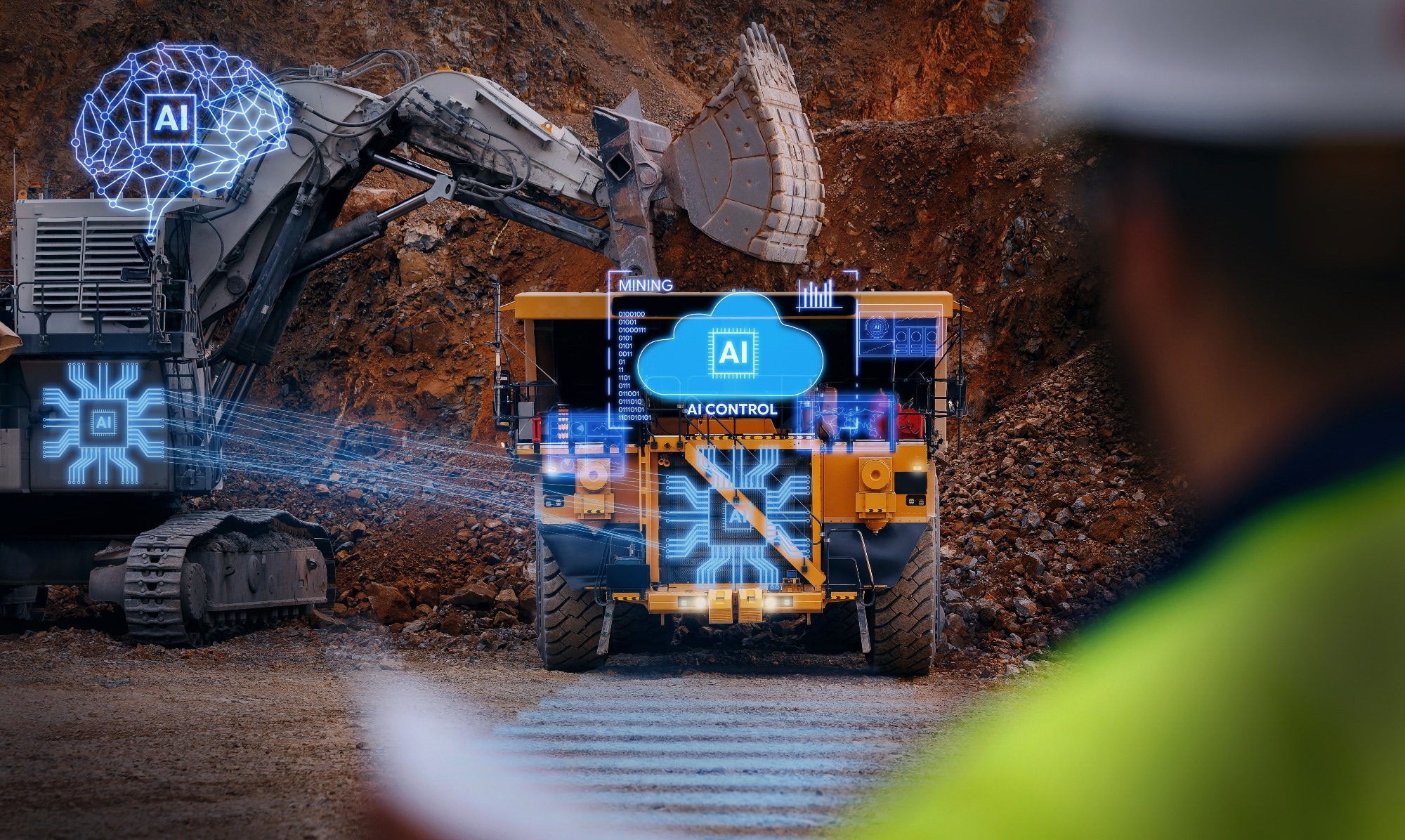
Image Credit: Parilov/Shutterstock.com
Those labels describe how workers get hurt. However, the main causes of mining accidents sit further upstream, in machine design, rock behavior, air quality, crew experience, and management choices.1,2
Machinery and Vehicle Interaction
Heavy equipment drives the largest share of serious harm. Loss of control over work equipment causes 18.97% of mining accidents in Spain and 26.67% of the fatal accidents. Conveyors, bolting machines, milling machines, trucks, and loaders appear repeatedly, with operation, maintenance, and repair as the activities most often underway.2
The pattern repeats across countries. Haulage equipment was involved in 31.6% of Australian mining accidents, and haul trucks alone accounted for 22.3% of fatalities in a review of United States fatality data from 1995 to 2006. Vehicle incidents accounted for 41% of quarry accidents in United Kingdom quarries over 11 years.3
Collisions with pedestrians are the single largest group of machine-related accidents in underground coal mining. Two main factors contribute to these incidents. Workers stand in a machine's travel path, and operators cannot see them because their sightlines are obstructed by the equipment itself or by the confined layout of the working area.1
Ground Failure and Rock Behavior
Geology establishes a baseline level of risk that no procedure can eliminate. The strength of the strata above a coal seam governs how often rock, rib, and roof falls occur. Falling roof material and rib pillars have been associated with half of all fatalities in underground bituminous coal mines.1
Surface operations face a parallel problem in the collapse of stockpiles, benches, and excavation walls. In Spain, incidents involving breaking, sliding, and collapsing materials account for 14.5% of all mining accidents but result in 31.11% of fatalities: while these events are infrequent, their consequences are severe.2
Related hazards include rockbursts, sinkholes, landslides, blast overpressure, ground vibration, and flyrock thrown during blasting. Each of these depends on how well the rock mass has been characterized before work begins, which makes geotechnical measurement a direct safety activity rather than a purely engineering one.4
Gas, Dust, and Ventilation Failures
Air quality causes fewer incidents than machinery but has a higher per-event fatality rate. Most underground gas fatalities happen due to poor
ventilation and the inability to detect harmful substances in the air. One Spanish gas accident at Pola de Gordón killed six workers, and asphyxiation cases produced 13.33% of the country's mining deaths.2
Methane and coal dust remain the classic triggers of catastrophic loss. Roughly 55% of gas explosions in Chinese coal mines occurred at sites classified as low-methane emitters, indicating that a low baseline reading offers weak protection. In an analysis of 782 mine explosion events in China, dust explosions accounted for about 59% of the events.2
Alongside sudden events, there is chronic exposure: silica dust, carbon monoxide, machinery exhaust, noise, extreme temperatures, and vibrations damage workers' health over the course of a career.
Another key concern is mine fires, which turn an air quality problem into an escape problem within minutes, as smoke limits visibility and breathable air along the only exit route.4
Experience, Fatigue, and Human Factors
Inexperience is one of the strongest predictors available. Most accidents across coal, metal, nonmetal, and aggregate operations involved miners with fewer than five years on the job, and accident frequency fell steadily as job experience accumulated. Failure to provide adequate task training sits among the most influential root causes.1
Age works in two directions in regard to mining; though younger workers are injured more often, workers over 55 face higher mortality once an accident occurs.2
Physical and mental condition matters alongside training. Fatigue, reduced fitness, stress, and heavy physical work increase the risk of mistakes when operating machines and during transport tasks.
Body movement with physical effort accounted for 27.17% of Spanish mining accidents, most of them musculoskeletal and best addressed through ergonomics.2
Management and Investment Decisions
Site-level decisions shape every explored category. American data show an inverse relationship between profitability and reported injuries; poor engineering practices and a lack of investment in safety are likely reasons for this trend. Underground coal and metal operations carried a higher accident risk than surface work, while aggregate and nonmetal sites showed the reverse pattern.1
Research on surface mining incidents points to the same organizational roots. Many investigation reports from different countries highlight several issues: lack of maintenance, poorly built haul roads, weak signaling systems, unrecognized site conditions, failure to use seat belts, and poor communication. These findings place supervision quality and procedure design at the center of prevention work.3
Technology That Reduces Incidents
Proximity detection and collision avoidance systems attack the largest cause directly. They combine cameras, thermal imaging, stereoscopic vision, light detection and ranging (LiDAR), radar, radio-frequency tags, and low-frequency magnetic fields to locate people near machines and, in turn, warn the operator or slow the machine.5
Sensor choice determines how well these systems work underground. LiDAR can measure distance accurately within a few centimeters, but it needs a clear line of sight. Thermal cameras can see through dust and darkness, but often give more false alarms. Ultra-wideband can measure with less than 10 centimeters of error over distances up to 200 meters and has low interference.5
Wearables and artificial intelligence (AI) help cover the areas that machine sensors cannot reach. Helmet-mounted cameras, personal alarm devices, instrumented clothing, and smart insoles track location, heart rate, respiration, and joint loading, while machine learning flags missing protective equipment and predicts equipment failures from maintenance data.4
Companies Working in This Area
Established equipment makers now sell integrated safety systems. For example, Caterpillar offers MineStar Detect and Cat Detect, which merge cameras, radar, satellite positioning, and fatigue monitoring. Similarly, Komatsu markets Smartzone proximity detection and the HawkEye camera system, and Hexagon supplies MineProtect collision avoidance, tracking radar, and a smart camera safety center.5
There are also specialist vendors focusing on underground conditions. Newtrax builds staged collision warning and intervention systems, and Strata Worldwide supplies the electromagnetic HazardAvert and HazardAlarm units. Similarly, Matrix Design Group sells the magnetic-field IntelliZone with optional LiDAR and radar, and Booyco Electronics pairs very-low-frequency detection with long-range tags.5
Other suppliers focus on positioning, vision, and monitoring. Mine Site Technologies provides magnetic proximity detection and tracks situational awareness, Minetec offers centimeter-level SafeDetect nodes, and Schauenburg Systems operates a camera system that uses AI and does not require tags. Finally, Motion Metrics combines radar with thermal imaging for shovel operations.5
What the Evidence Suggests
The main causes of mining accidents cluster into five linked groups covering machinery interaction, ground failure, air quality, human condition, and management investment. Each group has a measurable share of incidents, and each responds to a different mix of engineering controls, training, and supervision.1
Technology narrows the gap where human perception fails. Computer vision anti-collision systems are designed to reduce accidents and fatalities underground, and proximity detection using image recognition and AI could be used to reduce the incidence of serious and fatal accidents on operating sites.3
References and Further Reading
- Rahimi, E. et al. (2022). Accident Analysis of the Mining Industry in the United States - A Retrospective Study for 36 Years. Journal of Sustainable Mining. 21. DOI:10.46873/2300-3960.1345. https://jsm.gig.eu/journal-of-sustainable-mining/vol21/iss1/3/.
- Baraza, X. et al. (2023). Statistical analysis of the severity of occupational accidents in the mining sector. Journal of Safety Research. 86. DOI:10.1016/j.jsr.2023.07.015. https://www.sciencedirect.com/science/article/pii/S0022437523001007.
- Imam, M. et al. (2023). The Future of Mine Safety: A Comprehensive Review of Anti-Collision Systems Based on Computer Vision in Underground Mines. Sensors. 23(9). DOI:10.3390/s23094294. https://www.mdpi.com/1424-8220/23/9/4294.
- Bes, P. et al. (2025). Innovative Technologies to Improve Occupational Safety in Mining and Construction Industries - Part I. Sensors. 25(16). DOI:10.3390/s25165201. https://www.mdpi.com/1424-8220/25/16/5201.
- Qian, M. et al. (2022). Survey of Collision Avoidance Systems for Underground Mines: Sensing Protocols. Sensors. 22(19). DOI:10.3390/s22197400. https://www.mdpi.com/1424-8220/22/19/7400.
Disclaimer: The views expressed here are those of the author expressed in their private capacity and do not necessarily represent the views of AZoM.com Limited T/A AZoNetwork the owner and operator of this website. This disclaimer forms part of the Terms and conditions of use of this website.