*Important notice: This news reports on an unedited version of an accepted paper and is awaiting final editing. Therefore, the paper should not be regarded as conclusive or treated as established information.
A two-parameter clustering algorithm has been developed to automatically identify roof-weighting regions and periodic weighting intervals in underground coal mines. This data-driven approach, presented in Scientific Reports, was evaluated using hydraulic-support resistance data.
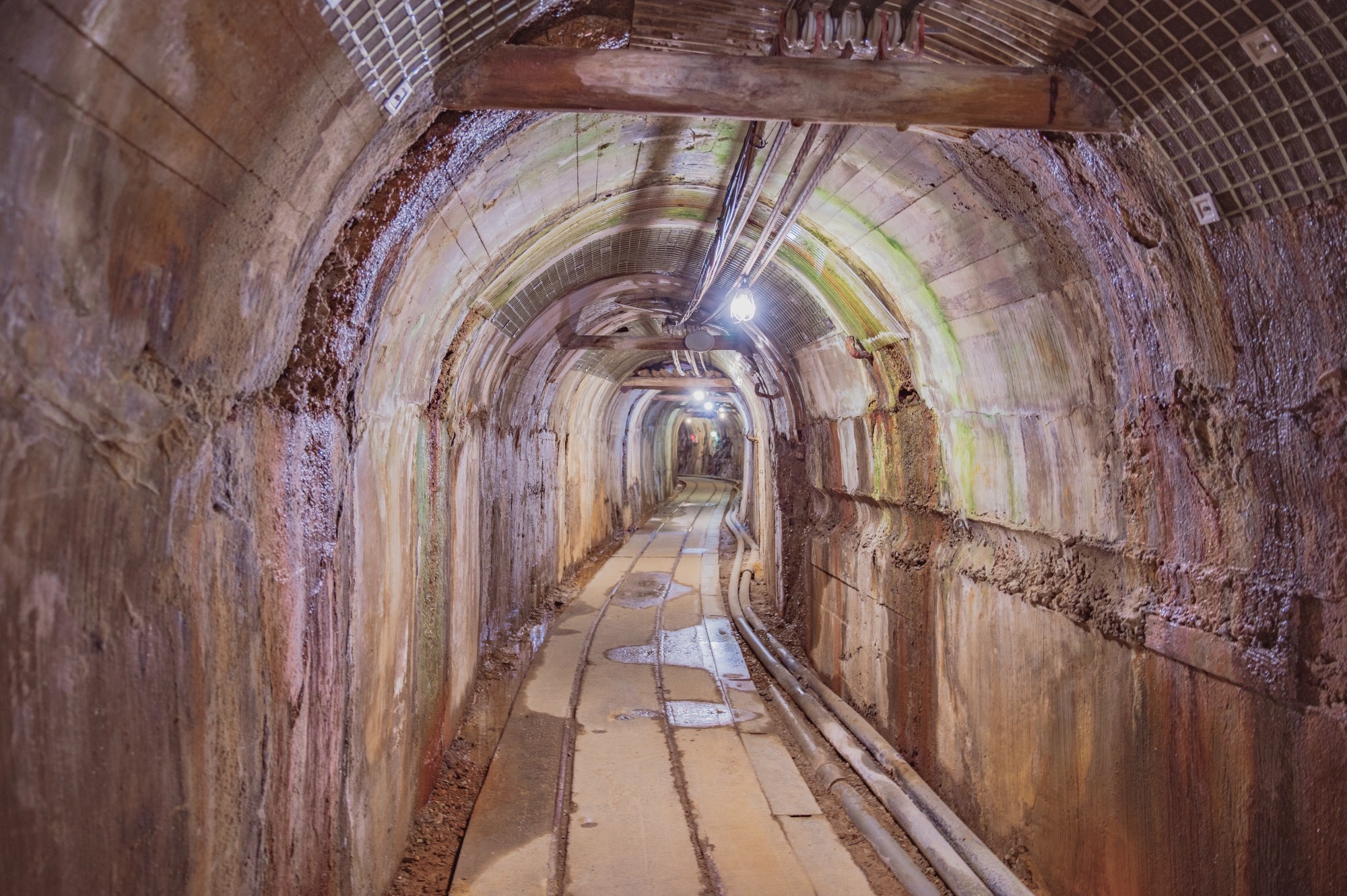 Study: Research on a roof weighting parameter mining system using support resistance manifestation information. Image Credit: koichi.T/Shutterstock.com
The approach successfully identified high-resistance regions associated with roof weighting and produced a mean periodic weighting interval close to the field reference value. The study provides a practical approach for automating mine-pressure analysis and supporting intelligent ground-control systems.
Automating Roof-Weighting Analysis in Underground Coal Mines
Roof weighting is a critical ground-control phenomenon in underground coal mining. As the working face advances, the overlying strata fracture and move. The resulting load transfers through the roof to the hydraulic support, causing changes in support working resistance. These changes provide important information about the timing and spatial distribution of roof-pressure behavior.
Engineers traditionally analyze roof weighting by manually interpreting hydraulic-support resistance curves. Experienced engineers can identify important pressure events, but manual interpretation can also introduce differences between assessments.
Previous studies have examined mine-pressure behavior, support resistance, clustering methods, and early-warning techniques. However, an integrated method that can automatically identify spatially continuous roof-weighting regions and calculate periodic weighting intervals from large monitoring datasets was still necessary.
The study addresses this gap with a two-parameter clustering algorithm designed for hydraulic-support resistance data. The researchers also compare its performance with the density-based spatial clustering of applications with noise (DBSCAN) method.
Their workflow links data preprocessing, spatial representation, roof-weighting identification, cluster evaluation, and periodic weighting calculation. The approach aims to replace repetitive manual interpretation with a more objective and data-driven analysis process.
Transforming Support Resistance Data into Roof-Weighting Patterns
The researchers analyzed hydraulic-support resistance data from the 23203 working face of Zhuanlongwan Coal Mine. The dataset included face advance, hydraulic-support position, and support working resistance.
They first cleaned the monitoring data by removing invalid records and addressing missing or abnormal resistance values. Negative resistance measurements were treated as missing and filled using linear interpolation.
The team then converted the cleaned data into a two-dimensional spatial grid. Face advance represented the horizontal direction, while hydraulic-support number represented the vertical direction.
They classified support resistance into different loading states using predefined thresholds. For the Zhuanlongwan case, resistance values of 32 MPa or higher represented roof-weighting points. Intermediate values indicated medium loading, while lower values represented low resistance.
The team evaluated both methods using the number of clusters, noise points, purity, and Rand index. After clustering, they calculated cluster centroids and used the distances between selected centroids to estimate periodic weighting intervals. They also incorporated the workflow into a web-based analysis system for data import, parameter selection, clustering, visualization, and interval calculation.
Clustering Identifies Roof-Weighting Regions and Periodic Intervals
The results showed that clustering parameters strongly influenced the identification of roof-weighting regions. For the proposed method, the researchers varied MD while keeping MS at 3. The combination of MD=2 and MS=3 delivered the strongest overall performance, identifying 93 roof-weighting clusters and 253 noise points.
Download a PDF copy of this page!
The method achieved a purity of 0.8763 and a Rand index of 0.8396, indicating that it could distinguish meaningful high-resistance regions from scattered points.
The spatial distribution also showed that roof weighting does not occur at perfectly regular intervals across the mining face. The researchers selected nine relatively large clusters for periodic weighting analysis and calculated the distances between their centroids.
The resulting mean periodic weighting interval was 23.94 m, while the median interval was 22 m, matching the field reference value. The mean differed from the 22 m reference by 8.81%. This result suggests that the automated approach can reproduce the engineering reference while capturing natural variations in roof-pressure behavior.
DBSCAN produced comparable results. With ε=2.5 and MinPts=3, it identified 96 roof-weighting clusters and 237 noise points. Its Purity reached 0.8603, while the Rand index was 0.8236.
The method produced a mean periodic weighting interval of 24.125 m, corresponding to a 9.66% deviation from the 22 m field reference. Its median interval also matched the field value at 22 m.
Parameter sensitivity analysis further highlighted the need to balance feature preservation with noise removal. A low MS value retained many small clusters, while a high value removed potentially meaningful roof-weighting features. The researchers identified MS=3 as a practical balance.
Their analysis similarly supported MinPts=3 for DBSCAN. Combining these visualizations with automated centroid and interval calculations can reduce repetitive manual analysis and help engineers process large monitoring datasets more efficiently.
Toward Automated and Intelligent Mine-Pressure Monitoring
This study demonstrates that clustering analysis can extract useful roof-weighting parameters from hydraulic-support resistance data. The proposed two-parameter algorithm identified spatially continuous roof-weighting regions and calculated periodic weighting intervals without requiring a predetermined number of clusters.
The research moves roof-weighting analysis beyond manual curve interpretation toward a more objective and repeatable data-driven process. Its integration into a web-based system also creates potential for more efficient mine-pressure assessment, roof-control planning, and intelligent mining applications.
Future studies should focus on testing the approach under different geological conditions and with longer monitoring datasets. Real-time processing, adaptive parameter selection, and integration with additional monitoring sources could further improve roof-pressure identification.
Potential inputs include roof displacement, microseismic activity, acoustic emission, geological information, and operational parameters. The study provides a practical framework for converting large volumes of hydraulic-support data into actionable roof-control information.
Overall, the approach represents a step toward automated ground-control analysis and safer, more intelligent underground coal mining.
Journal Reference
Wang, Y., Du, J., et al. Research on a roof weighting parameter mining system using support resistance manifestation information. Scientific Reports. DOI: 10.1038/S41598-026-65151-X. https://www.nature.com/articles/s41598-026-65151-x.
Disclaimer: The views expressed here are those of the author expressed in their private capacity and do not necessarily represent the views of AZoM.com Limited T/A AZoNetwork the owner and operator of this website. This disclaimer forms part of the Terms and conditions of use of this website.