In mining, the interaction between geological structures and excavation activities is key for operational safety, mainly during the extraction of thick coal seams. A recent study published in Scientific Reports examined fault activation and ground pressure behavior during coal seam extraction across a 70° normal fault in the Ordos Basin.
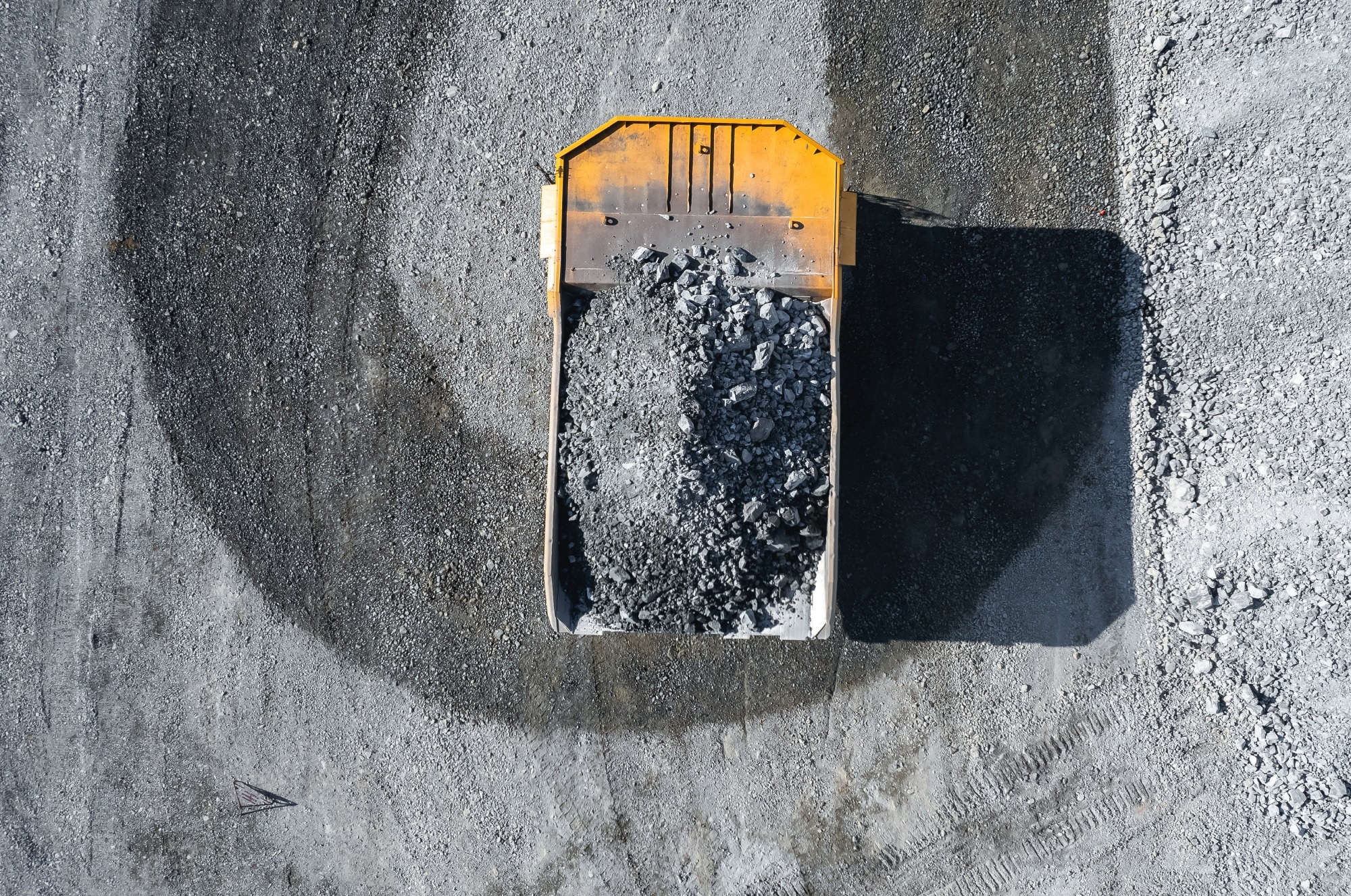
Image Credit: Parilov/Shutterstock.com
Researchers examined how mining-induced stress redistribution near fault zones affects strata stability. Their findings provide significant insights into stress evolution and ground pressure hazards as working faces approach faults, thereby contributing to improved safety and operational planning in fault-affected coal mining environments.
Advancement in Mining Engineering
Modern mining engineering increasingly depends on theoretical modeling and physical simulation to enhance safety and extraction efficiency. In thick coal seam mining, one of the most critical challenges is controlling ground pressure near geological faults.
As excavation progresses, stress redistribution within the surrounding rock mass can activate nearby faults, leading to instability, ground falls, rock bursts, and subsidence. Advancements in computational simulation techniques and analytical methods now allow engineers to better predict mining-induced stress evolution and fault response.
Understanding these complex interactions is essential for designing effective support systems, implementing reliable monitoring strategies, and optimizing extraction plans. Accurate assessment of stress changes near fault zones not only reduces operational risk but also helps safeguard both mine stability and the surrounding geological environment.
Methodological Framework for Fault Behavior Analysis
Researchers employed an integrated approach combining theoretical analysis with physical simulation to analyze the behavior of the 70° normal fault during thick coal seam mining. They comprehensively assessed fracture development, displacement evolution, and stress redistribution in the overburden as the working face advanced toward the fault.
Field data and laboratory-based similar-material simulations were utilized to model stress distribution and structural response under progressive excavation. The outcomes indicated that peak floor stress increased significantly as the working face neared the fault, reaching up to 19.95 MPa. The subsidence profile exhibited a characteristic “U-shaped” pattern with localized “M-shaped” variations, reflecting complex stress-structure interactions.
A critical threshold was identified when the working face came within 5 meters of the fault, leading to pronounced stress concentration in both the immediate and main roof. This behavior was primarily driven by intensified vertical stress loading and horizontal stress unloading, indicating an elevated risk of fault activation. These findings provide a quantitative basis for managing ground pressure hazards in fault-influenced mining zones.
Stress Dynamics and Fault Activation
The study showed a strong coupling between mining progression and fault activation. As the working face approached the fault, peak stress increased by 3.17 to 17.22 MPa, while the main roof stress rose by 4.55 to 17.80 MPa. Concurrently, the average periodic weighting interval decreased from 21.5 m in the footwall to 15 m near the hanging wall, reflecting accelerated roof-failure cycles and heightened ground-pressure risk.
Maximum roof subsidence values recorded along monitored survey lines were 13.35 m, 12.02 m, and 11.45 m. The analysis confirmed that fault activation is governed by intensified vertical stress loading combined with horizontal stress unloading, creating instability as the working face enters the fault influence zone. These results highlight the necessity for strengthened support systems and enhanced real-time monitoring when mining near faults.
Want to save for later? Click here to download now.
Enhancing Safety Measures in Fault-Affected Mining
This research has significant implications for mining operations in fault-affected thick coal seams. By clarifying the mechanisms linking fault activation to ground pressure evolution, it provides a foundation for improving support design, layout planning, and hazard-prevention strategies. Understanding stress redistribution near fault zones enables engineers to implement targeted reinforcement and adjust mining parameters proactively.
The findings emphasize the importance of enhanced real-time monitoring as working faces approach faults. Integrating geotechnical sensors, stress-monitoring systems, and predictive modeling tools can strengthen early warning capabilities and support proactive risk management. Incorporating these insights into operational protocols can help reduce roof failures, improve safety, and promote more efficient and sustainable coal extraction.
Implications for Future Mining Practices
In summary, this study provides a detailed analysis of fault activation and ground pressure behavior during thick coal seam mining in normal fault zones. By clarifying stress redistribution mechanisms and instability development near faults, it strengthens the foundation for safe mining in geologically complex locations.
The findings underscore the need for adaptive support design, real-time stress monitoring, and predictive modeling as mining operations approach fault-influenced zones. Continued refinement of modeling techniques and advancement of monitoring technologies will further enhance hazard prediction and operational resilience in mining areas. Overall, applying these insights will support safer, more efficient, and sustainable mining operations while advancing the industry's capacity to manage geological risk effectively.
Journal Reference
Xin, T., et al. (2026). Mine pressure behavior law and fault activation response of normal fault zones in thick coal seams under mining disturbance. Sci Rep. DOI: 10.1038/s41598-026-40000-z, https://www.nature.com/articles/s41598-026-40000-z
Disclaimer: The views expressed here are those of the author expressed in their private capacity and do not necessarily represent the views of AZoM.com Limited T/A AZoNetwork the owner and operator of this website. This disclaimer forms part of the Terms and conditions of use of this website.