*Important notice: This news reports on an unedited version of the paper which has been accepted. and is awaiting final editing. Scientific Reports sometimes publishes preliminary scientific reports that are not fully edited and, therefore, should not be regarded as conclusive or treated as established information.
Marble powder blended with hydrated lime stabilized clay soils for mine haul roads, improving swelling, stiffness, bearing capacity, and settlement resistance under heavy haul-truck loading in experimental and numerical tests.
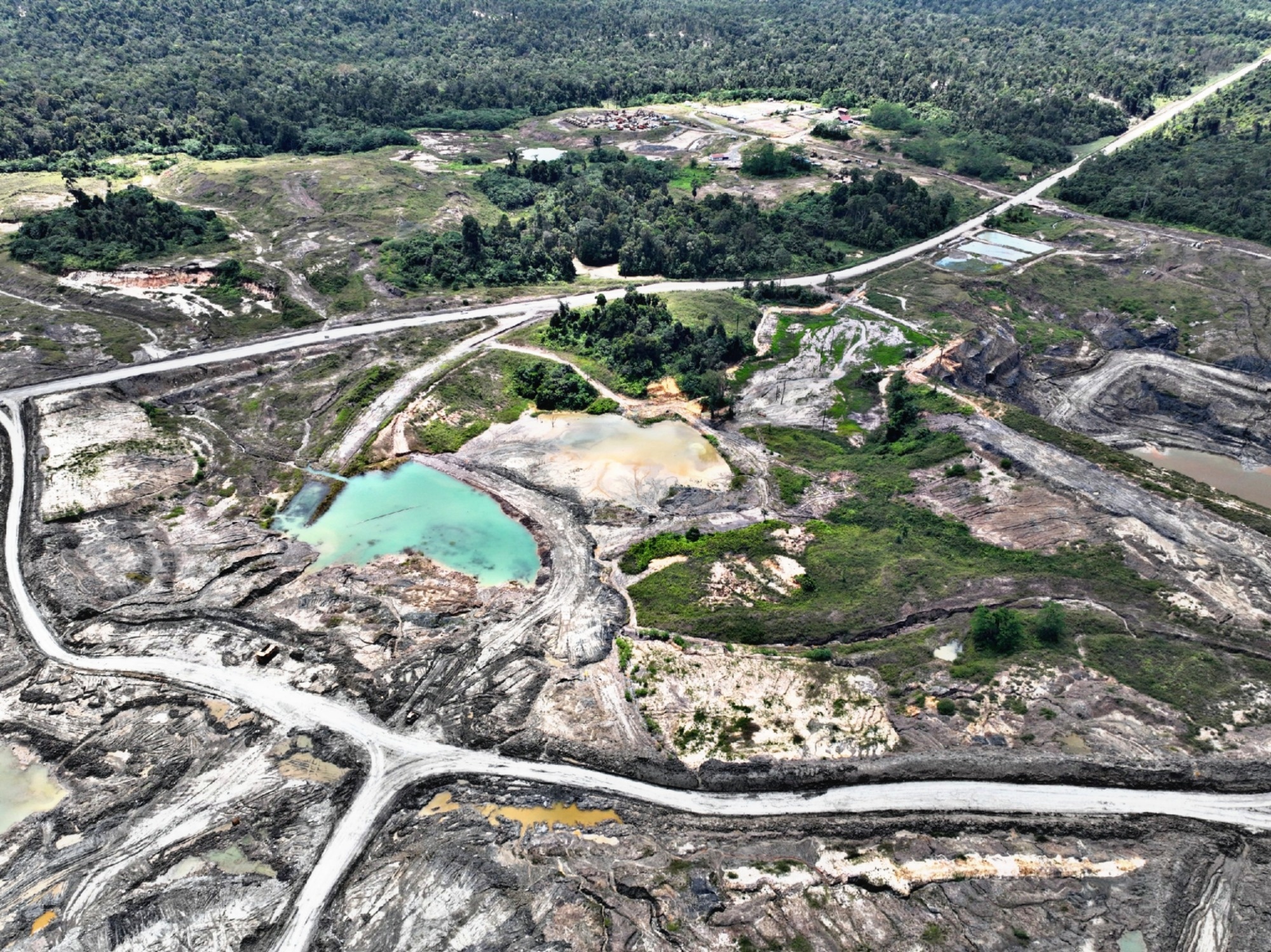 Study: Valorization of marble powder with lime for mine haul road base courses: experimental and numerical study. Image Credit: Dian Nugraha Perdana/Shutterstock
A recent study in Scientific Reports investigates the use of marble powder waste from Egypt's marble-processing industry as a stabilizing material for mine haul road construction in clay-rich environments. The study evaluates the potential of combining marble powder with hydrated lime to improve the performance of weak clay soils under heavy haul truck loading.
The results show that combining 25% marble powder with 2% hydrated lime substantially strengthens clay soils, offering a practical way to repurpose quarry waste for mining road construction.
Turning Quarry Waste into High-Performance Road Materials
The construction and mining sectors face growing pressure to adopt sustainable practices that reduce waste and support circular economy goals. Marble processing generates massive quantities of slurry and powder waste, which industries dump in open land accelerating environmental degradation and groundwater contamination.
Egypt is one of the world's major marble producers, and the Shaq El-Thouban industrial zone near Cairo represents one of the largest marble and granite processing centers in the Middle East. The rapid expansion of the industry has intensified waste accumulation, creating both an environmental challenge and an opportunity for sustainable material reuse. Previous research has explored the use of marble waste in concrete, bricks, and pavement applications, and found that marble powder can improve the strength of weak soils.
However, earlier investigations focused mainly on simple strength measurements and did not fully examine the interaction between marble powder and clay soils. This study addressed these gaps through experimental testing and finite element modeling. The researchers evaluated how marble powder and hydrated lime affect clay soil behavior under realistic haul truck loading.
Experimental Testing and Numerical Modeling Approach
The researchers collected clay soil from the Shaq El-Thouban region of East Cairo and classified it as medium-plastic clay with high swelling potential and low bearing capacity. They sourced marble powder from nearby marble-processing operations as the primary stabilizing material and added hydrated lime to selected mixtures to promote pozzolanic reactions.
The researchers prepared mixtures with marble powder contents ranging from 0% to 30% in 5% increments and confirmed 2% as the optimum lime content through pH testing. The program covered measurement of Atterberg limits, compaction, California Bearing Ratio (CBR), and consolidated-drained triaxial compression testing, with samples cured for 7, 14, and 28 days.
Researchers applied X-ray diffraction (XRD), scanning electron microscopy, energy-dispersive X-ray spectroscopy (SEM – EDS), and Fourier transform infrared spectroscopy (FT-IR) to examine how marble powder altered soil structure and reduced void spaces within the clay matrix.
To evaluate field-scale performance, the researchers developed three-dimensional finite element simulations using PLAXIS 3D and the Hardening Soil constitutive model. They applied wheel loads ranging from 200 to 600 kPa to replicate heavy haul truck pressures and evaluated stabilized layer thicknesses from 15 cm to 60 cm to assess how pavement geometry influences structural performance.
Improved Strength, Reduced Settlement, and Better Load Resistance
The results showed that marble powder significantly improved the properties of the clay soil, with the 25% marble powder and 2% hydrated lime mixture consistently delivering the strongest performance across all tests. The free swell index dropped from 70% in untreated soil to just 5% in the optimum mixture, confirming a major reduction in expansiveness and moisture sensitivity.
Compaction testing revealed that marble powder increased maximum dry density and improved soil packing, but its performance declined beyond 25% content as excessive coarse particles reduced compaction efficiency. CBR results demonstrated substantial load-bearing gains, with the optimum mixture exceeding the 80% minimum requirement for pavement base materials after 28 days of curing.
Saving this for later? Download a PDF here.
Triaxial compression tests confirmed that stabilization raised the stiffness modulus from 23.76 MPa in untreated soil to 164.10 MPa in the optimum mixture. Microstructural analysis attributed these improvements to particle rearrangement, void filling, flocculation, and pozzolanic bonding.
The finite element simulations validated the laboratory findings under realistic field conditions. Untreated soil experienced settlement at 37 cm under 600 kPa loading, while stabilized mixtures significantly reduced deformation and improved load distribution. The optimum mixture reduced strain by more than 90% under heavy loading, dropping below the critical threshold of 2000 micro-strains. Statistical trends confirmed that both marble powder content and curing time strongly influenced geotechnical performance.
Conclusion and Industry Implications
This study demonstrated that marble powder waste can function as an effective stabilizing material for mine haul road construction, particularly when combined with hydrated lime. The findings highlight a circular economy opportunity by converting marble processing waste into a valuable geotechnical construction material.
The optimum mixture of 25% marble powder and 2% hydrated lime showed significant improvements in strength, stiffness, bearing capacity, and deformation resistance, satisfying pavement base course requirements under heavy haul truck loading. Both experimental testing and finite element simulations confirmed the technical suitability of the stabilized material for haul road base layers.
The researchers noted that future investigation must be towards evaluating the long-term durability, cyclic loading behavior, leaching risks, and wetting-drying performance under real field conditions. The proposed stabilization approach has strong potential for broader adoption as a low-cost and sustainable construction solution for mining regions facing growing infrastructure and waste management pressures.
Journal Reference
Abdelkader, H. A. M., Ye, H., et al. (2026). Valorization of marble powder with lime for mine haul road base courses: experimental and numerical study. Scientific Reports. DOI: 10.1038/S41598-026-49528-6, https://www.nature.com/articles/s41598-026-49528-6
Disclaimer: The views expressed here are those of the author expressed in their private capacity and do not necessarily represent the views of AZoM.com Limited T/A AZoNetwork the owner and operator of this website. This disclaimer forms part of the Terms and conditions of use of this website.