Researchers have developed a fully coupled stress-damage-seepage numerical model to investigate the evolution of floor damage in underground coal mine reservoirs under combined mining and hydraulic pressures in Western China.
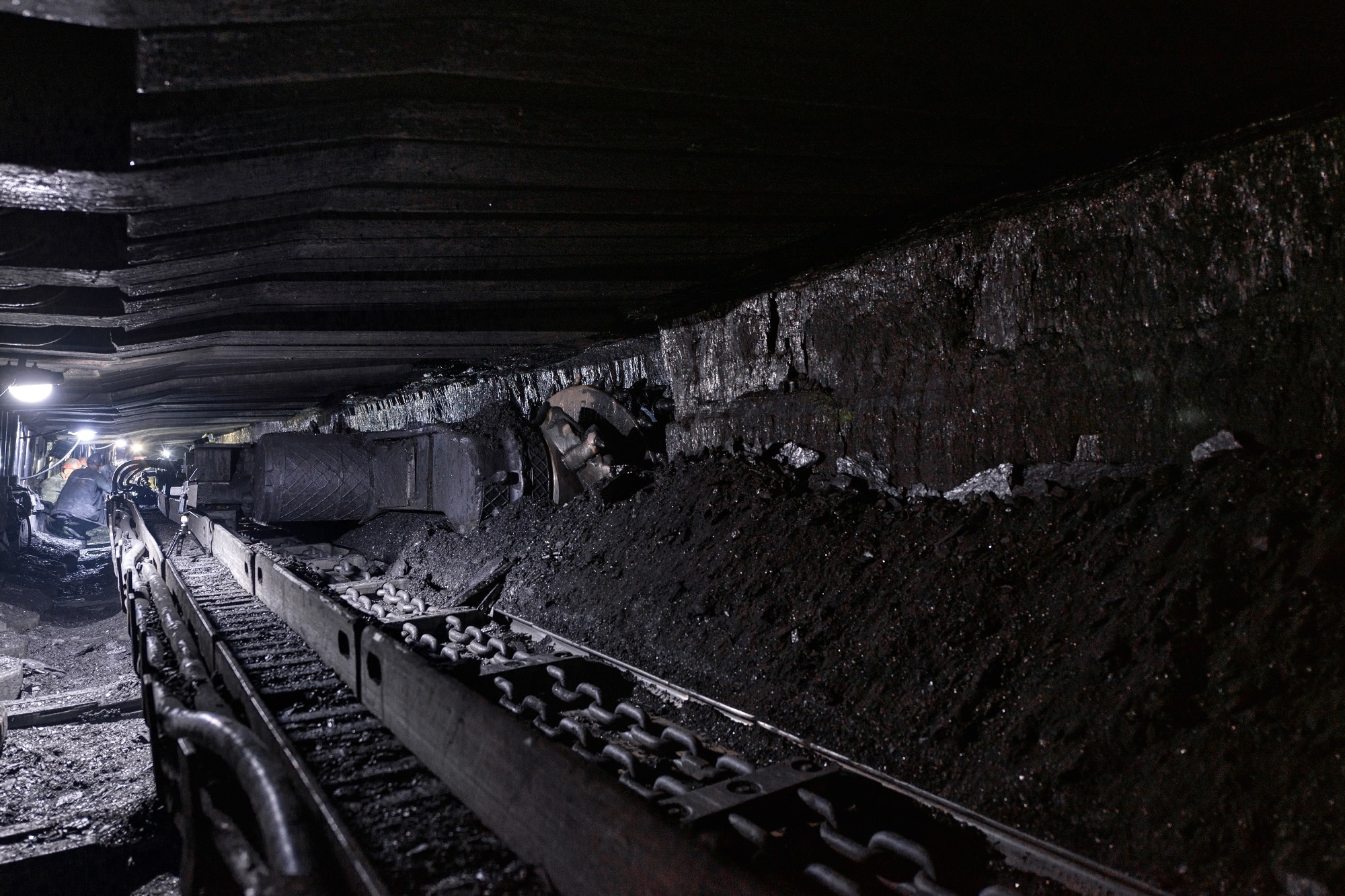
Image Credit: Nordroden/Shutterstock.com
Coal Mine Reservoir Challenges
Western China, rich in coal resources, faces significant water scarcity and ecological fragility, exacerbated by extensive coal mining activities. Mining-induced fractures disrupt groundwater systems, causing water loss and environmental degradation.
To address this, the “conduction, storage, and utilization” technology for underground coal mine reservoirs has been implemented, using goaf spaces for mine water storage and purification. However, the long-term safety of these reservoirs critically depends on the stability of the reservoir floor, which is susceptible to damage under combined mining-induced and hydraulic pressures.
Understanding the damage evolution and failure mechanisms of the floor rock mass under coupled stress and seepage conditions is essential for optimizing site selection, ensuring operational safety, and defining safe water level thresholds in underground reservoirs within mining areas.
Want to save for later? Click here.
Stress-Damage-Seepage Modeling
This research developed a fully coupled numerical model integrating stress-damage-seepage interactions focused on the mine floor’s mechanical behavior in an underground coal mine reservoir context. The model accounts for rock heterogeneity characterized via a Weibull distribution based on geological data from the Shendong mining area, a typical mining region in Western China.
The modeling framework incorporates fluid-solid coupling theories within porous media, continuous damage mechanics, and rock failure constitutive laws to simulate the entire lifecycle from initial rock equilibrium through coal seam excavation and subsequent water impoundment in the goaf.
The model parameters were calibrated and validated against field measurements and theoretical predictions, ensuring accuracy in reproducing observed damage depths under mining stress conditions free of water pressure.
Simulations were carried out to systematically investigate the floor damage evolution under varying conditions of water storage pressure, burial depth, mining height, and lithology (mudstone versus sandstone). A dimensionless sensitivity analysis was employed to quantify the relative influence of each factor on damage propagation and failure depths.
Floor Damage Evolution Analysis
Validation of the model established that simulations matched closely with field data, with the maximum failure depth after mining excavation registering around 28.11 meters, consistent with theoretical expectations and practical observations in the Shendong area. This confirmed the model’s ability to accurately capture macroscopic mechanical responses of the floor rock mass, including heterogeneity effects.
The study revealed the critical role of water pressure as the primary driver of deep damage propagation in the floor. Below a threshold pressure of 1.0 MPa, floor damage remained shallow and essentially dormant, constrained by effective confining stress.
Once the water pressure surpassed this threshold, a pronounced “hydraulic wedging” mechanism activated, resulting in a rapid transition from limited shallow fracturing to deep, penetrating failure zones with an order-of-magnitude increase in permeability. Increasing water pressure further intensified this effect, forming extensive fracture networks and significantly expanding failure depths.
Rock lithology strongly influenced damage development patterns and seepage behavior. Mudstone exhibited a substantially lower intrinsic permeability (on the order of 10-17 m²) compared to sandstone (approximately 10-10 m²). Its plastic shear deformation under damage conditions restricted permeability increases, maintaining effective water barrier properties even after disturbance.
Variations in burial depth markedly affected floor failure characteristics. Shallow burial (200 m) resulted in low in-situ stresses with primarily localized tensile failures restricted to near-surface layers. As burial depth increased to 300 m, damage depths enlarged modestly yet remained manageable.
Deeper burial levels of 400 m and 500 m induced high deviatoric stresses in the floor strata, facilitating complex compressive-shear failure mechanisms when water pressure was present. These conditions produced broad, connected damage zones extending well beyond shallow layers, with maximum failure depths exceeding 38 meters, pinpointing significant risks for deep instability in high-stress environments.
This was attributed to an “equivalent unloading” effect whereby the mechanical boundary conditions at the floor–coal seam interface were fundamentally dictated by the release of vertical stress irrespective of mining height. Floor plastic failure depth was instead controlled by horizontal geometries such as the working face length and environmental in-situ stress levels, rather than vertical extraction dimensions, reinforcing the feasibility of underground reservoir construction even in ultra-thick coal seams.
Key Findings and Implications
This study provides new insights into the mechanisms driving floor damage in underground coal mine reservoirs under the combined effects of mining-induced stresses and hydraulic pressure.
By developing a comprehensive stress–damage–seepage model that captures the inherent heterogeneity of rock masses, it reveals that water storage pressure is the dominant trigger of deep floor failure. A critical threshold of 1.0 MPa was identified, beyond which damage transitions from localized shallow fracturing to extensive deep failure accompanied by a sharp increase in permeability.
These findings offer valuable guidance for the design and safe operation of underground coal mine reservoirs. In particular, they provide a scientific basis for optimizing reservoir site selection, regulating operational water levels, and enhancing long-term structural stability and safety in the challenging mining environments of Western China.
Journal Reference
Zhang J., Zhou X., et al. (2026). Floor Damage Evolution in Coal Mine Reservoirs. Water. 2026; 18(14):1688. DOI: 10.3390/w18141688, https://www.mdpi.com/2073-4441/18/14/1688