*Important notice: This news reports on an unedited version of an accepted paper and is awaiting final editing. Therefore, the paper should not be regarded as conclusive or treated as established information.
A new study demonstrates that combining thermodynamic modeling with reduction roasting and magnetic separation can significantly improve the recovery of both nickel and iron, offering a more energy-efficient and environmentally friendly processing route for low-grade oxide nickel ores.
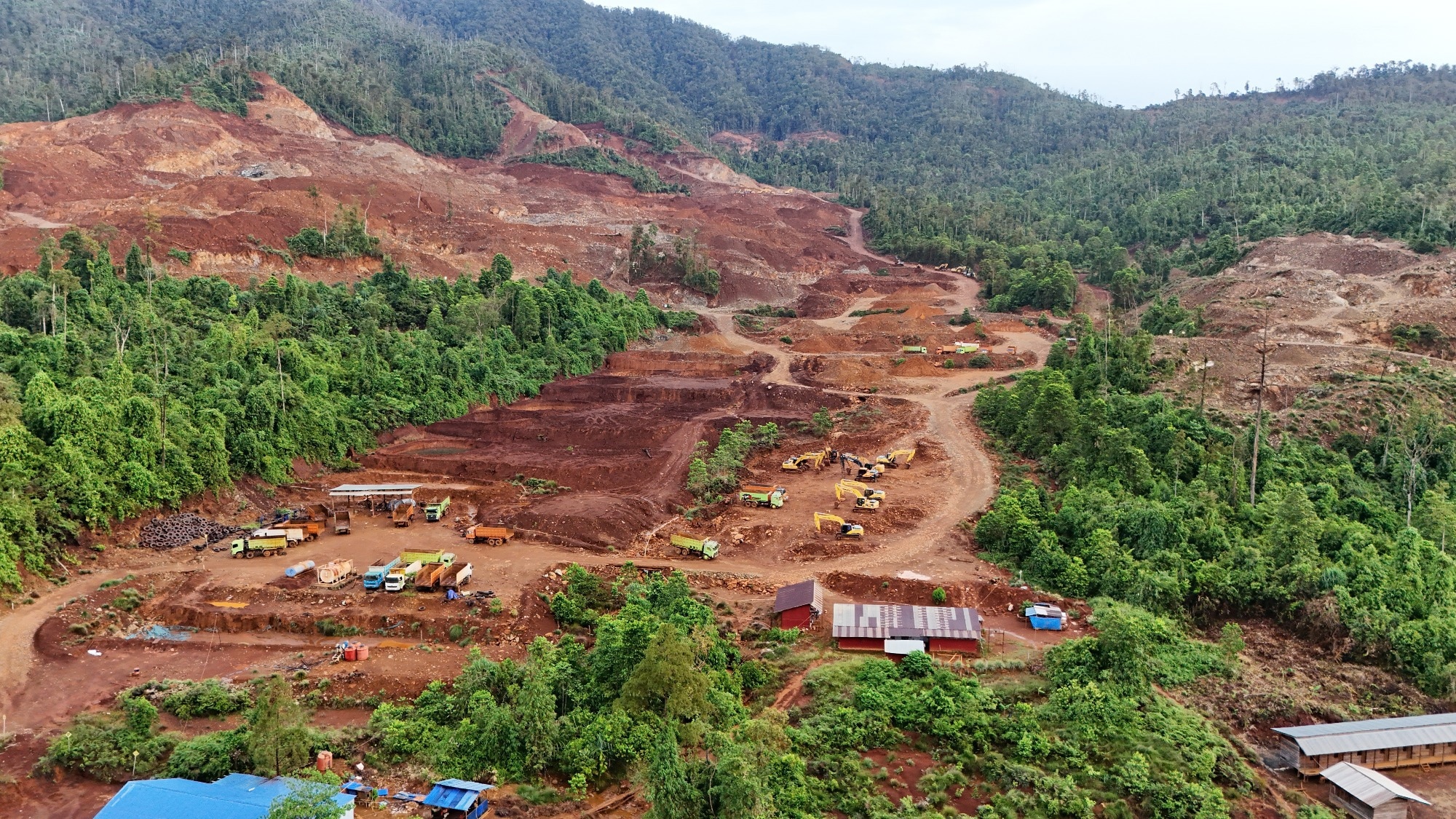
Study: Thermodynamic modeling and experimental analysis of reduction of iron and nickel from oxide nickel ore. Image Credit: Sesan13/Shutterstock.com
Nickel Ore Reduction Context
Nickel is a strategic metal extensively used in stainless steels, heat-resistant alloys, and advanced materials with specific magnetic and physicochemical properties. The expanding demand for nickel, driven by technologies in electric vehicles, energy storage, and hydrogen systems, has intensified focus on efficient and sustainable extraction methods.
Lateritic nickel ores, abundant but complex due to the distribution of nickel mainly in oxide and silicate forms, pose technological challenges for metal recovery. Traditional processing routes often involve high energy consumption and generate substantial slag, prompting the exploration of alternative approaches. This study aims to investigate the reduction roasting of lateritic nickel ore using coke as a reductant followed by magnetic separation.
Thermodynamic and Experimental Approach
The study utilized oxidized lateritic nickel ore from the Badamsha area in western Kazakhstan. Initial characterization involved X-ray diffraction (XRD) and energy-dispersive spectroscopy (EDS) to identify mineral phases and elemental distributions, revealing a multiphase system dominated by iron oxides, nickel oxides, and complex silicates incorporating nickel and magnesium.
Thermodynamic modeling was performed with the HSC Chemistry 10.0 software, focusing on Gibbs free energy minimization under isobaric-isothermal settings at atmospheric pressure. Predominance diagrams for Fe-C-O, Ni-C-O, Si-C-O, and Mg-C-O systems were constructed across temperatures from 100 to 1200 °C, with varying carbon consumptions (0.1 to 2.0 kg per 100 kg ore) to investigate phase stability and reduction pathways.
Thermal behavior of the nickel ore mixed with coke was studied using simultaneous thermal analysis (TG-DTA-DTG) under an argon atmosphere, heating samples at 15 °C/min. Preliminary ore preparation steps included crushing and sieving to obtain particles within the −2.0 to +1.0 mm size range for effective beneficiation. A jigging method was employed for preliminary physical separation based on density differences, enriching iron- and nickel-bearing phases. Reduction roasting experiments were conducted around 1200 °C with various carbon additions, followed by magnetic separation to isolate metallic and oxide phases.
Click here to download a free PDF copy of this page
Reduction Roasting Outcomes
Thermodynamic modeling showed sequential reduction of iron oxides from hematite (Fe2O3) to magnetite (Fe3O4), wüstite (FeO), and metallic iron with increasing temperature and carbon reducing potential.
Magnetite formation was optimized between 700 and 900 °C at moderate carbon consumption (~0.3–0.7 kg), favorable for magnetic beneficiation due to its strong magnetic response. At higher temperatures and carbon levels, fayalite (Fe2SiO4), wüstite, and metallic iron became predominant.
For nickel phases, reduction of NiO to metallic nickel intensified between 900 and 1200 °C with carbon consumption above 0.6 kg, enabling effective nickel metallization. In contrast, silicate phases such as CaSiO3, MgSiO3, and Mg2SiO4 exhibited high thermodynamic stability across the entire temperature range, indicating their resistance to reduction.
Thermal analysis corroborated these findings, identifying major transformation intervals: dehydration and dehydroxylation of hydrosilicates around 192–762 °C, reduction of iron oxides producing magnetite at ~1014 °C, and partial melting above 1235 °C.
The presence of coke facilitated shifts of thermal effects to lower temperatures by enhancing the reducing atmosphere, accelerating reduction steps. The black magnetic phase formed after cooling indicated successful magnetite synthesis, essential for subsequent physical separation.
Jigging effectively concentrated the denser Fe- and Ni-bearing oxides into the heavy fraction, separating them from silicate-rich tailings. Post-roasting XRD analysis revealed formation of a multiphase product containing magnetite, metallic Fe-Ni alloy, calcium oxide, and various silicates like pigeonite and magnesium–aluminosilicate.
The coexistence of these magnetic and non-magnetic phases created an amenable composition for physical separation techniques. Magnetic separation further enriched iron and nickel into the magnetic fraction as confirmed by phase and chemical composition analyses, demonstrating the process’s efficiency in selectively recovering metals.
The experimental results aligned closely with thermodynamic predictions, validating the proposed operating window for reduction roasting. The combination of moderate carbon consumption, temperatures near 1200 °C, and controlled atmosphere optimized the formation of magnetic phases while minimizing nickel incorporation into silicates, which complicate recovery.
Process Feasibility and Insights
The findings highlight the potential of reduction roasting with coke, followed by magnetic separation, as a practical and more sustainable route for recovering nickel from low-grade lateritic ores.
By combining thermodynamic modeling with laboratory experiments, the researchers identified the conditions needed to promote iron oxide reduction and nickel metallization while limiting nickel losses to stable silicate minerals.
The result is a more selective, energy-efficient process that could help unlock the value of complex oxide nickel deposits.
While additional optimization will be needed before large-scale implementation, the study provides a strong foundation for developing cleaner and more effective nickel beneficiation technologies.
Journal Reference
Adilov G., Yessengaliyev D., et al. (2026). Thermodynamic modeling and experimental analysis of reduction of iron and nickel from oxide nickel ore. Scientific Reports. DOI: 10.1038/s41598-026-62947-9, https://www.nature.com/articles/s41598-026-62947-9